

Description
Mode of action
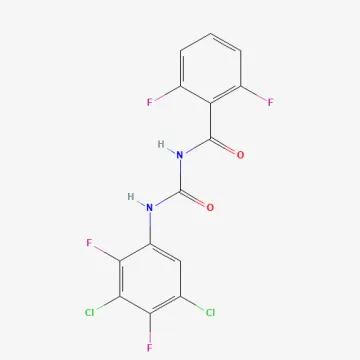
Teflubenzuron belongs to the benzoylurea chemical class. It is a systemic insecticide that acts as a specific insect growth regulator (IGR).
The primary mechanism of action involves inhibiting chitin synthesis in the insect cuticle. Upon ingestion or contact, the substance disrupts the molting process and the formation of a new exoskeleton.
The active ingredient is most effective against larval stages of pests. Adult insects that come into contact with the product often lay non-viable eggs.
The substance exhibits pronounced ovicidal and larvicidal effects, which allows for interrupting the insect life cycle at early developmental stages. This prevents crop damage by young larvae.
The compound is characterized by high resistance to rainfall washout, which provides prolonged crop protection after application.
What it targets
Teflubenzuron is used against a wide range of Lepidoptera, Diptera, and Coleoptera pests.
It is effective in controlling various types of fruit moths, leaf rollers, and cutworms that infest fruit crops. The product also shows excellent results in managing pest populations in vegetable production and field crops.
The agent is frequently used to protect apples, pears, grapes, and various vegetables from caterpillars that damage leaves and fruits.
Due to its selectivity, the product helps reduce harmful insect populations without triggering secondary pest outbreaks when application regulations are followed.
The substance holds significant importance in integrated pest management (IPM) programs, where selective impact on specific pests is required.
Rates and timing
Application rates depend directly on the crop, the specific pest species, and the level of infestation. Typically, spray solutions are prepared according to the manufacturer's recommendations for the specific formulation.
The optimal time for application is during the egg-laying period or the appearance of early-instar larvae. Timely treatment is critical for achieving maximum efficacy.
The frequency of applications per season is strictly regulated to prevent the development of insect resistance. It is necessary to rotate the use of teflubenzuron with insecticides from different chemical groups.
It is important to perform thorough spraying to ensure uniform coverage of the entire plant surface, including the undersides of leaves where egg clusters are often located.
Pre-harvest intervals vary depending on the crop and must be strictly adhered to by agronomists to ensure product safety.
Restrictions
Teflubenzuron is moderately toxic to warm-blooded animals but requires standard personal protective equipment during the preparation and application of mixtures.
Strict ecological limitations must be followed: avoid contamination of water bodies, fishery zones, and buffer strips, as the substance is hazardous to aquatic organisms.
When working near apiaries, it should be noted that the product has specific toxicity; therefore, applications must not be conducted during the active flowering period of honey plants.
Store the product in dry, dark warehouses, out of reach of children and animals, in the original tightly sealed manufacturer's packaging.
In case of contact with skin or mucous membranes, immediately rinse the affected area with plenty of running water and seek medical advice if necessary.
Regulatory
Status in the European Union
Not approved in the EU
- CAS number
- Teflubenzuron
- Category (EU)
- IN - Insecticide
- ADI
- 0.01 mg/kg bw/day
- ARfD
- Not appl.
- AOEL
- 0.016 mg/kg bw/day
EU legislation
EU status is for reference only and does not replace national registration in your country.
Content graph
Connections · Teflubenzuron
Most often together:
Marketplace