

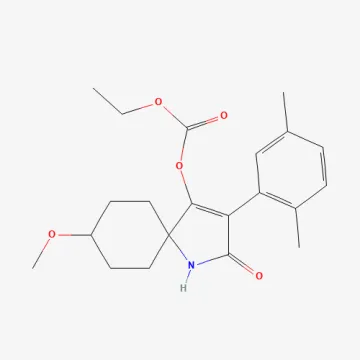
Description
Mode of action
Spirotetramat is a systemic insecticide belonging to the chemical class of ketoenols (tetramic acid derivatives). It is distinguished by its unique ability to move in both the xylem and phloem of plants.
The mode of action is based on the inhibition of lipid biosynthesis in pests. By blocking the enzyme acetyl-CoA carboxylase, the compound effectively disrupts metabolic processes in target insects.
Once inside the plant, spirotetramat is converted into its active enol form, which is systemically distributed through the vascular system, reaching even new growth and concealed habitats.
The lack of lipids leads to the death of immature stages, such as nymphs and larvae, preventing them from developing into reproductive adults and significantly reducing pest pressure.
Due to this distinct physiological mechanism, spirotetramat provides a reliable solution for managing pests that have developed resistance to traditional organophosphate or carbamate insecticides.
What it targets
This active ingredient is designed to control a wide range of sucking pests that cause damage to commercial crops by draining sap and transmitting plant viruses.
Target species include various aphids, whiteflies, scale insects, and mealybugs, which are often difficult to control with contact-only products.
It is also highly effective against psyllids, thrips, and specific species of mites, making it an essential component of integrated pest management (IPM) programs.
Spirotetramat is widely used in high-value horticulture, including fruit trees, vineyards, and vegetable crops, to ensure clean production and higher yields.
- Various Aphid species
- Greenhouse and Tobacco Whitefly
- San Jose scale
- Pear Psylla
- Spider Mites
Rates and timing
Application rates for spirotetramat are determined by the target pest density and the growth stage of the crop to ensure optimal coverage and efficacy.
The most effective timing for application is during the early colonization stage of the pests, typically before they reach the adult phase or start heavy egg-laying.
In orchards, application is usually recommended post-bloom, allowing the systemic nature of the compound to protect developing fruits and tender leaves from emerging populations.
Correct application timing is critical; since the compound works systemically, plants require sufficient time to absorb the active ingredient through the leaf surface.
Limiting the number of applications per season is a standard practice to preserve the longevity of the molecule and maintain high control standards across several growing years.
Restrictions
Although spirotetramat is generally considered safer for many beneficial insects compared to broad-spectrum insecticides, care should be taken to avoid direct application during peak pollinator activity.
Tank mixtures with highly alkaline substances should be avoided, as they may lead to the degradation of the active ingredient and reduce its overall field performance.
Strict adherence to pre-harvest intervals (PHI) is mandatory to ensure that chemical residues in the final produce remain well below the legal safety limits.
Farmers must utilize appropriate protective gear, including gloves and masks, during the mixing and spraying process to prevent unnecessary exposure.
Disposal of empty containers and washing equipment should be handled in accordance with local environmental regulations to protect surrounding water sources and soil health.
Regulatory
Status in the European Union
Not approved in the EU
- CAS number
- 203313-25-1
- Approved from
- 01.05.2014
- Approval until
- 30.04.2024
- ADI
- 0.05 mg/kg bw/day
- ARfD
- 1.0 mg/kg bw
- AOEL
- 0.05 mg/kg bw/day
Hazard classification (CLP)
Aquatic Acute 1 - H400Aquatic Chronic 1 - H410Eye Irrit. 2 - H319Repr. 2 - H361fdSTOT SE 3 - H335Skin Sens. 1A - H317
EU legislation
EU status is for reference only and does not replace national registration in your country.
Content graph
Connections · Spirotetramat
Most often together:
Marketplace
Products · 6


