

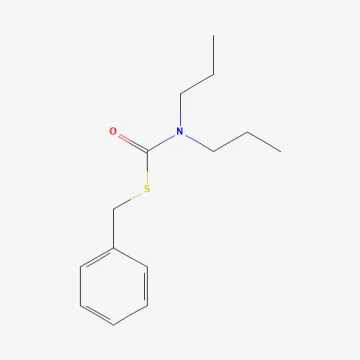
Description
Mode of action
Prosulfocarb belongs to the thiocarbamate chemical class. It is a systemic herbicide primarily absorbed by the shoots and roots of weeds from the treated soil layer.
The active ingredient inhibits lipid synthesis and suppresses the growth of weed meristematic tissues. Consequently, susceptible plants stop growing immediately after germination and perish either before or shortly after emergence.
The efficacy of the product depends directly on soil moisture availability. With sufficient water, prosulfocarb distributes evenly in the topsoil, creating a protective barrier.
An important aspect of its action is the ability to provide long-lasting suppression of weeds, giving the crop a competitive advantage during early growth stages.
As a soil-applied herbicide, its efficiency is minimal against weeds that have already developed significant root systems or reached later growth stages.
What it targets
Prosulfocarb is mainly effective against a wide range of annual grass weeds. It also demonstrates suppressive effects on certain broad-leaved weed species.
Targeted species include common windgrass (Apera spica-venti), blackgrass (Alopecurus myosuroides), annual meadow-grass (Poa annua), and various species of goosefoot and nightshade.
The primary use is protecting cereal crops, such as winter wheat and barley, from early weed infestation that can significantly reduce final yields.
Application is critical in fields with high densities of grass weeds that are notoriously difficult to control with post-emergence herbicides.
The mode of action allows prosulfocarb to be used in tank mixes to broaden the spectrum of controlled weeds within an integrated weed management program.
Rates and timing
Application rates vary depending on soil type and the intensity of weed pressure. Lighter soils typically require lower doses, while heavier soils require higher rates for optimal control.
The primary application window is pre-planting, at the time of planting, or immediately after planting, but strictly before crop emergence.
Uniform distribution of the spray solution across the field surface is essential, as the quality of coverage determines the success of a soil-applied herbicide.
When planning application, consider weather forecasts. A light rainfall following the treatment enhances the penetration of the substance into the soil and activates its herbicidal properties.
In extremely dry conditions, efficacy may decrease; in such cases, mechanical incorporation or irrigation may be necessary to ensure the active ingredient reaches the germination zone.
Restrictions
Working with prosulfocarb requires strict adherence to safety protocols. The product has a strong odor, so personnel must wear appropriate personal protective equipment for respiratory and skin protection.
Application during high wind conditions is strictly prohibited to prevent drift onto neighboring crops, residential areas, or water bodies.
When planning crop rotation, it is essential to consider the degradation period of the active ingredient in the soil to prevent phytotoxicity in sensitive subsequent crops.
Use on soils with very high organic matter content is generally discouraged, as organic matter can bind the herbicide, reducing its availability to target weeds.
Storage must be carried out in specialized facilities away from food, animal feed, and water supplies, strictly maintaining temperature controls as specified by the manufacturer.
Content graph
Connections · Prosulfocarb
Most often together:
Marketplace
Products · 2
