

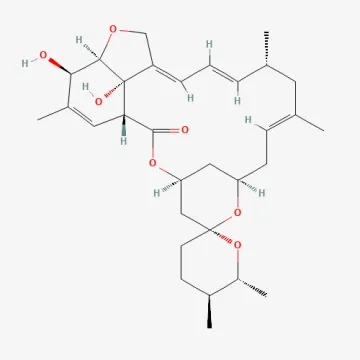
Description
Mode of action
Milbemectin belongs to the group of macrocyclic lactones of natural origin. It is derived from the fermentation of the soil bacterium Streptomyces hygroscopicus subsp. aureolacrimosus, resulting in a compound with high biological activity.
The mechanism of action involves stimulating the release of gamma-aminobutyric acid (GABA) in the presynaptic neurons of pests. This increases chloride ion influx through cell membranes, causing paralysis and rapid death of the organisms.
The substance possesses significant contact and stomach activity. It is characterized by excellent translaminar properties, allowing it to penetrate leaf tissues and provide a lasting residual effect that resists washing off by rain or overhead irrigation.
Milbemectin is effective against all life stages of pests, including eggs, larvae, and adults. This comprehensive activity helps in breaking the pest life cycle, which is essential for managing dense populations effectively.
The compound shows selectivity toward target species when used correctly, which makes it a valuable component in Integrated Pest Management (IPM) strategies, as it helps preserve various beneficial entomophagous insects.
What it targets
The primary use of milbemectin is the control of phytophagous mites. It serves as one of the most powerful tools for managing mite infestations on a variety of agricultural and horticultural crops, both in greenhouses and open fields.
It effectively combats a broad spectrum of pests, including spider mites (Tetranychidae), rust mites (Eriophyidae), and false spider mites (Tenuipalpidae), all of which can severely damage plant health.
In addition to its acaricidal activity, milbemectin exhibits insecticidal properties against certain leaf-mining insects, such as leaf miners, which damage internal leaf layers and impact photosynthesis and plant aesthetics.
The range of crops protected by this substance includes vegetables like cucumbers, tomatoes, and peppers, as well as fruit trees, vines, and nursery plants. It is highly valued for its ability to halt damage quickly.
By protecting the vegetative mass from damage, milbemectin helps prevent chlorosis, leaf deformation, and premature fruit drop, ultimately securing higher yields and better quality produce for the market.
Rates and timing
Application rates for milbemectin vary depending on the infestation level and the specific crop type. Generally, low concentrations of the working solution are sufficient, making it a cost-effective solution for large-scale operations.
Short pre-harvest intervals allow for the use of milbemectin even close to the harvesting stage, making it a flexible tool for growers who must adhere to strict safety standards for food products.
Applications should ideally occur at the first signs of mite activity. It is crucial to ensure thorough coverage of the entire plant surface, particularly the underside of leaves, where mite colonies are typically concentrated.
Temperature during application should be considered for optimal results. While milbemectin remains stable across a wide temperature range, avoiding application during extreme solar radiation is recommended to maximize the product's longevity.
To mitigate the risk of resistance development, it is vital to alternate milbemectin with other insecticides or acaricides that utilize different modes of action, while strictly adhering to seasonal application limits.
Restrictions
Despite being a naturally derived product, milbemectin remains a potent pesticide requiring careful handling. Operators must wear appropriate personal protective equipment, including gloves, goggles, and protective clothing during preparation and spraying.
The substance is toxic to certain aquatic organisms. Consequently, it is strictly prohibited to dispose of solution residues in water bodies or drainage systems. Proper waste management protocols must always be followed.
Storage must be in the original sealed packaging in a cool, dark, and secure location, inaccessible to children and pets. It must never be stored alongside food, beverages, or animal feed to prevent contamination.
The working solution should be prepared immediately prior to use. Storage of the diluted mixture for extended periods is not advised, as it can lead to degradation of the active ingredient and reduced efficacy.
Compatibility with other pesticides or fertilizers should always be verified. A small-scale jar test is recommended before mixing to ensure there are no physical incompatibilities or risks of phytotoxicity to the crop.
Regulatory
Status in the European Union
Approved in the EU
- CAS number
- See note
- Category (EU)
- IN - Insecticide
- Approved from
- 16.11.2025
- Approval until
- 15.11.2040
- ADI
- 0.007 mg/kg bw/day
- ARfD
- 0.03 mg/kg bw
- AOEL
- 0.014 mg/kg bw/day
Hazard classification (CLP)
Acute Tox. 4 - H302Acute Tox. 4 - H332Aquatic Acute 1 - H400Aquatic Chronic 1 - H410
EU legislation
EU status is for reference only and does not replace national registration in your country.
Content graph
Connections · Milbemectin
Most often together:
Marketplace