

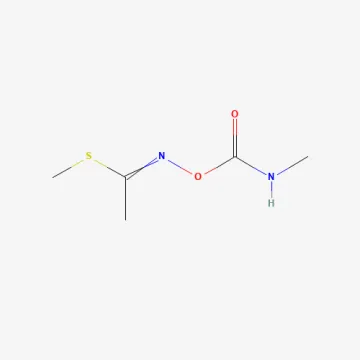
Description
Mode of action
Methomyl belongs to the carbamate chemical class and acts as a potent insecticide and acaricide with both contact and systemic activity.
The core mechanism involves the inhibition of the acetylcholinesterase enzyme in the insect nervous system, which halts the transmission of nerve impulses.
Consequently, pests experience immediate paralysis, leading to the cessation of feeding activities and eventual death within a very short timeframe.
The substance is rapidly absorbed by plant tissues, providing thorough protection to the treated areas and emerging foliage post-application.
Due to its high initial toxicity, methomyl is highly effective at rapidly reducing heavy pest populations before significant economic damage occurs.
What it targets
Methomyl is widely used to control a diverse range of pests, including Lepidoptera (caterpillars), thrips, aphids, leafhoppers, and various mite species.
It is effectively deployed in field crops, vegetables, fruit orchards, and vineyards to combat both chewing and piercing-sucking insect types.
The compound is particularly valuable in managing populations of pests that have developed resistance to organophosphate and pyrethroid insecticides.
By providing efficient control over hidden-feeding pests, it ensures better crop health and yields in high-pressure agricultural environments.
- Armyworms
- Thrips
- Aphids
- Leafhoppers
- Mites
Rates and timing
Application rates for methomyl-based products vary significantly based on the crop type, pest pressure, and specific formulation concentration.
It is recommended to apply the treatment during the early stages of pest infestation or when thresholds for economic damage are reached.
Pre-harvest intervals (PHI) must be strictly followed to ensure that residue levels in the final produce remain within established safety limits.
To maintain long-term effectiveness, it is advisable to incorporate methomyl into integrated pest management (IPM) programs involving different modes of action.
Precise calibration of application equipment is essential to ensure uniform coverage and optimal efficacy across the treated field area.
Restrictions
Methomyl is classified as highly toxic to humans, livestock, and beneficial insects like bees, requiring rigorous adherence to safety protocols.
Operators must wear complete personal protective equipment (PPE), including respiratory protection, when handling or applying the product.
Application should never occur during the flight activity of bees or under weather conditions that increase the risk of spray drift to non-target areas.
Strict buffer zones must be maintained near water bodies, residential areas, and other sensitive habitats to prevent environmental contamination.
Storage must be restricted to secure, cool, and well-ventilated facilities to prevent accidental exposure and maintain chemical integrity.
Regulatory
Status in the European Union
Not approved in the EU
- CAS number
- 16752-77-5
- Category (EU)
- IN - Insecticide
- Approved from
- 01.09.2009
- Approval until
- 31.08.2019
- ADI
- 0.0025 mg/kg bw/day
- ARfD
- 0.0025 mg/kg bw
- AOEL
- 0.0025 mg/kg bw/day
Hazard classification (CLP)
Acute Tox. 2 - H300Aquatic Acute 1 - H400Aquatic Chronic 1 - H410
EU legislation
EU status is for reference only and does not replace national registration in your country.
Content graph
Connections · Methomyl
Most often together:
Marketplace