

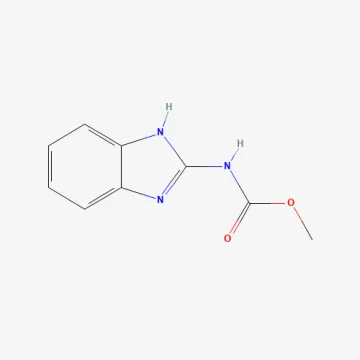
Description
Mode of action
Carbendazim belongs to the benzimidazole chemical class and acts as a systemic, broad-spectrum fungicide. The active substance is absorbed by plant roots or foliage and moves acropetally within the vascular system, protecting both existing tissues and new growth.
The mechanism of action involves inhibiting the cell division of fungal pathogens. Carbendazim interferes with the synthesis of beta-tubulin, a key structural protein of fungal microtubules, which disrupts mitosis and ultimately leads to the death of the fungal organism.
This compound provides both preventative and curative properties. When applied as a preventative measure, it inhibits infection; if applied early during symptom development, it can halt the progression of fungal diseases within the plant.
The substance demonstrates high activity against a wide range of pathogens including Ascomycetes, Basidiomycetes, and Deuteromycetes. Its systemic nature allows it to provide durable protection to vegetative organs over a period of several weeks.
Thanks to its translocation properties, carbendazim effectively controls pathogens in hard-to-reach areas such as young shoots and nodes, which is particularly vital for the effective protection of cereal crops.
What it targets
Fungicides containing carbendazim are widely used to combat powdery mildew, septoria, eyespot, and various types of rots in small-grain cereal crops.
The product is effective against fusarium head blight and snow mold, making it a preferred choice for seed treatments and early spring applications on winter wheat and barley.
In sunflower cultivation, carbendazim is used to manage phoma leaf spot, phomopsis, and gray mold, preventing the spread of infection through stems and flower heads.
In sugar beet production, this active ingredient is applied to control cercospora leaf spot, a disease capable of significantly reducing root sugar content and overall yield.
Additionally, carbendazim is utilized in orchards and vegetable production to protect fruit trees from scab and monilinia, as well as to control anthracnose in various vegetable crops.
Rates and timing
Application rates vary depending on the crop species and the severity of the pathogen infection. Typically, the working solution is applied at a rate of 0.3–0.6 liters per hectare for field crops.
When used as a seed treatment, the application rate is generally 0.5–1.0 liters per ton of seeds, ensuring protection against soil-borne and seed-borne infections during initial growth stages.
The timing of application is determined by the development stage of the pathogen and prevailing weather conditions. Spraying should occur at the first sign of disease to prevent widespread outbreaks.
The interval between treatments is typically between 10 and 20 days, depending on the intensity of disease progression and environmental factors that affect the residual activity of the fungicide.
It is important to maintain optimal temperature conditions, as carbendazim efficacy is highest at moderate temperatures, whereas extreme heat or drought may reduce the rate of systemic translocation.
Restrictions
The primary limitation of using carbendazim is the high risk of fungal resistance development. Continued use of fungicides from the same chemical group leads to the selection of resistant strains.
To prevent resistance, it is necessary to rotate carbendazim with fungicides from other chemical groups, such as triazoles or strobilurins, or utilize them in tank-mix formulations.
When handling the product, the use of personal protective equipment (PPE) for respiratory, skin, and eye protection is mandatory, as the substance is classified as moderately toxic.
Livestock grazing on treated fields is prohibited during the specified pre-harvest interval, which is generally at least 20–30 days following the final application.
Applications near water bodies or beehives are not recommended, as the substance may pose risks to aquatic life and beneficial insects if applied in violation of local regulations.
Regulatory
Status in the European Union
Not approved in the EU
- CAS number
- 10605-21-7
- Approved from
- 01.01.2007
- Approval until
- 30.11.2014
- ADI
- 0.02 mg/kg bw/day
- ARfD
- 0.02 mg/kg bw
- AOEL
- 0.02 mg/kg bw/day
Hazard classification (CLP)
Aquatic Acute 1 - H400Aquatic Chronic 1 - H410Muta. 1B - H340Repr. 1B - H360FD
EU legislation
EU status is for reference only and does not replace national registration in your country.
Content graph
Connections · Carbendazim
Most often together:
Marketplace