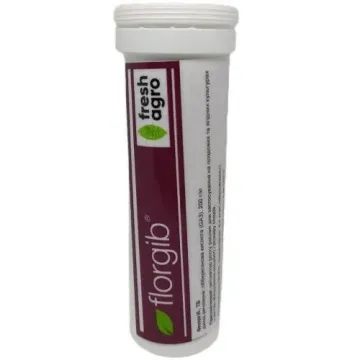
Florgib
Fine Agrochemicals Ltd., United Kingdom
Plant Growth Regulators
0
0
·
67
5 offers
270.1 €per 1 l
Buy
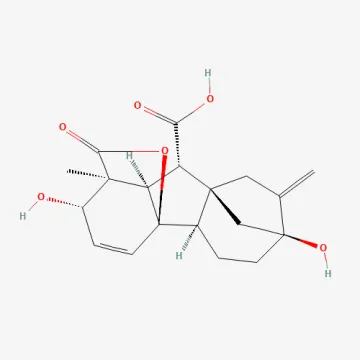
Gibberellic acid is a naturally occurring plant hormone belonging to the gibberellin group, essential for regulating various developmental processes.
The substance functions by triggering specific genetic responses that enhance cell wall elasticity and promote cell division in plant tissues.
It plays a critical role in mobilizing nutrient reserves, specifically converting stored starches into sugars that fuel rapid stem and leaf expansion.
Furthermore, it is a primary factor in breaking seed and bud dormancy, signaling the plant to initiate growth cycles at the onset of spring.
In modern agriculture, this hormone is used as a precise tool to manage crop timing, fruit development, and overall structural biomass.
Gibberellic acid is widely used in viticulture to increase berry size and loosen clusters in seedless grape varieties for better quality.
In vegetable production, it serves to improve fruit set in tomatoes, peppers, and cucumbers, especially under greenhouse environmental stressors.
It is effective in fruit orchards for preventing premature fruit drop and enhancing the size and uniformity of stone and pome fruits.
Seed treatment with this hormone is standard practice for accelerating germination rates and ensuring uniform stand establishment in various crops.
Ornamental growers utilize it to influence flowering times and increase the length of floral stalks for commercial flower production.
Because gibberellic acid is highly bioactive, it requires very low application rates, often measured in parts per million (ppm).
Correct timing is essential; applications are most effective when timed with specific physiological stages such as peak bloom or early fruit formation.
When preparing the solution, use distilled or treated water to ensure the acidity is optimal for the stability of the hormone molecule.
Uniform coverage is required during application to prevent uneven growth patterns or malformation within the plant structure.
Monitoring the plant's health status is vital, as excessive application can lead to undesired physiological responses or stunted development.
Gibberellic acid should not be viewed as a fertilizer; adequate soil fertility must be maintained to support the rapid growth triggered by the hormone.
Avoid tank-mixing with strongly alkaline substances, as this can degrade the molecule and render the treatment ineffective.
Standard safety protocols should be followed during handling, ensuring no direct contact with the eyes or skin during the mixing process.
Storage must occur in a cool, dark environment, as direct sunlight and heat contribute to the degradation of the active ingredient.
Care should be taken to prevent drift during application, as neighboring crops may react unpredictably to exposure to synthetic plant hormones.
Approved in the EU
EU status is for reference only and does not replace national registration in your country.