
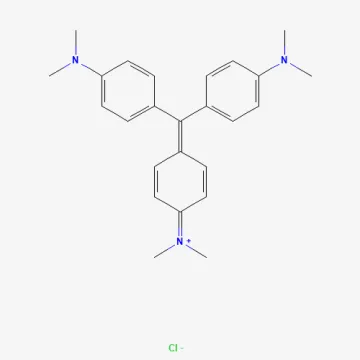
Gentian violet
Description
Mode of action
Gentian violet, also known as crystal violet, is a triphenylmethane dye that functions as a powerful antiseptic and antifungal compound in agricultural settings.
Its mechanism of action involves interacting with the acidic components of the pathogen's cell structure, effectively inhibiting vital enzyme functions and protein synthesis.
The substance significantly alters the permeability of fungal cell membranes, which leads to osmotic imbalance and the eventual termination of the pathogen's growth.
In agronomy, it acts primarily as a protective barrier, preventing opportunistic infections from colonizing wounds or mechanical injuries on plant stems and branches.
The compound provides a long-lasting inhibitory effect on fungal spores, creating an environment that is hostile to the development of common agricultural molds.
What it targets
Gentian violet is utilized in horticulture and crop management as a targeted fungicide and antiseptic for various types of plant pathogens.
It is widely used to treat pruning cuts on fruit and ornamental trees to prevent the entry of wood-decay fungi and bacterial pathogens.
The agent is also effective in the disinfection of bulbs, tubers, and rhizomes prior to planting to ensure a healthier start for the emerging crop.
In greenhouse operations, it is applied to surfaces, benches, and trays to control the growth of algae, mosses, and mold that can harbor harmful pathogens.
It can also be used as a spot treatment for early-stage surface infections on succulents and other plants susceptible to dampness-related fungal diseases.
Rates and timing
Working solutions for tree wound dressings typically range from 0.1% to 1.0% concentration, depending on the severity of the damage and the target organism.
For seed or bulb treatments, quick immersion techniques are preferred to ensure thorough coverage without causing damage or saturation of the plant tissue.
Applications are most effective when performed in dry conditions, allowing the treated area to dry quickly and form a stable, protective residual layer.
When applying to foliage, extreme caution regarding concentration is required, as the dye can cause severe phytotoxicity if the dosage is too high.
Timing is critical: applications should be performed immediately after pruning or harvesting to provide the best possible protection against airborne spores.
Restrictions
The most significant aesthetic limitation is the intense purple staining, which restricts its use on flowers, fruits, or foliage meant for public display.
Safety precautions are essential; users must wear gloves and protective eyewear to prevent skin irritation or accidental contact with sensitive mucous membranes.
Compatibility with other pesticides should be carefully reviewed, as the alcohol-based solvents sometimes used with the dye can affect the stability of mixtures.
Environmental management of waste solution is crucial; it should never be discharged directly into rivers, streams, or unprotected soil surfaces.
Stability can be affected by UV exposure, so containers should be kept in cool, dark environments to ensure the product remains effective over time.
Status in the European Union
Not approved in the EU
- Category (EU)
- BA - Bactericide
EU status is for reference only and does not replace national registration in your country.