
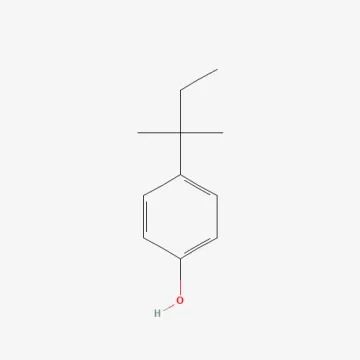
4-tert-pentylphenol
Description
Mode of action
4-tert-pentylphenol belongs to the alkylphenol group, which in agrochemical practice often acts as an adjuvant or an active component with antiseptic properties. Their mode of action is based on disrupting the integrity of pathogen cell cytoplasmic membranes.
The substance causes protein denaturation and inhibition of enzymatic processes essential for microorganism survival. Due to their lipophilic properties, the molecules easily penetrate through the protective walls of fungal spores and bacterial cells.
Within complex formulations, the compound can also act as a synergist, increasing the permeability of the leaf cuticle for main systemic pesticides. This allows for increased efficiency of active ingredients while reducing their overall dosage.
Alkylphenol-based formulations are capable of creating a short-term protective barrier on the surface of treated tissues. This prevents re-infection of crops by pathogenic agents present in the surrounding environment.
An important aspect is selectivity: when regulations are followed, the compound shows minimal phytotoxicity to cultivated plants. It effectively suppresses the metabolism of harmful agents without affecting the photosynthesis processes of the crop being treated.
What it targets
This group of compounds is used primarily as a broad-spectrum fungicide and antiseptic. The main objective is to control fungal diseases such as powdery mildew, various types of leaf spots, and rot.
It is effective against a wide range of phytopathogens, including members of the Ascomycetes and Deuteromycetes classes. Application is justified under high infection pressure when rapid suppression of spore activity is required.
It is actively used for disinfecting containers, tools, and greenhouse surfaces, where it is necessary to exclude the development of mold fungi. This is an important element of integrated pest management systems in protected cultivation.
It helps suppress the development of bacterial infections on the surface of seeds and fruits during storage. Use in post-harvest treatment helps to reduce crop losses caused by rot.
- Powdery mildew fungi
- Root and basal rots
- Seed mold
- Bacterial tissue infections
Rates and timing
The dosage of products is calculated based on the target pathogen and the crop's biological growth stage. Standard application rates vary from 0.5 to 2.0 liters of working solution per hectare for field treatments.
When used in greenhouses for surface disinfection, concentrations of 0.1% to 0.5% of the active ingredient are applied. It is important to ensure uniform wetting of the entire treated area to achieve maximum effect.
Application timing is strictly regulated: treatments should be carried out in the morning or evening hours in the absence of intense solar radiation. This prevents premature evaporation of the active components from the leaf surface.
To achieve prolonged action, repeated treatments are recommended at intervals of 10–14 days. It is important to rotate products with different modes of action to prevent the development of resistance.
It is not recommended to spray immediately before precipitation, as rainwater can wash off the active ingredient. The optimal time is during the period of active crop growth before the flowering stage.
Restrictions
4-tert-pentylphenol requires strict adherence to safety procedures when handling chemicals. Protection of the skin, respiratory tract, and eyes using specialized PPE is necessary.
The substance must not enter water bodies or sewage systems due to its toxicity to aquatic flora and fauna. After use, leftover solution must be disposed of in accordance with local regulations.
Storage should be carried out in the original packaging in a cool, dry place, inaccessible to children and animals. Joint storage with food and feed is not permitted.
Waiting periods before harvest must be taken into account: the use of this class of substances requires a break of 20–30 days after the last treatment. Failure to comply with deadlines may lead to excessive residue levels in produce.
Before full-scale application on new varieties, it is recommended to conduct a phytotoxicity test on a small plot. This will prevent possible leaf surface burns if the crop is sensitive.
Status in the European Union
Not approved in the EU
- CAS number
- 80-46-6
- Category (EU)
- BA - Bactericide
EU status is for reference only and does not replace national registration in your country.