

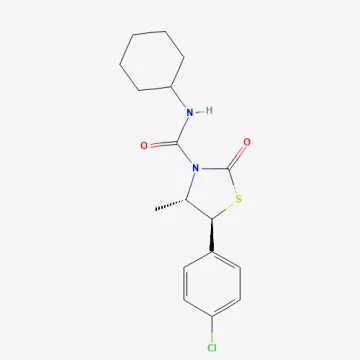
Description
Mode of action
Hexythiazox is a chemical substance belonging to the thiazolidine class. It acts as a specific acaricide with contact and stomach activity, focusing on physiological development rather than neurotoxic impact.
The primary mode of action is the inhibition of chitin synthesis. This disrupts the molting process, effectively preventing immature mites from developing into adults and eventually leading to their death.
A key characteristic of this compound is its high efficacy against mite eggs, larvae, and protonymphs. While it does not kill adult mites immediately, it renders them sterile, thereby stopping the reproductive cycle.
The substance exhibits translaminar movement, which allows it to penetrate leaf tissue and provide protection to parts of the plant that may not have been directly contacted by the spray solution.
Hexythiazox is known for its long residual control, often protecting crops for 30 to 40 days, which significantly reduces the need for frequent pesticide applications.
What it targets
Hexythiazox is widely used to control various phytophagous mites, particularly those belonging to the Tetranychidae (spider mites) and Eriophyidae families.
Target pests include the common spider mite, European red mite, citrus red mite, and various rust mites that affect diverse agricultural crops.
It is suitable for protecting fruit orchards, vineyards, soybean fields, vegetables grown in open or greenhouse environments, and various ornamental plants.
Due to its selective nature, it is an excellent tool for Integrated Pest Management (IPM) programs, as it generally has low toxicity towards beneficial insects and predatory mites.
Because it lacks a rapid "knock-down" effect on adult mites, it is often recommended to monitor pest populations closely and combine it with other knockdown acaricides if adult density is already high.
Rates and timing
Application rates for Hexythiazox typically range from 0.15 to 0.4 kg/ha, depending on the crop type, pest species, and the intensity of the infestation.
The most effective timing for application is at the onset of egg-laying. Early intervention is critical to curb population growth before extensive damage to the crop occurs.
It is essential to ensure thorough coverage of the plant canopy, paying close attention to the underside of the leaves, where mite eggs are most frequently deposited.
To prevent the development of resistance, it is generally advised to limit usage to one application per season. If further treatment is required, rotate with products having a different mode of action.
Mixing and application should be performed using clean water, and the pH of the solution should be checked to ensure optimal stability and efficacy of the active ingredient.
Restrictions
Operators handling Hexythiazox must wear appropriate personal protective equipment (PPE), including chemical-resistant gloves, eye protection, and protective clothing.
While the substance is generally categorized as low-toxicity to mammals and bees, care must be taken to prevent drift into non-target areas, sensitive habitats, or bodies of water.
Applications should be avoided during peak bee foraging hours and in windy conditions to minimize the risk of environmental contamination and off-target movement.
Storage should be in a cool, dry, and well-ventilated area, kept away from reach of children, livestock, and food items, strictly following local safety regulations.
In case of accidental contact or exposure, rinse the affected area with plenty of water for several minutes and consult a physician if any symptoms occur, ensuring the product label is available.
Content graph
Connections · Hexythiazox
Most often together:
Marketplace
Products · 12


Hexoran
Жеджианг Хебен Пестисайд енд Кемікалс Ко., Лтд., Китай
Insecticides
0
0
·
49
9 offers
79.96 €per 1 l
Buy


Prefect
Jiangsu Fengshan Group Co., Ltd, Китай, Nanjing Fengshan Chemical Co., Ltd, Китай.
Insecticides
0
0
·
57
No offers
—
Details
