
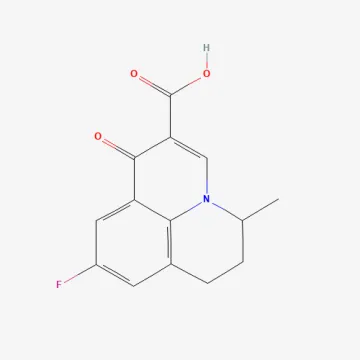
Flumequine
Description
Mode of action
Flumequine belongs to the second-generation quinolone (fluoroquinolone) class. Its primary role in agriculture involves suppressing bacterial activity and targeting specific fungal pathogens.
The mechanism of action is based on the inhibition of the DNA gyrase enzyme and topoisomerase IV, which are critical for the replication process of microbial DNA.
As a result of blocking these enzymes, DNA synthesis is halted, leading to the rapid death of the pathogen cell and preventing the infection process from spreading in plant tissues.
The substance possesses systemic properties, allowing it to move effectively through the plant's vascular system after application.
Due to its high selectivity, the product is useful for the prevention and treatment of bacterial diseases, inhibiting pathogen multiplication even at early stages of symptom development.
What it targets
The substance exhibits activity against a wide range of gram-negative bacteria that affect various agricultural crops.
It is particularly effective against phytopathogenic bacteria of the Erwinia, Pseudomonas, and Xanthomonas genera, which cause leaf spots and rot.
It is used for protecting fruit and berry crops, as well as vegetables in open and greenhouse conditions, from bacterial blight and vascular bacteriosis.
The agent is also used in complex seedling protection programs against various types of bacterial "black leg" diseases.
The spectrum of action covers most pathogens that attack the root system and aerial parts of plants under high humidity conditions.
Rates and timing
The application rates of flumequine depend on the specific formulation and the target crop, so strictly following the manufacturer's guidelines is essential.
Applications are typically carried out preventively or at the first signs of disease appearance during the active growing season.
The working solution must ensure thorough wetting of the leaf surface, especially on the underside, where infection sites often accumulate.
The interval between repeated applications generally ranges from 7 to 14 days, depending on the severity of the disease and local weather conditions.
It is not recommended to exceed the maximum number of treatments per season to prevent the development of resistance in pathogen populations.
Restrictions
Flumequine requires strict adherence to safety measures during handling, as it is a biologically active compound.
Personal protective equipment for skin, respiratory organs, and eyes must be used when preparing and applying the working solution.
An important limitation is the pre-harvest interval, which must be strictly observed to ensure the safety of agricultural produce.
Discharge of product residues into water bodies or drainage systems must be avoided due to their potential impact on aquatic microflora.
The product must be stored in its original packaging in a dry, cool place out of reach of children and animals.
Status in the European Union
Not approved in the EU
- CAS number
- 42835-25-6
- Category (EU)
- BA - Bactericide
EU status is for reference only and does not replace national registration in your country.