
Description
Mode of action
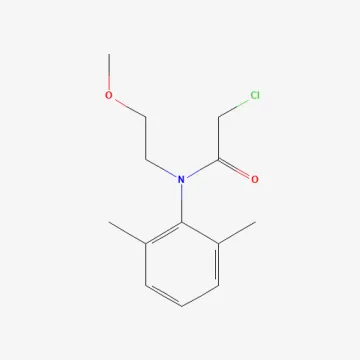
Dimethachlor belongs to the chloroacetanilide chemical class. It is a highly effective active ingredient that exhibits systemic activity, affecting cell division and protein synthesis processes in germinating weeds.
The mechanism of action is based on the inhibition of meristematic tissue growth. The substance is actively absorbed by weed seedlings and roots before they even emerge on the soil surface.
Once inside the plant, dimethachlor blocks the enzymatic processes responsible for the development of primary roots and shoots. As a result, weeds die during the germination phase, failing to compete with crops for nutrients and light.
The product has a pronounced soil action, creating a protective barrier in the top layer of the ground. Its effectiveness directly depends on sufficient soil moisture, which is necessary for the activation of the active molecules.
Due to its chemical structure, the substance has high selectivity, allowing the protection of the crop during the critical early development phase and ensuring a clean start for the fields.
What it targets
Dimethachlor is primarily used as a pre-emergence herbicide to control a wide range of annual grass weeds and certain broad-leaved weed species.
The list of controlled species includes the most common weeds infesting oilseed crops, such as barnyard grass, loose silky-bent, black-grass, and various species of goosefoot.
The efficacy of the product against broad-leaved weeds depends on the specific biological characteristics of the weeds and the concentration of the active ingredients in the soil solution.
The product is most active against actively growing seedlings at the moment they pass through the pesticide-treated soil layer.
- Barnyard grass (Echinochloa crus-galli)
- Loose silky-bent (Apera spica-venti)
- Goosefoot species (Chenopodium spp.)
- Black-grass (Alopecurus myosuroides)
Rates and timing
The use of dimethachlor is restricted by strict regulations tied to the crop growth stage and soil conditions. Application must be carried out exclusively before the crop emerges.
The application rate of the active ingredient varies depending on the soil type: it is higher on heavy loamy soils due to adsorption processes, and lower on light soils to prevent phytotoxicity.
An important condition for application is the availability of sufficient soil moisture. Under drought conditions, the effectiveness of the treatment may decrease significantly, necessitating further agrotechnical measures.
Application timing is strictly limited to the sowing period. The optimal period is immediately after sowing, but no later than 3-5 days before the crop's mass germination.
To achieve maximum results, the soil must be well-prepared and free of large clods to ensure even distribution of the working solution over the surface.
Restrictions
Dimethachlor requires strict adherence to safety measures. When handling the product, personal protective equipment for the respiratory tract, skin, and eyes must be used.
Application near water bodies and livestock grazing areas is prohibited due to potential environmental risks and the danger of residue accumulation in the ecosystem.
Crop rotation should be considered when using the product. Although the substance degrades relatively quickly in the soil, caution should be exercised when planting sensitive crops the following year.
It is not recommended to apply the product during strong winds to avoid drift of the working solution onto neighboring fields or areas with sensitive vegetation.
Storage must be carried out in specialized, dry warehouse facilities at temperatures that prevent freezing or overheating of the product's formulations.
Regulatory
Status in the European Union
Approved in the EU
- CAS number
- 50563-36-5
- Approved from
- 01.01.2010
- Approval until
- 15.10.2026
- ADI
- 0.1 mg/kg bw/day
- ARfD
- 0.5 mg/kg bw
- AOEL
- 0.1 mg/kg bw/day
Hazard classification (CLP)
Acute Tox. 4 - H302Aquatic Acute 1 - H400Aquatic Chronic 1 - H410Skin Sens. 1 - H317
EU legislation
EU status is for reference only and does not replace national registration in your country.
Reference
Connections · Dimethachlor
Most often together:
Marketplace