

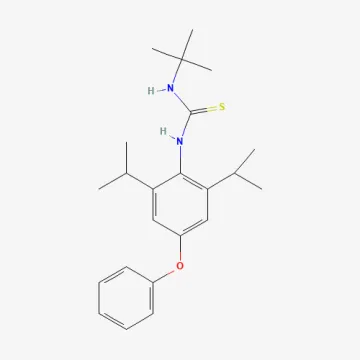
Description
Mode of action
Diafenthiuron belongs to the thiourea chemical class. It is a unique active ingredient that acts as a pro-insecticide: inside the pest's body, activated by sunlight or specific enzymes, it converts into a potent metabolite known as carbodiimide.
The mechanism of action involves the inhibition of oxidative phosphorylation in the mitochondria of pests. This process stops the production of ATP, which leads to paralysis of the nervous system and the rapid death of the insect or mite.
This substance exhibits contact, stomach, and moderate fumigant action. It is capable of penetrating leaf tissues, providing long-lasting protection even for parts of the plant that were not directly reached by the spray solution.
A key feature of diafenthiuron is its high efficacy against all mobile stages of mite development, including nymphs, larvae, and adults. It also suppresses the development of eggs, which is crucial for preventing population explosions.
Diafenthiuron does not cause cross-resistance in pests that have developed immunity to other insecticide classes like organophosphates or pyrethroids, making it an essential tool for anti-resistance integrated pest management programs.
What it targets
This substance is highly effective against a wide spectrum of phytophagous pests, particularly those from the order Hemiptera and various mite species. The primary targets include different types of whiteflies, aphids, and thrips.
The compound is particularly valuable in the fight against spider mites (Tetranychidae), which are notorious for rapidly developing resistance to most other acaricides. Its use ensures reliable control on vegetable and fruit crops.
- Greenhouse and tobacco whitefly
- Spider mites at all developmental stages
- Various species of aphids
- Thrips during the growing season
Applying the product is recommended in intensive crop cultivation technologies, both in protected and open field conditions, where high pest population density is observed.
Due to its ability to penetrate the plant epidermis, diafenthiuron provides excellent protection against hidden pests that prefer to feed on the underside of the leaf surface.
Rates and timing
Application rates vary depending on the level of crop infestation, the type of pest, and the cultivation system. Typically, spray solutions with an active ingredient concentration of 0.05–0.1% are utilized.
To achieve the maximum effect, applications should be performed at the very first signs of pest infestation. It is critical to ensure thorough coverage of all plant parts, especially the undersides of leaves where mite colonies and whiteflies often congregate.
The frequency of application is determined by the economic threshold of damage. In greenhouse settings, the interval between treatments ranges from 7 to 14 days, allowing for the control of successive generations emerging from eggs.
Pre-harvest intervals (PHI) generally range from 10 to 20 days. When planning treatments, it is essential to consult the specific regulatory guidelines for the target crop and geographical region.
Preparation of the working solution must be carried out according to the manufacturer's instructions for the specific product, ensuring proper water quality and pH balance to maintain the stability of the diafenthiuron molecule.
Restrictions
Diafenthiuron is moderately toxic to humans and warm-blooded animals. Proper personal protective equipment (gloves, goggles, respirators) must be worn during handling to prevent skin and mucosal contact.
The substance can be toxic to bees and other beneficial insects; therefore, it is strongly advised against spraying during the peak flowering season or in areas where pollinators are actively present.
Avoid spray drift onto neighboring crops and water bodies. Strict regulations apply regarding sanitary protection zones and water conservation areas when working with this class of pesticides.
To prevent the development of pest resistance, diafenthiuron should be rotated with insecticides from different chemical groups that utilize alternative modes of action.
The product should be stored in dry, cool warehouse conditions, kept away from children and animals, and maintained in its original packaging while strictly adhering to specified temperature ranges.
Regulatory
Status in the European Union
Not approved in the EU
- CAS number
- 80060-09-9
- Category (EU)
- IN - Insecticide
EU legislation
EU status is for reference only and does not replace national registration in your country.
Content graph
Connections · Diafenthiuron
Most often together:
Marketplace