

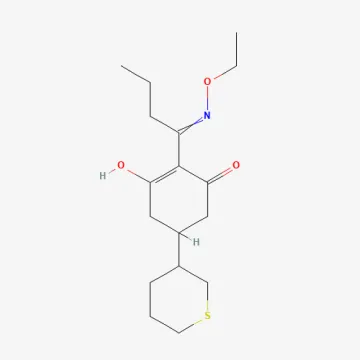
Description
Mode of action
Cycloxydim belongs to the cyclohexanedione chemical class and acts as a highly effective systemic herbicide with selective properties. The active ingredient is primarily absorbed by the foliage of weeds and is rapidly translocated through the phloem to the points of active growth.
The mode of action is based on the inhibition of the enzyme acetyl-CoA carboxylase (ACCase). This enzyme is a critical component in lipid biosynthesis, responsible for the formation of fatty acids in the cells of grasses.
As a result of blocking fatty acid synthesis, the integrity of cell membranes is compromised, which leads to the cessation of weed growth within just a few hours after application.
Complete mortality of susceptible grass species occurs within 1 to 3 weeks, depending on environmental conditions and the developmental stage of the weeds.
The active substance exhibits high selectivity, allowing it to be safely applied to broad-leaved crops without the risk of phytotoxicity.
What it targets
Cycloxydim-based products are utilized for the control of a broad spectrum of annual and perennial grass weeds in agricultural fields.
The primary targets include difficult-to-control species such as couch grass (Agropyron repens), barnyard grass, foxtail, wild oats, and other grassy weeds.
Applications are most effective in broad-leaved crop systems, including sugar beets, soybeans, sunflowers, flax, onions, carrots, and rapeseed.
It is important to note that cycloxydim has virtually no effect on broad-leaved weeds; therefore, it is often combined with other herbicides in spray programs to achieve comprehensive control.
- Couch grass (Elymus repens)
- Barnyard grass (Echinochloa crus-galli)
- Green and yellow foxtail
- Wild oats (Avena fatua)
- Black-grass
Rates and timing
Application rates of the active ingredient depend on the species composition and the density of weed infestation, typically ranging from 0.5 to 1.5 liters of formulated product per hectare.
The optimal growth stage for treating annual grasses is the 2- to 4-leaf stage, whereas perennial grasses (like couch grass) should be treated when they reach 10–15 cm in height.
The addition of adjuvants or surfactants is mandatory to improve leaf surface wetting and accelerate the penetration of the active ingredient into the plant tissue.
It is recommended to apply the herbicide in dry conditions, avoiding periods with dew, and at temperatures between +15°C and +25°C.
Inter-row cultivation should be avoided for 5–7 days before or after application to ensure that the systemic translocation process within the weed is not interrupted.
Restrictions
Cycloxydim is classified as a moderately hazardous compound for warm-blooded animals, requiring strict adherence to standard pesticide safety protocols during handling.
The use of personal protective equipment (PPE) for the skin, respiratory system, and eyes is mandatory during the preparation of the spray solution and the application process.
The product must not be allowed to enter water bodies, as it can have adverse effects on aquatic organisms.
Products should be stored in their original factory packaging in dry, cool warehouse conditions, kept away from children and animals.
After application, all spraying equipment must be thoroughly cleaned to prevent any risk of cross-contamination or injury to sensitive crops during subsequent use.
Regulatory
Status in the European Union
Approved in the EU
- CAS number
- 101 205-02-1
- Approved from
- 01.06.2011
- Approval until
- 31.08.2026
- ADI
- 0.07 mg/kg bw/day
- ARfD
- 2.0 mg/kg bw
- AOEL
- 0.1 mg/kg bw/day
Hazard classification (CLP)
Repr. 2 - H361d
EU status is for reference only and does not replace national registration in your country.
Content graph
Connections · Cycloxydim
Most often together:
Marketplace
Products · 2
