

Exirel
«Дюпон Інтернешнл Оперейшнз Сарл», Швейцарія
Insecticides
0
0
·
60
4 offers
121.95 €per 1 l
Buy
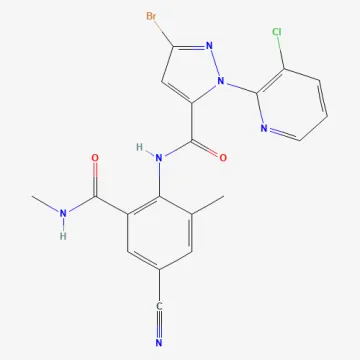
Cyantraniliprole is a systemic insecticide belonging to the anthranilic diamide chemical class. It acts primarily by binding to and activating insect ryanodine receptors, which leads to the uncontrolled release of calcium stores from muscle cells.
This rapid loss of calcium regulation causes insects to stop feeding almost immediately after ingestion or contact with the product. Paralysis follows within a few hours, leading to the eventual death of the pest within 1 to 3 days.
The compound exhibits excellent xylem-systemic mobility, allowing it to move throughout the plant and protect both existing foliage and new growth. This property is crucial for controlling pests that reside inside leaves or fruit.
Cyantraniliprole provides long-lasting control due to its ability to accumulate within plant tissues. Its unique mode of action makes it an essential tool for managing pests that have developed resistance to older insecticides like organophosphates or pyrethroids.
It is generally considered to have a favorable profile for many beneficial insects and natural enemies, making it a valuable component of Integrated Pest Management (IPM) programs worldwide.
This substance is highly effective against a broad range of lepidopteran, coleopteran, and dipteran pests. It is particularly renowned for its success in controlling leafminers and various types of moth larvae.
Cyantraniliprole is widely utilized for protecting vegetable crops in both open-field and greenhouse conditions, including tomatoes, peppers, cucumbers, and brassicas. It is also effective in orchard management against codling moths and leafrollers.
Additionally, it demonstrates significant efficacy against certain sucking pests, such as whiteflies and thrips, which are notoriously difficult to control with conventional products.
The product's ability to penetrate plant tissue helps manage pests that are sheltered from direct contact sprays, such as internal feeders. By suppressing early larval stages, it effectively disrupts the pest's reproductive cycle.
Application rates for cyantraniliprole vary significantly based on the crop type, pest pressure, and local climate conditions. Generally, usage ranges from 0.2 to 0.8 liters of formulated product per hectare.
When applied through drip irrigation systems (chemigation), application rates should be calibrated to ensure uniform distribution in the root zone. Pre-harvest intervals (PHI) typically range from 3 to 14 days, depending on the crop and regional regulations.
Timing of application is critical; the best results are achieved when the product is applied at the onset of pest infestation or according to threshold-based monitoring programs. Thorough coverage is essential for leaf-applied treatments.
To preserve the longevity of the compound and prevent the buildup of pest resistance, it should be used in rotation with insecticides that possess different modes of action.
Always calibrate spraying equipment before application to ensure the correct dosage per area. Mixing with other pesticides should be done only after verifying physical compatibility through a jar test.
Cyantraniliprole is toxic to certain pollinators; therefore, it should not be applied when bees are actively foraging in the crop. Strict adherence to buffer zones and application timing is mandatory near flowering crops.
Avoid applying the product under extreme weather conditions, such as high heat or strong winds, which can lead to rapid evaporation or off-target spray drift. Use appropriate nozzles to ensure a fine yet manageable droplet size.
Operators must wear appropriate personal protective equipment (PPE), including gloves, long-sleeved clothing, and face protection, to minimize exposure during mixing and application processes.
Environmental precautions include preventing spray runoff into ponds, streams, or drainage systems, as the compound can be hazardous to aquatic invertebrates.
Always store the product in its original, sealed container in a cool, dry, and well-ventilated area, away from the reach of children, livestock, and food supplies.
Approved in the EU
EU status is for reference only and does not replace national registration in your country.


