

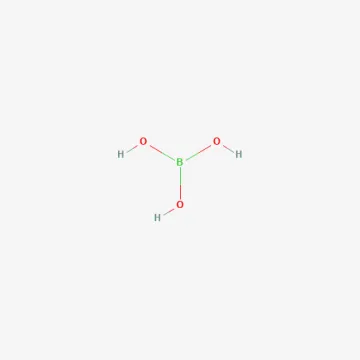
Description
Mode of action
Boric acid is an inorganic compound widely utilized in agriculture as a vital micronutrient and a mild antiseptic agent. It plays a foundational role in plant metabolism, specifically in the development of cell walls and the synthesis of essential proteins.
The primary mechanism of action involves facilitating the transport of sugars across cell membranes, which ensures that carbohydrates are efficiently distributed from leaves to fruits and roots. This process is critical for maximizing crop yield and quality.
Beyond its nutritional role, boric acid acts as an antiseptic that helps create an unfavorable environment for certain fungal and bacterial pathogens. It supports the plant's structural integrity, making it less susceptible to infections.
The compound is essential for the reproductive success of plants. It stimulates pollen germination and tube growth, ensuring effective fertilization. A deficiency in boron directly correlates with poor seed set and reduced fruit production.
Boron mobility within the plant is relatively low, making foliar applications of boric acid highly effective. By applying it directly to the foliage, growers can bypass soil immobilization issues and provide immediate relief to plants during active growth phases.
What it targets
The main objective of applying boric acid is to prevent and treat boron deficiency. Symptoms of this condition include stunted growth, chlorosis, and the death of terminal buds, which can severely compromise the plant's architecture.
It is specifically used to prevent internal cork, fruit cracking, and the malformation of tubers or roots. Boron deficiency often leads to hollow hearts in root vegetables, which significantly reduces their market value.
Crops that are high consumers of boron benefit the most from supplementation. Vegetables like tomatoes, peppers, and brassicas, as well as fruit trees like apples and pears, show marked improvements in productivity when treated.
- Vegetables: tomatoes, beets, cauliflower, peppers.
- Orchards: apples, pears, grapes.
- Berries: strawberries, raspberries.
- Field crops: sunflowers, sugar beets.
In addition to deficiency correction, it is employed as a general stress-relief agent, helping plants recover from temperature-related physiological stress during the flowering and fruit-setting stages.
Rates and timing
For foliar applications, a solution with a concentration ranging from 0.02% to 0.05% is typically used. This involves dissolving 2 to 5 grams of boric acid in 10 liters of water, depending on the crop's sensitivity and boron requirements.
The timing of the application is crucial; it should ideally be performed during the bud development stage and the onset of flowering. These are the peak periods when the plant requires supplemental boron for reproductive health.
Seed treatment is another common practice, using a 0.02% solution (0.2g per liter) for soaking. This enhances germination energy and promotes strong, healthy seedling emergence early in the season.
If applied as a soil drench, the concentration must be carefully controlled to prevent toxic accumulation. It is usually applied near the root zone but should not come into direct contact with the stem to prevent chemical injury.
Frequency should be limited to 2–3 applications per season to avoid toxicity. Always verify the boron levels in the soil before embarking on a rigorous application schedule.
Restrictions
The primary limitation is the narrow margin between sufficiency and toxicity. Boric acid is highly phytotoxic at high concentrations, often causing leaf burn and premature leaf drop if applied incorrectly.
Applications must be scheduled during calm, cool weather, ideally in the early morning or late evening. Applying in bright sunlight can create a lens effect with the spray droplets, resulting in severe tissue necrosis.
Personnel must wear personal protective equipment, including gloves and respirators, during preparation and application. While not highly toxic, ingestion or prolonged contact with boric acid should be avoided.
Boric acid is incompatible with highly alkaline substances, which can cause precipitation and reduce the compound's bioavailability. Always test the pH of the water before mixing to ensure optimal stability.
The substance should be stored in a cool, dry place away from food or animal feed. Leftover working solutions should be discarded safely and should not be stored for future use due to the risk of crystallization or contamination.
Regulatory
Status in the European Union
Not approved in the EU
- CAS number
- 10043-35-3
- Category (EU)
- IN - Insecticide
Hazard classification (CLP)
Repr. 1B - H360FD
EU legislation
EU status is for reference only and does not replace national registration in your country.
Content graph
Connections · Boric acid
Most often together:
Marketplace
Products · 2
KOMPLEKSNIY PRIPARAT «ADAPTOFIT», RK, REGULYaTOR ROSTU ROSLIN
High Yield
Plant Growth Regulator
0
0
·
59
No offers
—
Details