

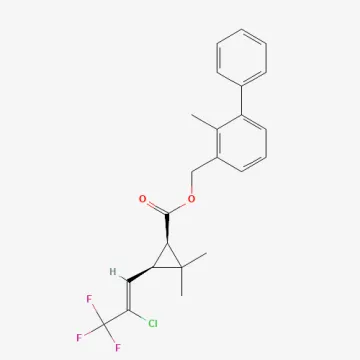
Description
Mode of action
Bifenthrin belongs to the chemical class of type II synthetic pyrethroids and possesses strong contact and stomach action against a wide range of insects and mites.
The mechanism of action of the substance is based on disrupting cell membrane permeability and blocking sodium channels in the nerve cells of pests.
As a result of the active component's impact, excessive membrane depolarization occurs, causing paralysis of the nervous system and rapid death of the organism.
Formulations based on bifenthrin have a long residual effect, which allows for effective control of pest populations for several weeks after application.
An important feature of the substance is the combination of insecticidal and acaricidal properties, making it a versatile tool in integrated pest management systems.
What it targets
This active substance is actively used to control sucking and chewing pests, as well as phytophagous mites.
The main spectrum of targets includes Lepidoptera, Coleoptera, Orthoptera, and Hemiptera, which cause damage to field and vegetable crops.
Bifenthrin effectively eliminates:
- aphids and whiteflies;
- spider mites;
- locusts;
- leafrollers and codling moths;
- weevils and plant bugs.
The application of the product is justified in cases of high pest density, when a rapid reduction of their population in the area is required.
Due to its high lipophilicity, the substance adheres well to the leaf surface, providing crop protection even when exposed to environmental factors.
Rates and timing
The timing of applications is determined by the economic threshold of the specific pest and the development stage of the crop being protected.
The working solution is prepared immediately before application with thorough stirring to ensure an even concentration of the active ingredient.
It is important to evenly cover the leaf surface of plants, as bifenthrin does not have systemic properties and acts only upon contact.
The frequency of treatments per season is strictly regulated to prevent the development of pest resistance to the pyrethroid group of preparations.
Application rates vary depending on the crop type, planting density, and the intensity of infestation by a specific pest species.
Restrictions
Bifenthrin poses a high risk to bees and other beneficial insects, therefore treatments during the flowering period are strictly prohibited.
When working with the substance, it is necessary to use personal protective equipment for respiratory, skin, and eye protection, following the manufacturer's instructions.
Drift of the product to adjacent fields and the entry of the working solution into water bodies are not allowed, as the substance is highly toxic to fish and aquatic organisms.
To prevent the development of resistance, it is recommended to rotate the use of bifenthrin with insecticides from other chemical classes.
Adherence to the regulated pre-harvest intervals is a mandatory condition to ensure the food safety of the harvested produce.
Content graph
Connections · Bifenthrin
Most often together:
Marketplace