

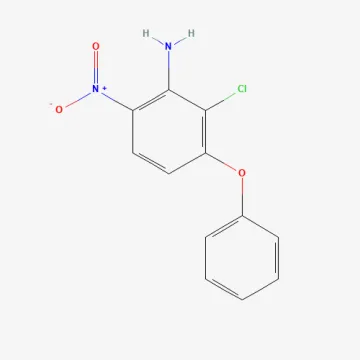
Description
Mode of action
Aclonifen belongs to the diphenyl ether chemical class and functions as a selective pre-emergence herbicide. Its primary mode of action involves the inhibition of carotenoid biosynthesis, which prevents the development of functional chlorophyll in emerging weeds.
The substance is absorbed by the coleoptile and hypocotyl of germinating seedlings rather than through the root system. This specific uptake mechanism ensures that the herbicide targets the weeds effectively as they push through the treated soil layer.
By blocking the synthesis of essential pigments, aclonifen protects chlorophyll from photo-oxidation. When seedlings reach the surface and are exposed to light, they lose their green coloration, become bleached, and perish shortly thereafter.
The efficacy of aclonifen relies on the formation of a stable herbicide barrier on the soil surface. A uniform coverage is essential, as gaps in the barrier can allow weeds to emerge without coming into contact with the active ingredient.
Aclonifen is characterized by low soil mobility and minimal leaching, making it a stable tool for weed control that remains localized in the upper soil profile where most weed seeds germinate.
What it targets
Aclonifen is highly effective against a broad spectrum of annual broad-leaved weeds and some grass species. It serves as a vital component in resistance management programs due to its distinct mode of action.
Key target weeds include species such as Chenopodium album (lamb's quarters), Amaranthus spp. (pigweed), Polygonum spp. (knotweed/smartweed), Capsella bursa-pastoris (shepherd's purse), and various Matricaria (mayweed) species.
It is widely used in crops like sunflowers, potatoes, and various legumes to manage early-season weed pressure that competes with young crop plants for nutrients and moisture.
The herbicide is particularly effective at controlling weeds that sprout from the top few centimeters of the soil. It suppresses the growth of these weeds effectively, ensuring the crop has a competitive advantage during the establishment phase.
While it is primarily directed at broad-leaved weeds, it also provides significant suppression of other competitive species, helping to maintain fields clean throughout the critical period of crop growth.
Rates and timing
Application rates for aclonifen are determined based on soil texture, organic matter content, and the expected weed spectrum. Rates typically range from 2.0 to 4.0 liters per hectare depending on the product formulation.
The optimal application timing is pre-emergence, specifically after planting but before the crop emerges. This timing ensures that the herbicide barrier is in place before the first flush of weeds appears.
Seedbed preparation is crucial for success. A fine, clod-free soil surface is necessary to ensure an even distribution of the herbicide barrier and to maximize its contact with weed seedlings.
Soil moisture plays an important role in the activation of the herbicide. Sufficient moisture is required for the substance to be available to the emerging weed shoots, though excessive rainfall immediately after application should be avoided.
On light, sandy soils, lower rates are recommended to ensure crop safety, whereas on heavier or high-humus soils, higher rates may be utilized to achieve the desired level of weed control efficacy.
Restrictions
The primary restriction is that aclonifen must never be applied after crop emergence. Post-emergence application can cause significant phytotoxicity, leading to severe chlorosis, necrosis, and potentially irreversible damage to the crop.
Mechanical operations such as harrowing or inter-row cultivation must be avoided after application. Disturbing the soil breaks the herbicide barrier, potentially bringing untreated weed seeds to the surface and undermining the control achieved.
The product should be stored in a cool, dry place, away from direct sunlight and extreme temperatures, in its original, sealed container to maintain its stability and effectiveness over time.
Users must adhere to local regulations regarding personal protective equipment (PPE). Handling should involve wearing gloves, eye protection, and long-sleeved clothing to prevent skin and respiratory exposure.
Care should be taken to prevent spray drift toward neighboring non-target crops or aquatic ecosystems. Observing mandatory buffer zones near waterways is essential for environmental stewardship and compliance with labels.
Regulatory
Status in the European Union
Approved in the EU
- CAS number
- 74070-46-5
- Approved from
- 01.08.2009
- Approval until
- 31.10.2026
- ADI
- 0.07 mg/kg bw/day
- ARfD
- Not appl.
- AOEL
- 0.07 mg/kg bw/day
Hazard classification (CLP)
Aquatic Acute 1 - H400Aquatic Chronic 1 - H410Carc. 2 - H351Skin Sens. 1A - H317
EU status is for reference only and does not replace national registration in your country.
Content graph
Connections · Aclonifen
Most often together:
Marketplace
Products · 11


KAULIS, KS (aclonifen, 600 g/L)
ТОВ «Фабрика агрохімікатів», Черкаси, Україна
Herbicides
0
0
·
30
1 offer
16.75 €per 1 l
Buy


