Description
Mode of action
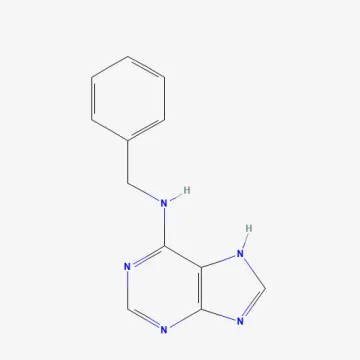
6-benzyladenine belongs to the class of synthetic cytokinins, which are fundamental plant hormones responsible for regulating various physiological processes, primarily the stimulation of cell division.
The substance works by activating the synthesis of essential proteins and nucleic acids, which facilitates the reactivation of dormant buds and promotes the development of lateral shoots.
Unlike auxins, 6-benzyladenine effectively suppresses apical dominance, allowing for better distribution of nutrients to secondary growth points and enhancing the overall architecture of the plant.
It also plays a crucial role in improving fruit development by increasing the transport of sugars and amino acids, which results in larger, more uniform fruits with improved storage life.
Additionally, 6-benzyladenine slows down leaf senescence by delaying the breakdown of chlorophyll, effectively extending the plant's active photosynthetic window throughout the season.
What it targets
In commercial orchards, it is primarily used on pome fruits like apples and pears to improve branch formation, tree canopy density, and the induction of flower buds.
Vegetable growers utilize this regulator to enhance the growth and quality of greenhouse crops, such as cucumbers and tomatoes, ensuring better marketability and fruit size.
It is extensively used in plant tissue culture (in vitro) to promote shoot proliferation and regeneration, which is vital for the mass production of disease-free planting material.
In viticulture, 6-benzyladenine helps manage cluster density and increase berry size, significantly boosting the economic value of table grape production.
Ornamental plant producers use it to encourage branching and improve the aesthetic quality of foliage and flowers, resulting in higher-grade marketable plants.
Rates and timing
Application rates must be strictly followed based on the crop growth stage and intended goal, as excessive concentrations can lead to morphological abnormalities in leaves or shoots.
Applications are typically scheduled during periods of active vegetative growth, avoiding extreme weather conditions like high heat or intense sunlight which may compromise absorption.
The substance is often applied as a foliar spray or through irrigation systems, depending on the specific crop requirements and the need for localized or systemic effects.
To maximize effectiveness, it is often used in combination with other regulators like gibberellins, creating a synergistic effect on plant height and reproductive growth.
It is recommended to monitor soil moisture and plant health prior to application, as optimal growth response requires healthy, well-nourished plants.
Restrictions
As a potent growth regulator, 6-benzyladenine should be used only after evaluating the physiological state of the crop to avoid undesirable growth deviations.
It does not possess fungicidal, insecticidal, or herbicidal properties and should not be confused with traditional crop protection products intended for pest or disease control.
Users must adhere to standard safety protocols, including wearing personal protective equipment, to prevent skin contact and inhalation of concentrated solutions.
Proper storage is essential; containers must be kept in a cool, dark environment to maintain the chemical stability and biological efficacy of the product over time.
Disposal of empty containers and washings must comply with local environmental regulations to prevent contamination of soil and water resources.
Regulatory
Status in the European Union
Approved in the EU
- CAS number
- 1214-39-7
- Approved from
- 01.06.2011
- Approval until
- 15.01.2030
- ADI
- 0.01 mg/kg bw/day
- ARfD
- Not appl.
- AOEL
- 0.03 mg/kg bw/day
EU status is for reference only and does not replace national registration in your country.
Content graph
Connections · 6-Benzyladenine
Most often together:
Marketplace
Products · 4