

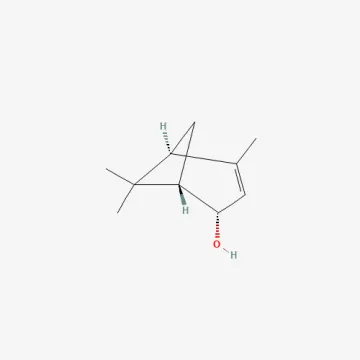
Description
Mode of action
Cis-verbenol belongs to the terpenoid class and serves as an aggregation pheromone for various insect species, primarily beetles (Coleoptera). In plant protection systems, it acts as a biologically active substance that mimics the communication signals of the same species.
The mechanism of action is based on the chemical stimulation of insect receptors. By being released into the environment, the substance creates a persistent attractive background that guides insects to a specific location where a trap or barrier has been installed.
Unlike traditional insecticides, this compound possesses no direct toxicity to the pest. It effectively exploits reproductive or foraging instincts to manage population migration within forest stands.
The use of cis-verbenol in pheromone dispensers allows for selective monitoring. This significantly reduces the burden on the ecosystem, as the impact is directed only toward specific target phytophagous insect species.
The application of this component relies on the insects' ability to detect ultra-low concentrations of the pheromone in the air. This makes it an indispensable tool in integrated pest management (IPM) systems.
What it targets
The primary targets are stem pests of coniferous trees, particularly members of the Scolytidae family, including the European spruce bark beetle and other wood-boring beetles.
Cis-verbenol-based products are used to protect spruce, pine, and fir plantations. They are effective against species that utilize this substance to locate weakened trees or select sites for mass infestation.
Application is appropriate in pest breeding hotspots where population density control is required. It is also used to prevent the expansion of insects into healthy areas of forest stands.
The substance can be used as a standalone attractant or in combination with other terpenes, such as verbenone or ipsenol, to create a synergistic effect and broaden the range of attracted species.
This compound is used less frequently against agricultural crop pests, with its primary niche being forestry and the protection of seed orchards from damage by stem insects.
Rates and timing
Application rates are determined by the design of the pheromone trap and the type of dispenser. Typically, one dispenser lasts throughout the entire insect flight season, as the release rate of the substance is strictly controlled.
Trap placement timing is aligned with the phenological period of adult activity. In temperate climates, this coincides with air temperatures reaching levels that trigger mass emergence and dispersal of bark beetles.
Trap inspection is conducted at 7–14 day intervals, depending on the intensity of insect flight. Upon reaching critical catch thresholds, decisions are made regarding sanitary logging or other control measures.
To prevent "habituation" or reduced attractiveness, manufacturer recommendations for replacing consumables must be followed. Improper storage of pheromones can lead to rapid degradation and loss of biological activity.
In forestry practice, it is important to consider the spatial arrangement of traps. They are placed in open areas or forest edges to ensure effective area coverage under prevailing wind directions.
Restrictions
The main limitation is the narrow specialization of the substance. It does not affect pests with different communication mechanisms, so accurate entomological monitoring of the species composition is necessary before use.
Precautionary measures include storing pheromones in airtight packaging in a cool place, away from food and direct sunlight. Dispensers should not be handled with bare hands to avoid disrupting the chemical composition of the bait.
The efficacy of the product depends significantly on weather conditions. Heavy rain, extreme temperature fluctuations, or high winds can reduce attractant concentration in the air and, consequently, lower trapping performance.
Strict adherence to usage protocols is necessary to avoid uncontrollable influx of insects from neighboring areas if the trapping system cannot cope with massive swarming (the "draw-in" effect of pests).
Working with pheromones requires high standards of field hygiene. Using dirty hands or contaminated equipment can lead to cross-contamination, which renders the pheromone trap ineffective for insects.
Regulatory
Status in the European Union
Not approved in the EU
EU legislation
EU status is for reference only and does not replace national registration in your country.
Content graph
Connections · Cis-verbenol
Most often together:
Marketplace