

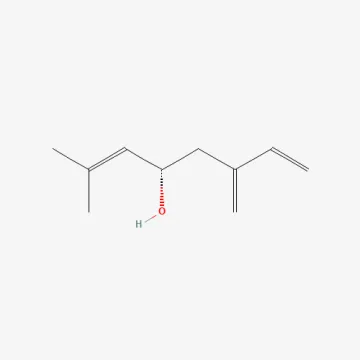
Description
Mode of action
Ipsdienol belongs to the class of terpene alcohols and is a key component of the aggregation pheromones of many bark beetle species. The substance mimics natural signals that insects use to find mates and congregate on a food source.
The mechanism of action is based on attracting individuals of both sexes to an odor source. As part of crop protection products, ipsdienol is used in synthetic form for disorientation or targeted collection of pests in pheromone traps.
Using this component allows agronomists and forestry experts to monitor pest populations in specific areas. The high species specificity of the substance minimizes the risk of impact on beneficial entomophages.
The substance acts by evaporating the active component from a dispenser. In forest areas, this creates a stable "pheromone plume" that overrides the natural signals of trees weakened by drought or disease.
The use of pheromone compositions with ipsdienol helps to timely detect the beginning of mass bark beetle reproduction. This is critical for making decisions about sanitary logging in forest management.
What it targets
The primary targets for the use of ipsdienol are members of the Scolytinae subfamily, in particular bark beetles of the genus Ips. The most significant target for control is the spruce bark beetle and other species that damage conifers.
Products based on this active ingredient effectively attract insects that attack spruce, pine, and fir. Ipsdienol is particularly effective when combined with other pheromones, such as ips-dienol or cis-verbenol, which enhances the synergistic effect.
The use of traps allows for reducing the load on stands through mass trapping of adults during their spring and summer flight periods. This prevents the colonization of new areas of healthy forest.
Ipsdienol is also used in research to assess population dynamics in protected areas. This allows for predicting pest outbreaks without the use of toxic, broad-spectrum insecticides.
The monitoring system using ipsdienol is suitable for territories where spraying of chemical pesticides is prohibited, ensuring the ecological safety of forest ecosystems.
Rates and timing
Application timing is strictly tied to the phenological phases of pest development. Traps are placed in the forest immediately before the start of the adult flight period, usually when the average daily air temperature reaches above 12–15 degrees Celsius.
The application rate of the product is determined by the type of dispenser and the intensity of the infestation in the area. Usually, one dispenser is sufficient for the entire flight season, but regular checks of trap capacity are required.
It is recommended to set traps at a distance of at least 20–50 meters from valuable groups of healthy trees to avoid provoking insect landings on live plants. Ideally, traps are placed in open clearings.
The frequency of trap maintenance depends on weather conditions and the speed of accumulation. During peak flight periods, it is necessary to clean containers of dead insects at least once a week to maintain effectiveness.
It is important to note that pheromone traps are not a means of total population extermination. They serve as a tool for control and monitoring that should be combined with other forest management methods.
Restrictions
The main limitation is seasonality: outside the bark beetle flight period, the use of ipsdienol is pointless. The substance is sensitive to extreme temperatures, so dispensers should be stored in a cool place in airtight packaging.
It is forbidden to place pheromone traps in the immediate vicinity of young or heavily weakened trees, as this can lead to a "concentration effect" and their additional damage by pests.
Strict adherence to the species specificity of the composition is necessary. Mixing different pheromones without manufacturer recommendations can lead to a suppression of attractiveness or accidental attraction of non-target insect species.
Products based on ipsdienol require careful handling during installation. It is recommended to use gloves to avoid transferring human odors to the dispenser, which can repel insects from the trap.
The efficiency of application decreases sharply in conditions of very strong winds or prolonged rains, which physically hinder insect movement and destroy the pheromone plume.
Regulatory
Status in the European Union
Not approved in the EU
- CAS number
- 35628-00-3
EU legislation
EU status is for reference only and does not replace national registration in your country.
Reference
Connections · Ipsdienol
Most often together:
Marketplace