
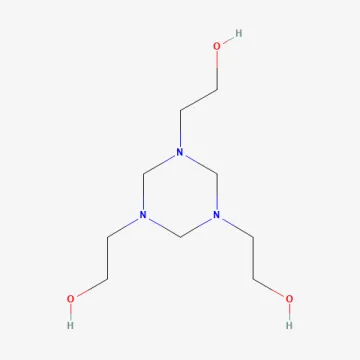
1,3,5-tris(2-hydroxyethyl)hexahydro-s-triazine
Description
Mode of action
This substance is a member of the triazine class and serves as a potent biocidal preservative used in agricultural chemical formulations to prevent microbial growth.
The primary mode of action involves the slow release of formaldehyde within an aqueous environment, which effectively denatures proteins and inhibits vital enzymatic processes in microorganisms.
This chemical ensures the biological stability of pesticide and fertilizer tank mixes, effectively neutralizing bacterial and fungal contamination during storage.
Its molecular structure allows it to maintain consistent performance across varying pH levels and temperatures, making it a reliable additive for professional-grade formulations.
By preventing microbial degradation, the substance maintains the physical and chemical properties of the product, ensuring the efficacy of the pesticide when finally applied.
What it targets
The compound is targeted against a broad range of Gram-positive and Gram-negative bacteria, as well as various filamentous fungi and yeasts common in industrial and agricultural settings.
It is specifically used to control the formation of biofilms and microbial sludge within pesticide application equipment and storage tanks.
In greenhouse operations, it acts to sanitize substrate components and organic fertilizers, reducing the population of deleterious microbes that can harm plant health.
It acts effectively against microbes that are otherwise resistant to weaker preservative systems, ensuring long-term shelf stability of chemical products.
- Pseudomonas species
- Aspergillus niger
- Penicillium spp.
- Fermentative yeasts
Restrictions
Personnel handling the substance must wear appropriate personal protective equipment, such as safety goggles, chemical-resistant gloves, and respiratory protection, to avoid irritation.
Storage must be conducted in airtight containers to prevent premature hydrolysis, as the substance is reactive when exposed to atmospheric moisture or water.
Spills must be managed according to local environmental regulations, as the substance can be toxic to aquatic life if released into drainage systems or surface water.
Do not mix with incompatible chemicals, such as strong oxidizers or acidic compounds, without consulting the material safety data sheet to avoid exothermic reactions.
Always verify the concentration of the active ingredient and adhere to the recommended dosage provided by the manufacturer to minimize environmental exposure.
Status in the European Union
Not approved in the EU
EU status is for reference only and does not replace national registration in your country.