
Modern methods of controlling the population of stray animals in rural areas: the benefits of spaying and neutering cats and dogs for farms
Find out why sterilizing stray and owned animals in rural areas is a cost-effective solution. We examine the threats to farms, the stages of the procedure, and alternative control methods.
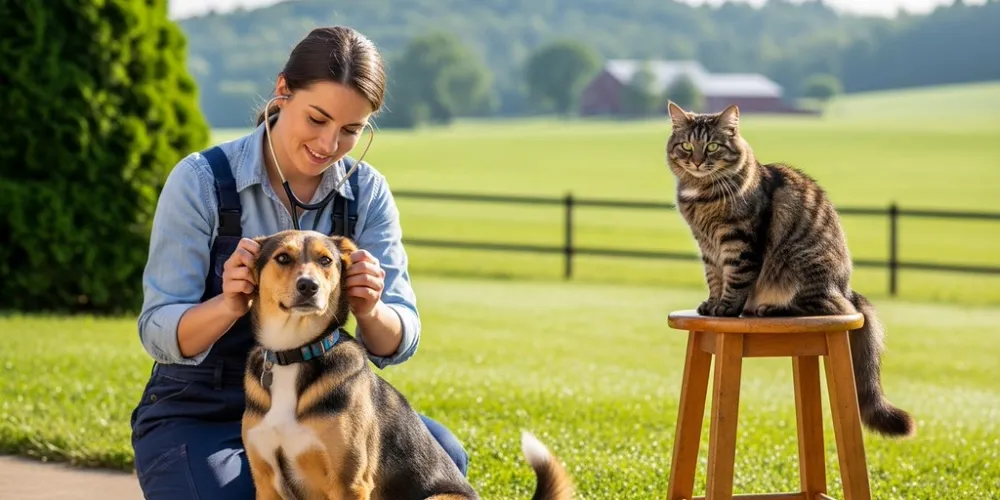
Stray cats and dogs in villages are a real threat to farms. They attack chicks and young animals, spread diseases, and provoke conflicts with domestic dogs. Both animals and people experience stress. A practical solution is to build a breeding control program for owned and stray animals. For pets, it is important to carry out timely cat sterilization and dog sterilization. This procedure reduces the risks of unwanted litters and makes behavior more predictable and calm.
Introduction to the Problem of Stray Animals
The problem of unattended animals in rural areas often remains in the shadows, уступая place to large-scale urban initiatives. However, it is precisely in villages and on farms that uncontrolled breeding of cats and dogs creates the most acute situations. Free roaming, which has historically been considered the absolute norm in the private sector, leads to a sharp population increase during mating periods. The absence of mandatory registration and microchipping only worsens the situation: it is almost impossible to identify the true owner of an animal that gave birth in an abandoned shed.
Veterinary practice shows that street colonies rarely emerge out of nowhere. Their main support comes from accessible food waste at unauthorized dumps, behind village shops, and at livestock slaughter sites. Such an easy food source significantly increases the survival rate of puppies and kittens born outdoors. The problem quickly shifts from a temporary household inconvenience to the status of a persistent environmental threat for a specific settlement.
Particular attention should be paid to the invisible but extremely serious danger of constant contact between stray packs and wildlife. Foxes, hedgehogs, wild rodents, and birds are natural reservoirs of severe infections and parasites. Unattended dogs and cats become a kind of bridge between wildlife and the farmyard. They bring ticks, dangerous helminths, and viral diseases with them, thereby greatly increasing risks for farm livestock and pets that never leave the yard. Documenting such contacts is extremely important for an objective assessment of biological risks in a specific area.
Without regular monitoring and transparent animal records, it is impossible to build an effective control system. Any one-time, spontaneous catching or sterilization campaigns turn out to be meaningless if there is no understanding of the colony’s overall scale. Record-keeping makes it possible not only to assess the real situation objectively, but also to plan time and resources wisely for mobile veterinary sessions.
Reasons for the Growth in the Number of Stray Animals in Rural Areas
The growth in the number of roaming packs is closely linked to socio-economic realities. Families moving to cities, seasonal residence of summer homeowners, and declining income levels often lead to animals being left outside to fend for themselves. Pets abandoned by former owners gather into packs in order to survive in harsh conditions.
Another major factor is the low accessibility of qualified veterinary care. Unlike a large city, where clinics are within walking distance, in villages a doctor’s visit or a trip to the district center requires significant time, transport, and money. State or municipal subsidized sterilization programs rarely reach remote villages. Because of this, unsterilized animals continue to produce offspring, which over time simply replenish the ranks of wild street colonies.
The social factor should not be underestimated either. Traditional human compassion and the habit of feeding animals that wander into the yard without taking full responsibility for them play a cruel role. With stable feeding and no caretaker, one fertile female can produce two or even three litters a year. If planned sterilization and vaccination methods are not applied, part of this offspring very quickly forms a stable and often aggressive colony that begins to dictate its own rules in the surrounding area.
The Impact of Stray Animals on Farms
For any farm, a pack of stray dogs or an overgrown colony of feral cats means direct and easily measurable economic damage. Basic hunting instincts drive predators to seek easy prey. Poultry chicks, hens, rabbits, and even young small livestock often become victims of nighttime attacks. In addition to the physical destruction of livestock, the very presence of predatory outsiders on the property causes severe chronic stress in farm animals. This directly leads to reduced milk yields, weight loss, and serious reproductive disruptions.
Serious conflicts also regularly arise between incoming packs and trained working dogs guarding the farm. In such territorial fights, animals receive deep lacerations that require lengthy, complex, and expensive veterinary treatment. In addition, severe infections, up to and including rabies, are transmitted instantly through bites and saliva, putting not only livestock but also farm workers themselves at direct risk.
People also experience constant psychological stress. Worry about children walking to school along village roads, fear for the safety of their own pets, and concern for the security of farm assets force farmers to spend unplanned funds on high solid fences and stronger security measures.
Competent and humane population control helps eliminate these risks at the root. A timely operation for owned pets eliminates the risk of extra puppies and kittens, which owners often get rid of in inhumane ways. Systematic programs for catching, sterilizing, and vaccinating street colonies create a reliable biological shield: vaccinated animals incapable of reproduction simply live out their lives peacefully, do not allow outsiders from the forest onto their territory, and do not spread dangerous infections.
Sterilization as a Solution to the Problem
Sterilization of animals in the realities of rural farming produces a clear and predictable effect that can be assessed within the first year. The main result is that cyclical, uncontrolled litters stop permanently. At the same time, expenses for feeding, treatment, and rehoming unwanted offspring automatically disappear. Pets become more predictable and calmer, which sharply reduces tension and the number of conflicts between animals and people in the yard.
Medical statistics confirm that a timely operation critically reduces the risk of severe reproductive diseases and hormone-related cancers, treatment of which costs the farmer many times more than the preventive procedure itself. Escapes, aggressive territorial fights, and persistent scent marking become things of the past. When mass programs are organized in villages, especially in combination with universal vaccination, sterilization reliably stabilizes the size of local colonies and prevents their expansion.
At the same time, it is important to understand that surgery is not a magic pill that will clear the streets in one day. The method works only in combination with other systemic measures: mandatory animal registration, regular vaccination, and education of owners. A one-time isolated operation without an established systematic approach provides only a short-term effect.
Benefits of Sterilizing Domestic Animals on the Farm
The benefits of planned sterilization for a working farm can be measured by very specific indicators. First of all, spending on feed and veterinary care is drastically reduced: there is no longer a need to spend the budget on vitamins for pregnant females, puppy formulas, or treatment of torn wounds received by males in mating fights. The risk of bringing infections from outside decreases, the likelihood of conflicts with livestock and poultry is reduced, animal management in group housing becomes much easier, and the environmental burden on the local area declines.
From a medical point of view, sterilization is a reliable investment in the longevity of a working pet. In females, the risk of pyometra is completely eliminated, and the likelihood of malignant mammary tumors is significantly reduced. In males, prostate and testicular pathologies are prevented. The animal stops experiencing the enormous physiological stress associated with an unsatisfied sexual instinct.
The economic effect becomes obvious very quickly. The owner saves money on treatment and feed and, no less importantly, preserves personal time and nerves by no longer having to constantly monitor the perimeter of the yard.
Comparison of surgical sterilization and alternative population control methods:
-
Surgical sterilization: solves the breeding problem once and for all. Reliably reduces the risk of severe diseases and corrects undesirable sexual behavior. Requires only a one-time intervention. In the long term, this is the most cost-effective and humane option.
-
Hormonal drugs: provide only a temporary effect and require strict regular use. They often cause severe side effects, including cancer and pyometra, and do not reduce the risk of reproductive diseases at all. Over the years of a pet’s life, they cost significantly more than surgery.
-
Isolation during heat: an extremely labor-intensive process that often fails. Males can break enclosures and dig under fences, while a confined female still attracts packs of stray dogs from all around. This method does not solve the stress problem and does not protect against diseases.
-
Shooting or euthanasia: absolutely unethical and inhumane methods that provoke strong public condemnation. From a biological point of view, they are ineffective: new, wilder, and unvaccinated packs from neighboring areas will inevitably come to the village to occupy the freed food base.
The Process of Sterilizing Cats and Dogs
A proper surgical process begins long before the operating table. Preparation starts with a detailed medical history and blood tests. If the doctor notices risk factors or the animal is of a certain age, an abdominal ultrasound or echocardiography may be prescribed. Immediately before the procedure, the pet requires a fasting period, usually from 6 to 12 hours for adult animals, to eliminate the risk of vomiting under anesthesia. On the day of surgery, the clinic обязательно checks vaccination history, signs informed consent documents, and records the owner’s contact details.
The operation itself is carried out according to strict protocols. In females, an ovariohysterectomy or ovariectomy is most often performed. In males, castration, or orchiectomy, is carried out. The foundation of safety is absolute asepsis. Doctors use repeated antiseptic treatment of the surgical field, sterile instruments, and modern disposable suture materials. The patient’s vital signs are continuously monitored during anesthesia. If the procedure is performed as part of a mobile field session, each patient receives a strictly individual, pre-sterilized surgical kit.
The recovery period requires attention from the owner, but the algorithm of action is quite simple. During the first hours, the animal is provided with warmth, rest, and adequate pain relief. To prevent licking of the sutures, a protective collar or postoperative vest is used. Activity such as jumping, running, and active play must be limited for 7 to 10 days. Water and food are introduced in small portions. The incision should be checked daily: it must remain dry and clean. If non-absorbable suture material was used, the stitches are removed at the clinic on days 10 to 14. An important rule is that if severe swelling, suspicious discharge from the wound, refusal to eat, or marked lethargy appears, the attending veterinarian must be contacted immediately.
Control of Stray Animals in Rural Areas
Solving the problem of overgrown street packs in villages requires an exclusively comprehensive approach. Surgical intervention serves as the foundation here, but it is far from the only tool. Long-term results are achieved only when the medical procedure is combined with universal rabies vaccination, registration, visual marking, and educational work among local residents.
Regular monitoring of the situation in the area is an essential element of any successful campaign. Without basic population records, it is impossible either to assess the real effect of interventions already carried out or to properly plan future visits by the veterinary team. Careful documentation of all disease cases, as well as records of contacts between dogs and cats and wild forest fauna, makes it possible to objectively evaluate local epidemiological risks and respond to them in time.
Organizing a so-called sterilization day at a farm or rural settlement requires clear advance planning. The process begins long before the surgical team arrives and includes collecting applications, preparing the premises, and purchasing the necessary consumables.
30-day plan for organizing mobile sterilization:
-
Collection of initial applications: a preliminary list of patients is formed. The owner’s details, animal species and sex, approximate age, vaccination status, and the presence of pregnancy or signs of heat are recorded. At this stage, the local coordinator and consulting veterinarian work actively.
-
Confirmation of lists and purchases: the lists are finalized. Based on the exact number of animals, consumables are purchased: surgical gloves, disposable absorbent pads, suture material, protective collars and postoperative garments of the required sizes, as well as antiseptics.
-
Preparation of the work site: a warm and well-lit room is selected and marked out. Strict separation is organized between the dirty zone and the clean zone. Tables are arranged for examination, premedication, surgery itself, and comfortable postoperative recovery.
-
Notification of owners: all participants receive reminders and instructions. The rule of mandatory fasting is emphasized, and the drinking regimen is agreed upon. Owners are reminded to bring a secure carrier for cats or a leash and muzzle for dogs.
-
Surgery day: the process runs like an assembly line. The animal goes through registration, initial examination, receives premedication, proceeds to surgery, and is then transferred to the monitoring area. After waking up, the patient is returned to the owner together with detailed care instructions.
-
Follow-up review: a phone check-in or visual examination of operated animals is carried out. General condition, appetite, and wound healing are recorded. Any complications are immediately entered into the log for review.
The success metrics for such an event are clear: a good result is attendance of at least 90% of the originally registered patients, strict observance of aseptic rules at the improvised site, and a minimal, ideally near-zero, percentage of postoperative complications.
Team Roles and Equipment
The success of a mass mobile session depends on a strict distribution of roles, which helps avoid chaos and queues. A coordinator from among the local residents handles all communication with villagers and on-site logistics. The veterinary surgeon and anesthesia assistant deal exclusively with the medical part and are not distracted by organizational issues. A registrar keeps records and fills out documents. A volunteer catcher helps safely deliver feral or aggressive animals, and a separate person is responsible for the timely supply of sterile consumables.
The patient flow is arranged in one direction: from the registration desk to the examination area, then to preparation, into the operating area, and finally to the recovery zone. This physical separation of stages drastically reduces the risk of cross-infection between healthy pets and stray animals.
To ensure surgical safety outside a stationary clinic, a strict minimum of equipment is required.
Minimum kit for mobile surgeries:
-
Individual sterile surgical sets, strictly one set per patient.
-
A portable autoclave or sealed containers for transporting sterile instruments.
-
Reliable antiseptics and disposable surgical drapes.
-
Equipment for monitoring vital signs: a pulse oximeter and digital thermometers.
-
Medical supplies: emergency resuscitation kits, anesthetic drugs, and a first aid kit with analgesics and antibiotics.
-
Means for keeping patients warm, as well as special sturdy containers for the safe disposal of biological waste and sharps.
An important rule of mobile surgery is that having at least two spare fully sterile instrument kits significantly speeds up workflow and protects the team against unexpected technical issues.
Record-Keeping, Statistics, and Successful Practices
The transparency of the program is ensured through strict documentation. Instead of scattered notes, a single surgical log is used. It must include the date of the intervention, the species and sex of the animal, and the approximate age. It is critically important to note the status of the animal and the type of visual mark applied. Data on administered vaccines, the type of suture material used, and the contacts of the responsible person are also recorded. Maintaining such a detailed register eliminates the risk that a street dog or cat will be caught and anesthetized again.
The mathematics of such control programs is quite illustrative. There is a simple effect calculator: to determine the number of births prevented outdoors in one year, multiply the number of operated females by the average number of litters per year, then by the average litter size, and then by the survival coefficient of the young. Thus, even sterilizing just ten street females prevents the appearance of about forty new stray puppies or kittens each year.
Key success factors for programs in rural settlements:
-
Regularity: conducting mobile veterinary sessions at least once or twice a year to cover newly arriving animals.
-
Community involvement: active participation of local coordinators and caretakers who know the specifics of local yards and can quickly detect newcomers.
-
Visual marking: bright tags, tattoos, or ear tips help instantly identify operated animals from a distance.
-
Synchronized vaccination: administration of core vaccines and rabies protection simultaneously with anesthesia to create a reliable immune barrier.
Cooperation with Veterinary Services
Effective work with invited veterinarians is built on clear agreements. Before the program starts, the list of services, pain management protocols, and logistical details are fixed. Issues of legal responsibility are discussed separately: documents for personal data processing and written owner consent for surgery are prepared.
To minimize the risk of postoperative complications, short training briefings are held for animal owners and local volunteers. In simple language, people are told why a dog must not be fed before anesthesia, how to properly arrange a warm resting place for a cat waking up from sleep, and which symptoms during the first day require urgent attention. The better the owner understands the process, the faster and easier the animal’s recovery will be.
Answers to Common Questions
At what age is it best to operate?
For females, veterinarians often recommend performing the operation before the first heat, as this maximally reduces the risk of hormone-dependent mammary tumors in the future. For males, the reference point is the time before obvious sexual behavior appears. In puppies of large breeds, the timing may shift due to skeletal development and the risk of orthopedic problems; in such cases, the optimal age is often considered to be 8 months and older. In any case, the exact decision is made individually during an in-person examination.
How long should the fasting period be before anesthesia?
The standard requirement for adult animals is 6 to 12 hours of fasting before surgery. For young animals, kittens, puppies, or miniature breeds, this period may be significantly shorter to avoid a drop in blood glucose levels. Access to water is usually maintained longer, but this must be coordinated with the anesthesiologist. The main purpose of such fasting is to protect the animal from stomach contents entering the airways during medicated sleep.
When can stitches be removed?
If the surgeon used standard non-absorbable sutures, removal takes place on the 10th to 14th day after surgery. In modern practice, intradermal absorbable sutures are increasingly used, and these do not need to be removed at all. Timing may vary: with ideal healing, the doctor may remove the threads earlier, and if recovery is slow, they may be left in place for a few more days.
Will guarding aggression and working qualities of the dog change?
Protective aggression aimed at guarding its yard and owner remains fully preserved. The operation removes only sexual roaming and specific sexual aggression toward other animals. A working dog will continue to vigilantly guard the entrusted territory, but it will stop running away from its post after sensing a female in heat several kilometers away. Working qualities depend on character and training, not on sex hormones.
Can a nursing cat or dog be sterilized?
It is better to postpone elective surgery. The standard strategy is to wait until the end of lactation and weaning of the young, and only then calmly perform the surgical intervention. However, in emergency life-threatening situations, the operation is carried out immediately regardless of whether the animal is nursing or not. This requires a special approach to anesthesia and postoperative medications.
What should be done if new stray animals come into the yard?
First of all, it is necessary to organize a strict quarantine for 7 to 10 days in a closed room or secure enclosure to protect the farm’s main livestock. The newcomer should be examined by a veterinarian. Then parasite treatment, rabies vaccination and core vaccinations, and, if necessary, inclusion in the sterilization schedule are carried out. The animal should be marked so that no confusion arises in the future.
Conclusion: Systematic Population Control
Sterilization of owned and street animals in rural areas is not a one-time act of compassion, but a pragmatic and economically sound tool for managing territory. An isolated approach gives only a short-lived illusion of solving the problem. Only the combination of surgery with record-keeping, mass vaccination, and education produces a stable and predictable result for decades to come.
Final recommendations for farms:
-
Treat sterilization of working and yard animals as a planned preventive measure and include it in the farm’s annual budget.
-
Carry out mandatory registration and visual marking of all animals permanently kept on your property.
-
Initiate and organize collective mobile sessions together with neighbors, as this significantly reduces the cost of procedures and increases overall coverage.
-
Appoint permanent caretakers to monitor feeding locations of remaining street colonies in order to notice the arrival of new unsterilized animals in time.
As for the timing of the procedures, there is no single universal template. Early sterilization before sexual maturity is excellent for tumor prevention and guaranteed prevention of unwanted litters. However, for puppies of large working breeds, later intervention may sometimes be indicated to allow the skeleton to form properly. The final decision is always made by the veterinarian after examination.
Editorial team agronom.info
Materials are prepared by the portal's agronomists and editors. We use only trusted sources: Ukrainian agricultural universities, variety registries, open scientific publications.
Not yet comments. Be the first!
Comments · 0