
Planting Currants: When, Where, and How to Plant Currant Seedlings
Currants only seem like an undemanding crop: how quickly the bush takes root, grows stronger, and begins to produce a plentiful harvest of large berries depends precisely on choosing the right seedling, planting at the proper time, and selecting a…
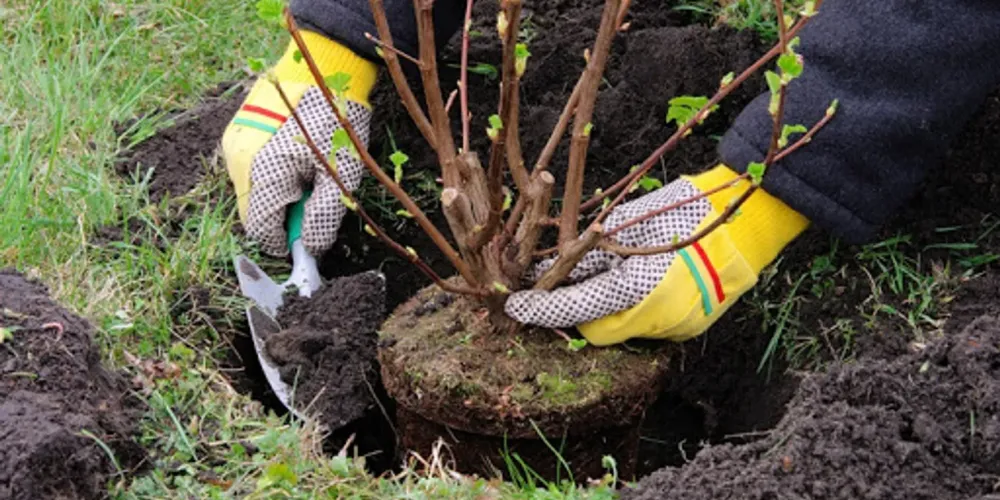
Currant is one of those crops that seem simple only at first glance. You plant a bush, water it, and wait for the harvest. But in practice, everything depends on the very first steps: whether the plant will take root, how quickly it will begin to bear fruit, and whether it will produce large, sweet berries or turn into a weak, disease-prone bush.
If you are planning to plant currants, it is important to choose high-quality planting material right away — you can view the available options. A good seedling is already half the success, especially for a crop that lays the foundation for future yields literally from the first season after planting.
In this article, we will go through everything step by step: when and how to plant currants, how to choose a healthy seedling, what spot in the garden suits it best, and which mistakes most often deprive gardeners of a harvest in the very first year.
When to plant currants: optimal planting times
The choice of planting time directly affects the bush’s survival rate and future yield. Autumn planting, 3–4 weeks before the first frosts, is considered the priority by agronomists: the plant is dormant, all its energy goes into developing the root system, and spring rains and meltwater reduce the need for frequent watering. Spring planting offers the advantage of a harvest as early as the following year, but requires strict moisture control and protection from late frosts.
Regional guidelines:
- Southern and Central Russia: both planting periods are acceptable, but autumn is preferable to save the gardener’s resources.
- Siberia, the Urals, and the North-West: it is safer to plant in spring so that the bush has time to root before the harsh winter. If you choose autumn, complete the work by mid-September.
Soil readiness criterion: you can start planting only when the soil has thawed and warmed up to +7…+9 °C at the depth of a spade bayonet, 20–25 cm. Planting earlier in cold soil will slow root growth and provoke fungal diseases.
Bare-root or container-grown seedlings:
- Currant seedlings with an open root system require strict timing: early spring before bud swelling or late autumn. Planting them in summer is not recommended — exposed roots dry out quickly, and the plant spends its resources on survival rather than rooting.
- Currant seedlings with a closed root system in containers do not have these restrictions. The preserved soil ball minimizes transplant stress, so such bushes can be planted in open ground throughout the growing season — from April to October, preferably on cloudy days.
Choosing and preparing a seedling
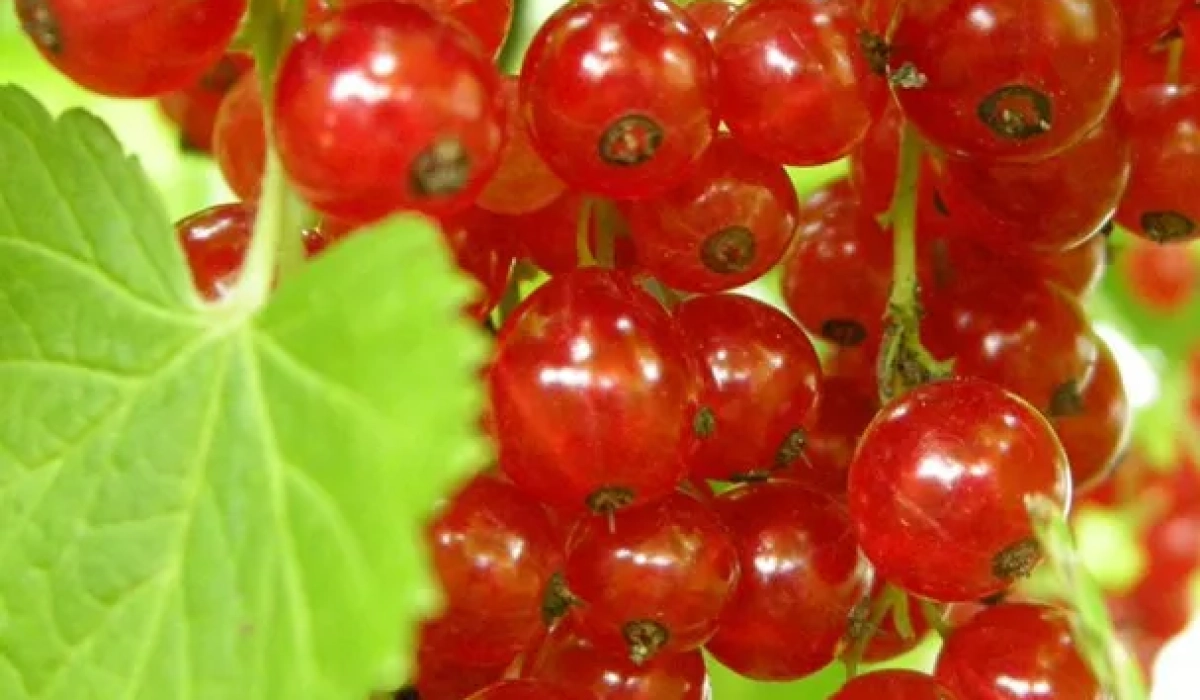
The quality of the planting material directly determines whether the bush will take root and when it will begin to bear fruit. When buying, evaluate the seedling planting material according to three key parameters:
- Roots — strong, fibrous, without dry areas or rot. A healthy specimen has at least 3–5 skeletal roots 20–30 cm long.
- Shoots — 2–3 straight stems 5–8 mm thick with smooth, undamaged bark. Leaves, if present, should be firm, green, and free of spots.
- Graft union — completely healed, dry, without bark peeling or signs of rot.
Clearwing moth test: before buying, make a control cut on one of the shoots. A light or greenish core indicates a healthy plant. If a black core is visible inside, the bush is affected by a dangerous pest and should not be purchased.
Pre-planting treatment: even a strong-looking seedling needs preparation before moving into the soil:
- Soaking. If the roots have wilted, immerse them for 1–2 hours in water with a rooting stimulant such as Kornevin, Zircon, or Yantarin. Fresh, moist roots do not need additional stimulation.
- Pruning. Immediately before planting, shorten the above-ground part to 10–15 cm, leaving 3–4 live buds. This redirects the plant’s energy toward root formation rather than the growth of weak branches. Treat the cuts with garden pitch or crushed charcoal.
- Sanitary cleaning. Use sharp pruning shears to remove all broken, rotten, or deformed roots down to healthy tissue.
Why are container-grown seedlings better for beginners?
Seedlings with a closed root system are supplied in containers with a preserved soil ball. This minimizes transplant stress, preserves beneficial soil microflora, and allows the crop to be planted at any time during the growing season, from April to October. Bare-root seedlings are more budget-friendly, but require strict timing and immediate planting: exposed roots quickly lose moisture and viability. If you have no experience or are unsure about weather conditions, choose container-grown seedlings — this is insurance against mistakes at the start.
Choosing a location and preparing the soil
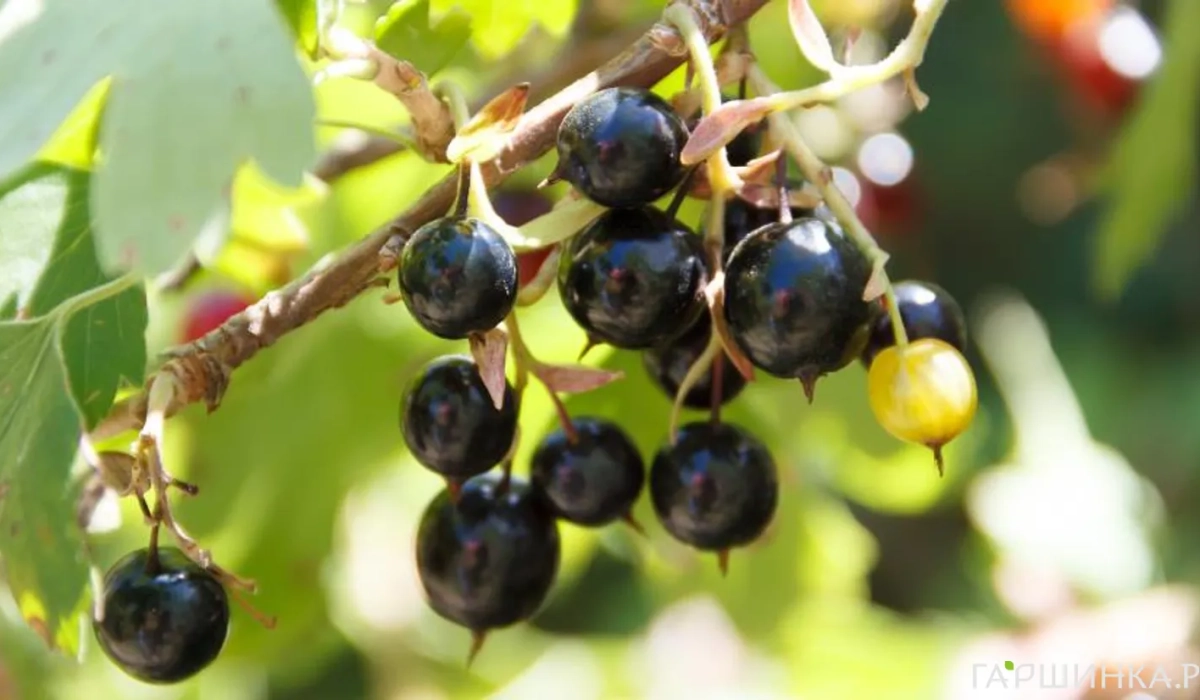
A proper choice of location determines not only the size of the harvest but also the bush’s resistance to diseases. Currants are adaptable, but they absolutely do not tolerate waterlogging or deep shade.
Light requirements
- Black currant is fairly shade-tolerant: it bears fruit steadily both in full sun and in light partial shade.
- Colored currants red, white, pink, and golden — require direct sun throughout the daylight hours. In shade, the berries lose sweetness, fall off, and the bushes are quickly affected by powdery mildew and anthracnose.
Groundwater and microclimate
The root system is sensitive to oxygen deficiency. The groundwater level should be no closer than 1–1.5 m to the surface. Deep lowlands, depressions, and areas of seasonal flooding are unsuitable. The ideal place is a flat area or a gentle south-western slope with natural protection from cold winds near fences, outbuildings, or mature trees, but with a 1.5–2 m setback.
Important: do not place the crop where old currant or gooseberry bushes have been uprooted. Soil in such areas is depleted and infected with specific pathogens. The best predecessors are annual vegetables, green manure crops, or lawn grass.
Soil acidity and structure
The optimal pH for currants is 5.5–6.5. If the value is lower, deacidify the soil 2–3 weeks before planting: apply dolomite flour, slaked lime, or wood ash at a rate of 300–500 g per m². Soil structure is adjusted according to soil type:
- Heavy loams and clay: drainage is required crushed stone or expanded clay 7–10 cm at the bottom of the planting hole, plus the addition of 20–30 kg of coarse river sand per m² to loosen the soil and improve air permeability.
- Light sandy soils: require increased moisture capacity. Increase the share of organic matter compost, well-rotted manure, peat and add 1–2 buckets of clay soil per m² so that nutrients are not washed out during watering.
Tip: dig planting holes in advance in autumn for spring planting, or 3–4 weeks before autumn planting. This allows the soil to settle naturally, prevents the root collar from being pulled too deep, and gives fertilizers time to distribute evenly in the soil.
Planting scheme and compatibility with other crops
Proper zoning of the plot ensures healthy bushes and a high yield. Currants release phytoncides that affect neighboring plants.
Distances:
- Distance between bushes: for black currant — 1.5–3 m, for colored currants — 1.25–2 m, and for golden currant — up to 3.5 m. In compact plantings — 0.6–0.8 m.
- Distance to fences and walls — at least 1–1.5 m.
- Distance to other crops: black currant is placed 3–5 m away from trees and berry bushes, colored currants — 2–3 m away.
Compatibility:
- Good neighbors: onion, garlic, herbs such as mint, thyme, basil, parsley, dill, as well as raspberry and honeysuckle. They repel pests and do not compete for nutrients.
- Problematic neighbors: nightshades tomatoes, potatoes, cabbage, fennel, celery, wormwood, gooseberry. The reasons are common diseases, competition for nutrients, or toxic effects.
Zoning:
- Black currant is placed along the northern or western boundary of the plot, away from sensitive crops.
- Buffer strips 1–1.5 m wide with lawn grass or green manure crops are created between currants and the orchard.
- Low-growing herbs or marigolds are planted in the near-stem zone to suppress weeds and improve the soil.
Good to know: the taste of the berries depends only on the variety, light, and watering — neighboring herbs do not affect it.
Step-by-step planting technology in open ground
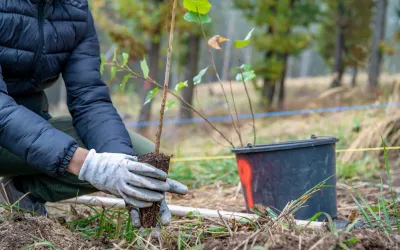
For successful currant planting, prepare a hole 40–50 cm deep and wide, and be sure to place a drainage layer of broken brick or expanded clay at the bottom. Fill the hole with a nutrient mixture: a bucket of humus, 150–200 g of superphosphate, 50–70 g of potassium fertilizers, and a glass of ash. Place the seedling at a 45° angle, burying the root collar 5–7 cm deep to form a strong root system. Carefully spread the roots, cover them with soil, and water generously, using 10–15 liters of water per bush. After planting, mulch the near-stem circle with straw, peat, or compost to retain moisture and protect against weeds.
Caring for a young bush in the first year after planting
In the first year after planting, currants need regular watering: maintain moderate soil moisture, avoiding both drying out and water stagnation. Fertilizing is not needed in the planting year — the plant uses the supply of nutrients placed in the hole. The first feeding is applied in the spring of the following year.
To protect against late frosts and prepare for winter, young bushes are hilled up to a height of 10–15 cm, and the near-stem circle is mulched with peat or compost. In regions with harsh winters, additional covering with agrotextile or spruce branches is recommended. Such care will ensure good survival and lay the foundation for a future harvest.
Перевод выполнен по предоставленному файлу.
Editorial team agronom.info
Materials are prepared by the portal's agronomists and editors. We use only trusted sources: Ukrainian agricultural universities, variety registries, open scientific publications.
Related articles
Not yet comments. Be the first!
Comments · 0