
Mylabris phalerata
Mylabris phalerata
Description
How to identify
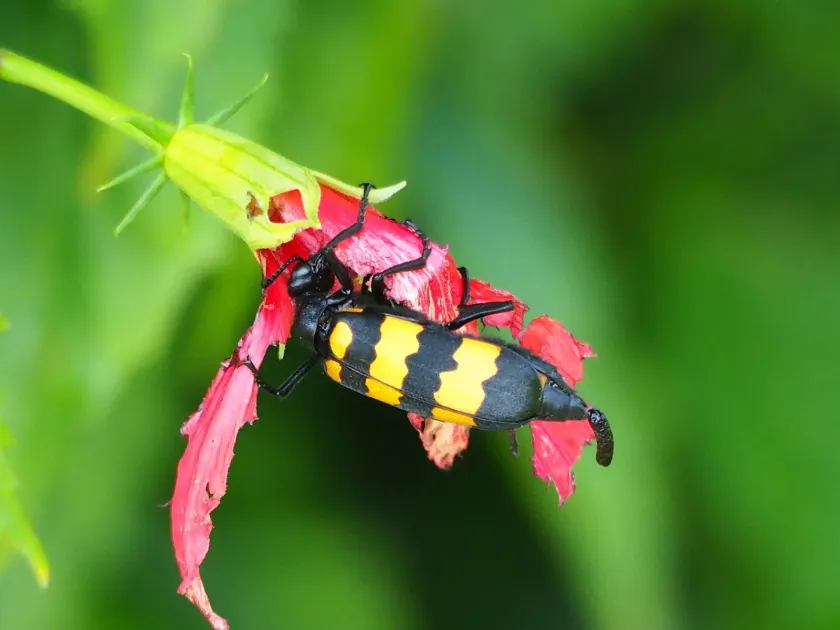
Mylabris phalerata is a prominent member of the Meloidae family, commonly known as blister beetles. Adult beetles are large, typically measuring between 20 and 30 mm in length.
The insect is characterized by its elongated body and striking elytra, which feature bold black and orange-yellow bands. This aposematic coloration is a warning sign to predators that the beetle contains toxic compounds.
The beetle derives its name from the high concentration of cantharidin in its hemolymph, a potent chemical that causes severe irritation and blisters if it comes into direct contact with human skin.
The larvae undergo hypermetamorphosis, a complex development process where they pass through various stages, each exhibiting distinct morphological and behavioral characteristics.
Adult beetles are day-active and exhibit strong flight capabilities, allowing them to rapidly colonize agricultural fields and move between host plant patches.
What it damages
The primary damage is caused by the adults, which are polyphagous feeders known to target the reproductive structures of plants, including flowers, buds, and immature pods.
Legume crops such as soybeans, peanuts, and peas are particularly susceptible. In some regions, cotton crops can also suffer significant damage during the flowering stage.
Massive infestations occurring during peak flowering can lead to the near-total destruction of reproductive organs, resulting in catastrophic yield losses for the grower.
In contrast to the adults, the larvae are not agricultural pests in the traditional sense; they are parasitic, often feeding on the egg pods of grasshoppers or the provisions within solitary bee nests.
Therefore, the economic impact of the species is twofold: immediate mechanical destruction of the crop by adults and a potential reduction in beneficial pollinator populations.
When it appears
The activity cycle of Mylabris phalerata is highly temperature-dependent. Adults typically emerge during the summer months when host crops are in the full flowering stage.
Warm and humid weather conditions favor rapid multiplication and high activity levels of the beetle. Females lay their eggs in the soil, initiating the larval developmental stages.
The species survives the winter as a larva, residing deep within the soil profile, which protects it from extreme cold and environmental fluctuations.
The timing of adult emergence is synchronized with the vegetative rhythm of target crops, ensuring that the beetle population has an abundant food source during its active phase.
Population density often fluctuates from season to season, heavily influenced by the success of larval development and winter survival rates.
Signs of infestation
The most reliable sign of an infestation is the presence of the colorful, conspicuous beetles clustered on the flowers or buds of host plants during daylight hours.
Damage symptoms include ragged or eaten petals, entirely missing buds, and hollowed-out flower centers. This often gives the plants an uneven or sparse appearance during the bloom phase.
Heavy infestations may also lead to the consumption of young shoot tips and tender foliage, further hindering the overall growth and health of the crop.
A sudden decline in pod set for legume crops, despite optimal growth conditions, is a strong indicator of significant adult beetle activity.
- Visible beetles feeding on floral structures.
- Ragged and consumed petals.
- Missing buds and reproductive parts.
- Abrupt reduction in bloom density.
Control measures
Effective management requires the application of contact or systemic insecticides during the peak of adult emergence to mitigate crop damage before it reaches economic thresholds.
Application should ideally be performed during early morning or late evening hours to avoid peak activity of beneficial pollinators and to increase the efficacy of the treatment.
Cultural control practices, such as weed management in field margins, are essential to remove alternative food sources that might support the beetle before primary crops flower.
Given the larval biology, sustainable management of grasshopper populations or soil cultivation techniques may help reduce the long-term carrying capacity of the land for this pest.
Workers must exercise extreme caution during manual removal or field monitoring, wearing protective gloves to prevent skin contact with the beetle's toxic hemolymph.
Taxonomy
- Latin name
- Mylabris phalerata
- Order
- Coleoptera (beetles)
- Family
- Meloidae
- EPPO code
- MYLBPH
Discussion
No discussions yet — be the first.