
Blister beetle
Mylabris oculata
Description
How to identify
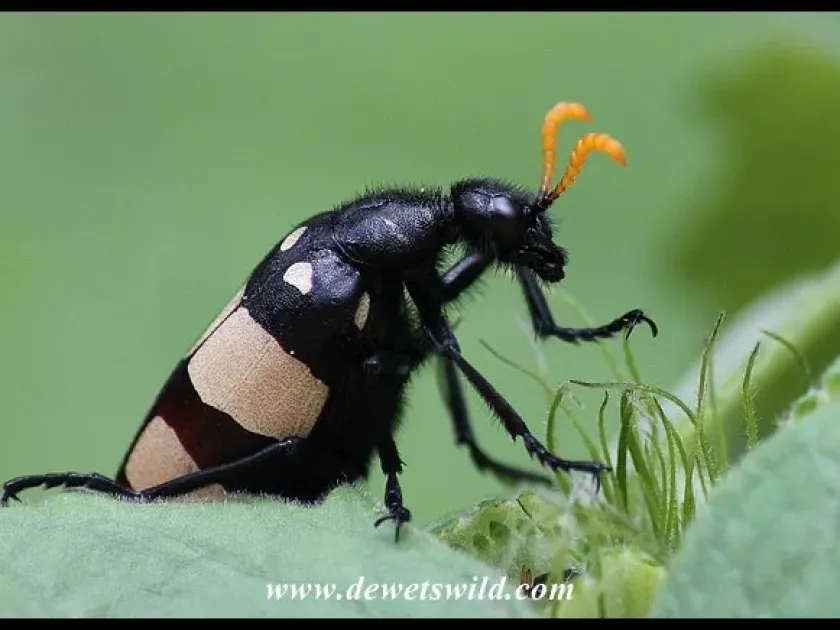
The blister beetle (Mylabris oculata) is a member of the Meloidae family in the order Coleoptera. Adult beetles are typically 20–30 mm long and exhibit a striking color pattern consisting of black elytra with yellow or orange bands and spots.
The beetle's body contains cantharidin, a potent toxin. If crushed or handled improperly, it can cause severe skin irritation, blisters, and painful rashes in humans. Caution and protective gear are essential when managing these insects.
The head is downward-facing, and the antennae possess characteristic club-shaped tips. These beetles are strong flyers, often gathering in large, visible groups on vegetation during sunny, warm periods of the day.
The life cycle involves hypermetamorphosis, a complex series of larval stages where the insect changes significantly in form and habit. Each stage is adapted for specific environmental conditions or developmental needs.
The population density is often correlated with the presence of ground-nesting solitary bees, as the larvae of Mylabris oculata are known to develop within bee nests, feeding on stored provisions and larvae.
What it damages
Adult beetles are the primary cause of damage, as they feed voraciously on the reproductive parts of plants. They target flower petals, stamens, and pistils, rendering the plants incapable of pollination and fruit set.
Preferred crops include various legumes such as soybeans, chickpeas, peas, and beans. Additionally, they are known to attack sunflowers, cotton, and various other flowering plants in and around fields.
During heavy infestations, these beetles can destroy up to 90% of a crop's flowers in a very short time, leading to near-total yield failure. This rapid devastation makes timely detection and intervention critical.
Beyond flower destruction, the beetles can cause damage to developing buds and tender shoots, which slows down the plant's growth and diminishes overall vigor during the vegetative and flowering stages.
Larval activity in the soil, while not directly damaging to crops, contributes to the decline of beneficial native bee populations. This reduction in pollinators further impacts the yield potential of the surrounding agricultural landscape.
When it appears
Adult blister beetle activity peaks during the second half of the summer, coinciding with the flowering phase of major field crops. They are most active and visible during peak sunlight hours.
The timing of their emergence is dictated by soil temperature and moisture levels. They overwinter as larvae in soil cells, emerging as adults once conditions are optimal for mating and feeding on floral resources.
Agricultural monitoring should begin as soon as crops enter the budding stage. Since they migrate easily, scouting should focus on field edges that border wild vegetation or meadows where populations often aggregate.
In arid climates, the life cycle may be interrupted or delayed, but these beetles are highly resilient. If environmental conditions become favorable, local populations can rapidly surge, requiring immediate reactive measures.
Seasonal management plans must account for the beetle’s tendency to congregate in massive numbers on flowering plants, which allows for effective targeted control if spotted early in the season.
Signs of infestation
The most obvious sign of infestation is the sight of bright, distinctly patterned beetles swarming on flowers. They often remain stationary for long periods while feeding, making them easy to spot.
Visual damage includes tattered or entirely missing flower parts. Often, only the pedicels remain, with the delicate petal tissues completely consumed or severely shredded by the beetles.
Premature bud drop and a lack of pod development are key indicators that blister beetles have been feeding on the crop. Fields may appear to be entering a successful flowering phase but ultimately fail to produce any fruit.
The presence of beetle waste or damaged, wilting flower remnants around the base of the plant can serve as an additional diagnostic sign in the field.
Monitoring the field during cooler early morning hours can be effective, as the beetles are less prone to fly away, allowing for a more accurate count and assessment of the infestation level.
Control measures
Effective control relies on systemic or contact insecticide applications when the population exceeds the economic threshold for the specific crop.
- Apply insecticides during the early budding stage before significant flowering occurs.
- Always wear gloves and protective clothing to avoid skin contact with cantharidin.
- Perform treatments during the late evening to protect non-target beneficial insects and pollinators.
- Utilize deep autumn tillage to disrupt overwintering soil cells and reduce next year's population.
- Manage and remove flowering weeds along field margins to eliminate secondary food sources.
When selecting chemical agents, it is important to check the pre-harvest interval (PHI) to ensure that toxic residues remain well within safety limits for the final harvested crop.
Edge spraying can be a highly efficient strategy if the beetle infestation is detected moving into the crop from surrounding areas, significantly reducing the amount of chemical needed for field-wide coverage.
Ongoing observation of population dynamics allows for more precise application timing, balancing the need for crop protection with the goal of minimizing environmental impact.
Taxonomy
- Latin name
- Mylabris oculata
- Order
- Coleoptera (beetles)
- Family
- Meloidae
- EPPO code
- MYLBOC
Discussion
No discussions yet — be the first.