
Mylabris cichorii
Mylabris cichorii
Description
How to identify
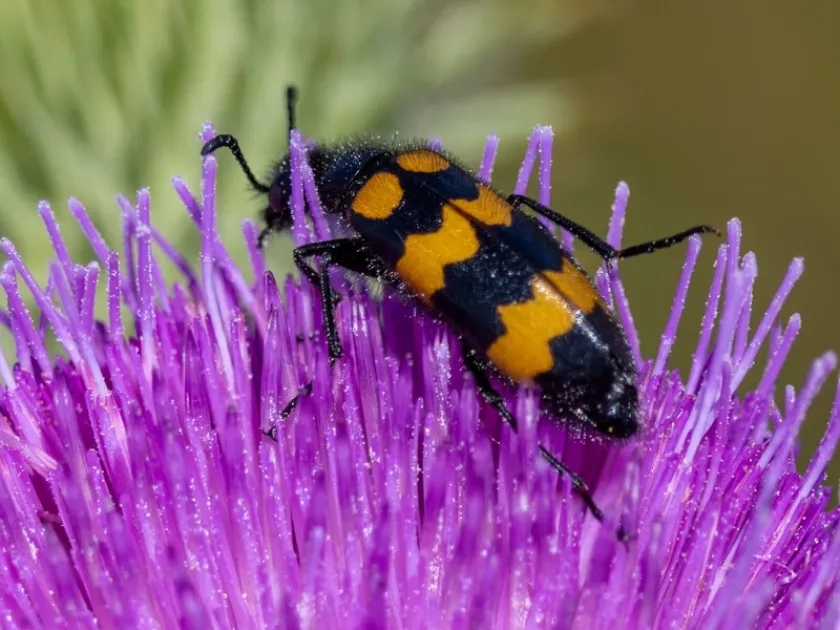
Mylabris cichorii is a species of blister beetle belonging to the family Meloidae within the order Coleoptera.
The adult beetle is elongated, typically measuring between 10 and 20 mm, with a distinct black body marked by bright yellow or orange transverse bands.
These insects are characterized by soft elytra and the ability to secrete cantharidin, a potent toxic compound that causes blistering upon contact with human skin.
The head is well-developed with filiform antennae, designed for effective navigation and foraging on host plants.
Larval stages are complex and usually develop within the nests of solitary bees, exhibiting a process known as hypermetamorphosis.
What it damages
The primary agricultural damage is caused by adult beetles, which are highly destructive to the reproductive parts of crops.
They frequently infest legumes such as soybeans, peas, beans, and various Asteraceae species during their flowering phase.
By consuming petals, stamens, and pistils, they prevent proper pollination and fruit set, leading to substantial yield losses.
In cases of severe infestation, the beetles can destroy the entire flower production of a field within a very short timeframe.
Secondary infections often develop in the damaged tissues of the flowers, further compromising the overall health and yield of the crop.
When it appears
Adult beetles typically appear in fields during the mid-to-late summer months, coinciding with the peak flowering period of many agricultural crops.
The activity of Mylabris cichorii is heavily influenced by temperature, with peak emergence and feeding occurring during warm, sunny weather.
There is generally one generation per year, and the life cycle is closely linked to the availability of their specific nesting hosts during the larval stage.
Feeding activity is most intense during the middle of the day, with beetles often sheltering inside flowers during cooler morning or evening hours.
As the season progresses towards autumn, adult beetle activity gradually declines as they complete their reproductive cycle.
Signs of infestation
Visible presence of the beetles on flower heads is the most reliable sign of an ongoing infestation within a crop field.
Damaged, chewed, or partially destroyed petals and buds provide clear evidence of beetle feeding patterns in the area.
A sudden decline in the formation of seed pods on leguminous plants despite a healthy vegetative stage points to potential pest impact.
The beetles are often easy to spot due to their bold warning coloration when they fall from plants during inspection.
Reduced pollinator visitation rates in fields can also indicate that the area is heavily occupied by blister beetles.
Control measures
Chemical control involving the application of registered insecticides is recommended when population thresholds are exceeded during flowering.
Contact-based insecticides are generally effective at reducing adult populations before they cause significant damage to the reproductive structures.
Integrated pest management includes the removal of weeds around field borders to reduce alternative food sources for the adult beetles.
Crop rotation and strategic field planning help disrupt the life cycle of the beetles and minimize migration from nesting sites.
Field workers should wear protective gear when working in infested areas to avoid skin contact with the toxic cantharidin secreted by the beetles.
Taxonomy
- Latin name
- Mylabris cichorii
- Order
- Coleoptera (beetles)
- Family
- Meloidae
- EPPO code
- MYLBCC
Discussion
No discussions yet — be the first.