
Mylabris bihumerosa
Mylabris bihumerosa
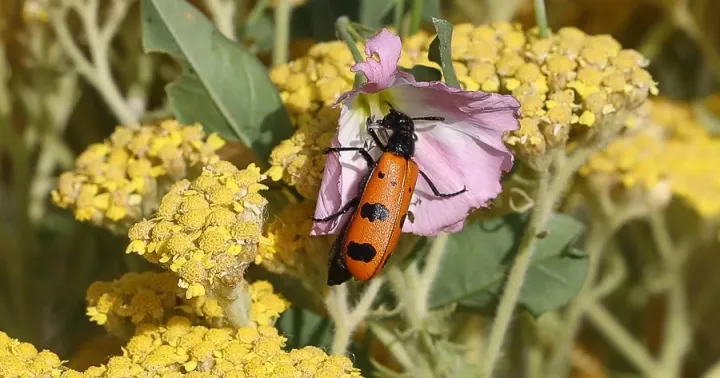
Description
How to identify
Mylabris bihumerosa belongs to the Meloidae family (blister beetles), order Coleoptera. These beetles are easily identified by their conspicuous, bright striped or spotted elytra pattern, usually featuring black and yellow-orange colors.
The body is elongated and robust. They possess glands that secrete cantharidin, a toxic substance used for self-defense against predators, which can also cause skin irritation in humans upon contact.
The larval stage is complex and often specialized; some species in this genus develop within the nests of ground-nesting bees or feed on the egg pods of grasshoppers, acting as natural biological controllers at that stage.
Adults are highly active during sunny, warm weather, displaying strong flight capabilities as they move between flowering plants to feed on nutrient-rich pollen and nectar.
Distinguishing Mylabris bihumerosa from other blister beetles requires observing the specific shape and arrangement of the spots on their wing covers, as regional variations exist within the genus.
What it damages
Adult beetles are the primary life stage causing economic damage. They feed aggressively on the reproductive parts of plants, including pollen, petals, stamens, and young ovaries.
Grain legumes such as chickpeas, lentils, and peas are particularly susceptible. The beetles frequently consume buds before they even open, preventing proper fruit set.
In cases of severe infestation, Mylabris bihumerosa can transition to cereal crops, damaging the flowering spikes and leading to stunted grain development or empty glumes.
Vegetable crops and oilseeds in arid climates may also suffer significant yield losses when beetle populations explode during the peak flowering window of the host plants.
The damage caused by these insects is often direct, resulting in flower shedding and reduced pod counts, which translates to a lower overall harvest for farmers.
When it appears
The presence of Mylabris bihumerosa in agricultural fields is closely tied to the flowering periods of their host plants, typically occurring during late spring and throughout the summer months.
These beetles prefer hot, dry weather conditions. During these periods, they are most active during the middle of the day, feeding and mating on the blossoms of various agricultural crops.
Their life cycle timing often coincides with the maturation of grasshoppers in the field, as the larvae of many blister beetles are known to feed on grasshopper eggs.
Population levels generally begin to decline as temperatures drop towards the end of summer, marking the end of the adult activity period before egg-laying for the next generation.
Field scouting should be prioritized during the crucial flowering stages of beans and cereals to detect early signs of colonization by the beetles.
Signs of infestation
The most obvious sign of infestation is the physical presence of the brightly colored beetles on the flowers, often clustered together on the most attractive blossoms.
Plants affected by these beetles show clear signs of feeding: jagged or missing petals, destroyed stamen bundles, and partially eaten ovaries that eventually wither and turn brown.
A high density of fallen petals underneath the plants is a common indication that Mylabris bihumerosa beetles are actively consuming the reproductive tissues above.
Visual observation is highly effective due to the stark contrast between the beetles' black-and-yellow bodies and the green foliage and flowers of the crop plants.
Excrement deposits on the leaves beneath the affected flowers can also alert agronomists to the presence of a beetle colony even if the insects have temporarily flown away.
Control measures
Chemical control via insecticides is the standard response when beetle counts exceed the economic threshold, focusing on pyrethroids or organophosphates.
Applications should be timed carefully—ideally during early morning or late evening—to minimize exposure to beneficial pollinators such as honeybees.
Deep plowing during the fall helps to destroy soil-dwelling stages, reducing the number of insects that successfully overwinter and emerge the following season.
Effective management of surrounding weeds and wild flowering plants along field edges can reduce the attractiveness of the area to these pests during the early season.
Integrated Pest Management (IPM) strategies, including crop rotation and the protection of natural predators, are encouraged to keep populations below damaging levels.
Taxonomy
- Latin name
- Mylabris bihumerosa
- Order
- Coleoptera (beetles)
- Family
- Meloidae
- EPPO code
- MYLBBI
Discussion
No discussions yet — be the first.