
Violet oil beetle
Meloe proscarabaeus
Description
How to identify
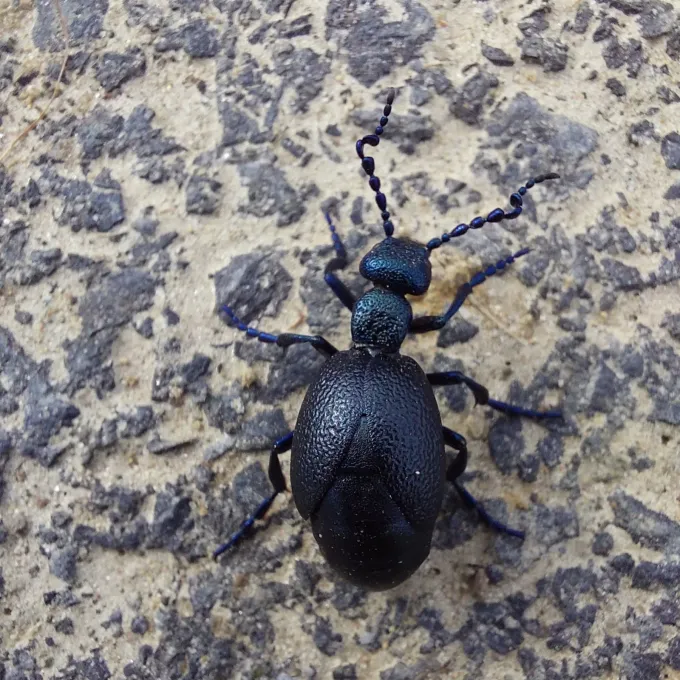
The violet oil beetle (Meloe proscarabaeus) is a member of the Meloidae family within the order Coleoptera. These beetles are characterized by their large size, reaching up to 40 mm, and a wingless body with overlapping, shortened elytra.
The insect typically displays a dark blue-black or violet metallic sheen. Because they lack flight wings, they are strictly ground-dwelling and are often found crawling slowly across open, sunny patches of earth.
The biological cycle of this species is complex, involving hypermetamorphosis. The first-instar larvae, known as triungulins, are highly mobile and specifically parasitize the nests of ground-nesting solitary bees.
A distinctive feature of these beetles is their chemical defense mechanism. They secrete a substance called cantharidin from their joints, which is highly toxic and causes severe skin blistering in humans and animals upon contact.
Adults are most frequently observed in early spring, as they emerge from the soil to forage and search for mates on sunny slopes, field margins, and sparse vegetation.
What it damages
Adult violet oil beetles are polyphagous herbivores that can occasionally cause damage to various agricultural crops and young seedlings during the early spring growth period.
They typically feed on leaves and tender stems of vegetable crops and certain cereals, often leaving irregular notches or holes in the foliage during periods of high activity.
While large-scale outbreaks are relatively rare, the damage to young plantings can be significant enough to stunt development, especially if the local population density is high.
The larval stage causes indirect economic damage by parasitizing solitary bees, which are essential pollinators for many crops, thereby potentially reducing the overall yield quality.
Although they are not typically considered major agricultural pests compared to others, their presence requires cautious handling, especially in home gardens or small organic farms.
Signs of infestation
Identifying the violet oil beetle is straightforward due to their large size, sluggish movement, and the metallic sheen on their bodies as they crawl through the garden soil.
Feeding damage is usually visible on the leaves of host plants, where adult beetles leave irregular holes or ragged edges, indicating their presence in the immediate vicinity.
Gardeners often encounter these beetles while digging or weeding in the spring. They are frequently found in sunny, open areas where the soil is warm and dry.
The presence of solitary bee colonies in the area can serve as a secondary indicator, as these bees are the primary hosts required for the successful development of beetle larvae.
Observing small, scorched spots or blister-like injuries on plants might sometimes be mistaken for fungal disease, but the physical presence of the beetle nearby usually confirms the cause.
Control measures
Mechanical removal is the most recommended method for small-scale control; however, this must be performed using protective gloves to prevent skin contact with the toxic hemolymph.
Maintaining a clean garden by removing weeds and debris can significantly reduce the habitat suitability for the beetles, effectively lowering their population over time.
Deep cultivation of the soil in late autumn is a highly effective cultural practice that destroys pupal chambers, preventing the next generation from successfully emerging.
Chemical control should be used as a last resort and strictly monitored to avoid harming non-target species, especially the native bees that provide essential ecosystem services.
Encouraging natural predators and maintaining biodiversity in the garden is a sustainable strategy to keep the population of these beetles in check without relying on heavy chemicals.
Taxonomy
- Latin name
- Meloe proscarabaeus
- Order
- Coleoptera (beetles)
- Family
- Meloidae
- EPPO code
- MLOEPR
Discussion
No discussions yet — be the first.