
Lytta stygica
Lytta stygica
Description
How to identify
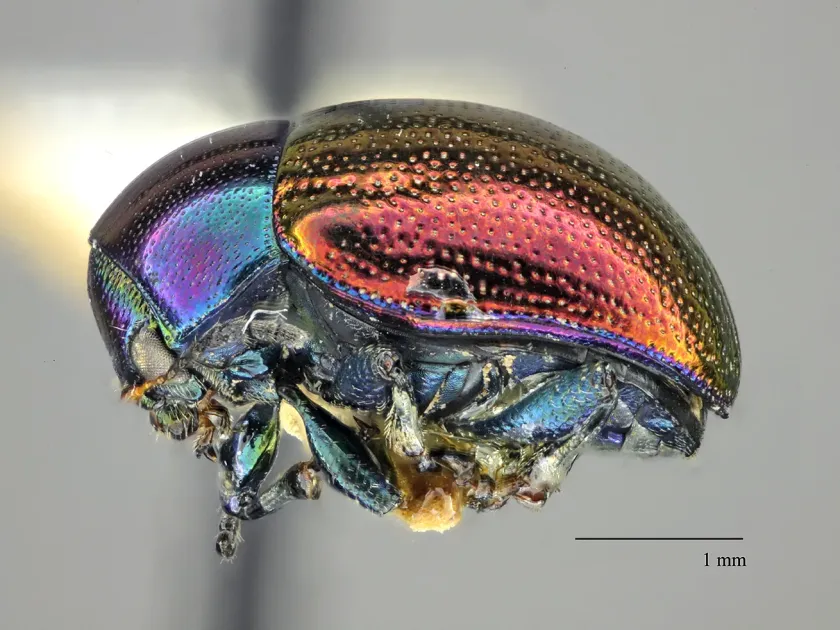
Lytta stygica is a species of blister beetle belonging to the family Meloidae within the order Coleoptera. These beetles are typically characterized by an elongated body, often featuring a deep black or dark blue metallic sheen.
A key biological feature of this genus is the presence of cantharidin, a potent toxic substance within their hemolymph. This chemical serves as a defensive mechanism, causing blistering or skin irritation upon contact with human skin.
Adult beetles possess a distinctively large, heart-shaped head and thread-like antennae usually consisting of 11 segments. Their elytra (wing covers) are relatively soft and flexible, which is a common trait among many blister beetles.
The life cycle of Lytta stygica involves complete metamorphosis. Their larvae are known for leading a secretive, often parasitic life cycle, frequently developing within the nests of solitary bees or egg pods of grasshoppers.
These beetles are primarily found in steppe and forest-steppe zones, where they have adapted to specific environmental conditions and local plant life, influencing their distribution patterns.
What it damages
The primary damage is caused by adult beetles, which are voracious consumers of both vegetative and reproductive parts of various agricultural and wild plants.
Crops frequently affected by Lytta stygica include small grains, various legumes, solanaceous plants, and several technical crops. They tend to target flower buds, young foliage, and developing grains.
In cases of high population density, these beetles can completely skeletonize leaves, leaving only the veins behind, which drastically reduces the plant's photosynthetic capacity.
Damage to the reproductive organs, such as buds and flowers, is particularly concerning as it directly leads to reduced yields and lower crop quality, impacting harvest outcomes significantly.
Infestations are often localized, with beetles moving in groups to rapidly defoliate specific areas of a field, necessitating immediate intervention to prevent spread.
When it appears
The flight period for adult Lytta stygica generally occurs in late spring and early summer, aligning perfectly with the active blooming phases of many agricultural crops.
These beetles are most active during warm, sunny hours when they feed and mate aggressively. Conversely, their activity decreases during cooler periods or at night when they seek cover.
The development cycle progresses through egg, larval (hypermetamorphosis), prepupal, and pupal stages, with most stages occurring within the soil, where they survive the winter in protective cells.
The emergence of adults is highly synchronized with soil temperature and the phenology of their primary host plants, ensuring they appear when food resources are most abundant.
Adult life spans last for several weeks, during which the females focus on feeding and laying eggs in the topsoil to ensure the survival of the next generation.
Signs of infestation
An early indication of an infestation is the appearance of skeletonized leaves with ragged, irregularly shaped holes that expand as the beetles continue their feeding.
During field inspections, groups of dark-colored beetles can be observed congregating on flowers or the tops of stems, often accompanied by visible excrement on the foliage below.
The premature wilting, drying, and dropping of flower buds or blossoms are clear signs of beetle activity that negatively impact the development of the plant's fruit or grain.
Severe infestations lead to a noticeable yellowing and thinning of the plant canopy, indicating that the plant is struggling to maintain metabolic processes after heavy defoliation.
If large numbers are present, a distinct odor may be detected near the infested crop, and the physical presence of the beetles is unmistakable due to their size and characteristic shape.
Control measures
Managing Lytta stygica requires an integrated approach that combines cultural practices and chemical interventions to effectively suppress the population.
- Implement deep autumn plowing to disturb and destroy overwintering larvae and pupae in the soil.
- Manage field margins by removing weeds that serve as initial feeding sites and reservoirs for the beetle.
- Conduct regular monitoring using visual counts or traps to determine if population levels require treatment.
- Apply insecticides (contact or systemic) only when population density exceeds the established economic injury level for the specific crop.
- Maintain proper crop rotation cycles to disrupt the habitat stability required for the beetle's development.
When performing control measures, always wear appropriate personal protective equipment (PPE) to avoid contact with the toxic hemolymph released by the beetles.
Taxonomy
- Latin name
- Lytta stygica
- Order
- Coleoptera (beetles)
- Family
- Meloidae
- EPPO code
- LYTTST
Discussion
No discussions yet — be the first.