
Striped blister beetle
Epicauta vitticollis
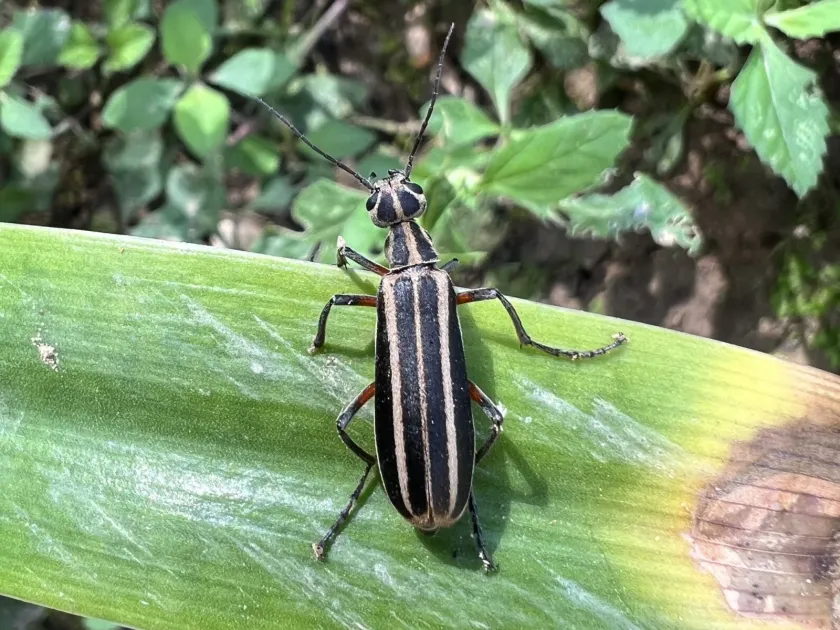
Description
How to identify
The Striped blister beetle (Epicauta vitticollis) is a member of the Meloidae family, belonging to the order Coleoptera, recognized as a notable plant pest in various agricultural regions.
The adult beetle is characterized by an elongated body, typically measuring 10 to 15 mm in length, with distinctive longitudinal stripes on the elytra and pronotum.
The common name of this family stems from the presence of cantharidin, a toxic compound in the hemolymph that causes skin blisters upon contact with humans or animals.
These beetles undergo a complex developmental process known as hypermetamorphosis, where the larval stages are morphologically distinct and exhibit unique dietary habits.
While the larval stages are often associated with the control of grasshopper populations, the adult beetles are highly voracious feeders that pose a severe threat to cultivated crops.
What it damages
The primary hosts for the Striped blister beetle include a variety of broad-leaved crops, with a particular preference for members of the legume family.
Key crops at risk include soybeans, alfalfa, potatoes, and tomatoes, where these beetles can aggregate in large numbers and cause rapid, widespread destruction.
The damage caused by adults is primarily through leaf feeding; they often skeletonize the foliage, leaving only the veins intact, which cripples the plant's photosynthetic ability.
Beyond vegetative damage, high populations of these beetles target flowers and young fruit, resulting in significant yield loss and stunted development of the plants.
Severe infestations can lead to complete defoliation, leaving the plants vulnerable to environmental stress and secondary infections from opportunistic pathogens.
When it appears
Adult beetles typically emerge during the summer months when warm, stable weather conditions favor their activity, mating, and dispersal into agricultural fields.
The peak of their activity frequently aligns with the flowering stages of soybeans and other legumes, making this period the most critical for field inspection and management.
These insects are highly mobile and are capable of migrating quickly from wild host plants to agricultural crops when food sources in surrounding areas become limited.
They typically complete one generation per year, but their high reproductive capacity means that population surges can happen rapidly if environmental conditions are ideal.
Field scouting during the months of July and August is essential, as this is when the beetles are most visible and actively feeding on host crops.
Signs of infestation
The most immediate sign of an infestation is the sudden appearance of ragged, skeletonized foliage across localized patches in the field.
Direct observation of the plants during the day will reveal the beetles feeding on the upper leaf surfaces, often gathered in clusters on the stems and flowers.
The presence of dark, frass-like excrement on the leaf surface beneath feeding sites is another clear indicator of beetle activity within the crop canopy.
Infested plants often display signs of rapid wilting and chlorosis, particularly when the feeding intensity is high and the plant's structural integrity is compromised.
- Skeletonized leaf patterns;
- Damage to buds and blooms;
- Visible clusters of beetles on plant tops.
Control measures
The primary control strategy involves the application of registered insecticides with contact or systemic action once populations exceed the established economic threshold.
Integrated pest management should include diligent weed control in and around field borders, as many weeds act as secondary hosts or reservoirs for the beetles.
Deep tillage of the soil can help reduce the survival rate of the pupae and overwintering larvae, thereby lowering the population pressure for the following season.
Biological control agents, such as specialized entomopathogenic fungi or bacteria, are being explored as potential alternatives for reducing beetle numbers without broad-spectrum chemicals.
Because these insects carry toxic cantharidin, farmers and scouts should wear protective clothing to avoid skin contact and potential chemical burns during handling.
Taxonomy
- Latin name
- Epicauta vitticollis
- Order
- Coleoptera (beetles)
- Family
- Meloidae
- EPPO code
- EPIAVT
Discussion
No discussions yet — be the first.