
Striped blister beetle
Epicauta vittata
Description
How to identify
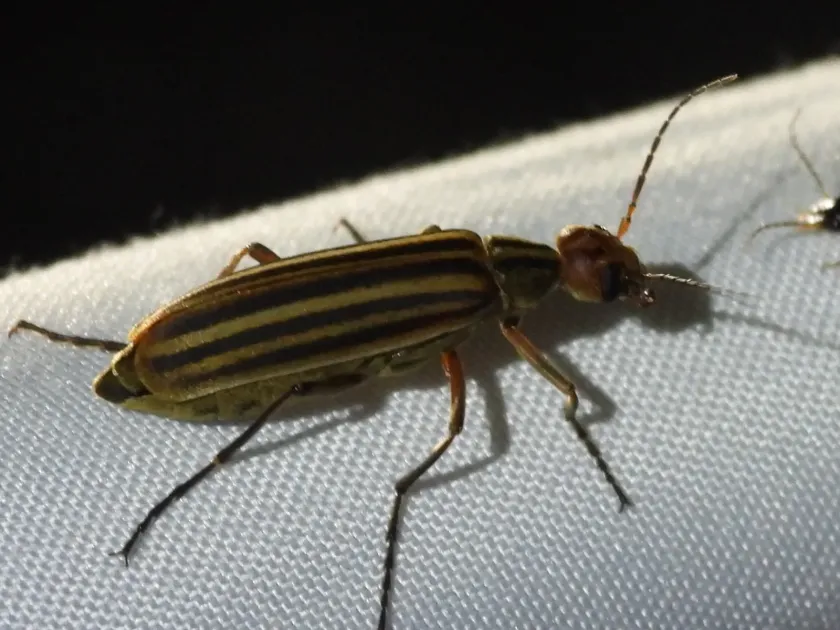
The striped blister beetle (Epicauta vittata) is a member of the Meloidae family, easily recognized by its elongated body and distinct yellow and black or brown stripes running down its wing covers.
Adult beetles contain a substance called cantharidin, which is a powerful blistering agent. Contact with the beetle can cause significant skin irritation, blisters, and chemical burns on human skin.
The head is distinctly separated from the pronotum, and the antennae are thread-like. They are generally found in clusters, as they tend to feed and aggregate in groups on host plants.
While the adults are the most visible stage, the lifecycle is complex. These beetles undergo hypermetamorphosis, where the larval stages look drastically different from the adult form.
Correct identification is crucial as they are often confused with other beetle species, but the presence of stripes and their congregating behavior are key indicators.
What it damages
The striped blister beetle is a significant polyphagous pest, known for its voracious appetite. It targets a variety of vegetable, field, and forage crops, often causing severe defoliation.
Common hosts include potatoes, tomatoes, eggplants, peppers, soybeans, and alfalfa. In many cases, these beetles can strip a plant of its foliage in a matter of days.
Beyond foliage consumption, adults can feed on flowers and developing fruit, directly reducing the marketable yield and the overall health of the agricultural produce.
The damage is characterized by ragged holes in the leaves. As the infestation progresses, the beetle leaves only the major veins of the leaves intact, leading to a skeletonized appearance.
Weakened plants are subsequently more susceptible to secondary pests and various plant diseases, which further compromises the agricultural yield of the affected fields.
When it appears
The presence of striped blister beetles is seasonal, typically coinciding with the warmer months of mid-to-late summer when the adults emerge from the soil.
The lifecycle is tied to the environment, as they prefer areas where their primary food sources are blooming or setting fruit, aligning with peak agricultural production times.
Larval stages are soil-dwelling and act as predators, often targeting the egg pods of grasshoppers, which means their population density is sometimes linked to previous grasshopper outbreaks.
Adults emerge to mate and feed throughout the summer, after which they return to the soil to deposit eggs that will overwinter and provide the next generation.
Monitoring for the appearance of these beetles should begin as soon as crops start flowering or setting fruit, as this is when the beetles are most active and damaging.
Signs of infestation
Sudden and rapid defoliation is the most common sign of a striped blister beetle infestation. If you notice plants being quickly stripped of their leaves, this pest is a primary suspect.
Clusters of beetles feeding together on the top parts of plants or leaves are a clear indicator. They often drop to the ground when disturbed, pretending to be dead as a defensive tactic.
Small holes appearing across the field in a pattern suggests that a colony of beetles has arrived and is moving through the crop area systematically.
Checking the underside of leaves and the top clusters of vegetation during early morning or evening hours usually reveals the presence of these aggregating insects.
The sheer speed at which damage occurs is a hallmark of this pest, distinguishing it from slower-feeding beetles that may only cause minor leaf loss.
Control measures
Management requires an integrated approach to mitigate the damage while considering the toxic nature of the beetles to humans and their role in the local ecosystem.
- Manual removal of beetles while wearing protective gloves to avoid contact with cantharidin.
- Application of pyrethroid-based insecticides when infestation levels exceed economic thresholds.
- Maintaining field borders and reducing weed cover to discourage aggregation.
- Tilling the soil in the autumn and spring to disturb overwintering larvae and pupae.
- Using row covers for small-scale gardening to prevent beetle access to susceptible plants.
When applying pesticides, it is vital to time applications to minimize impact on pollinators and beneficial insects that may be present in the crop fields.
Integrated pest management (IPM) practices, such as monitoring grasshopper populations, can help predict potential blister beetle outbreaks in following seasons.
Effective control is best achieved by early detection and immediate action, preventing the beetles from congregating in large, destructive numbers.
Taxonomy
- Latin name
- Epicauta vittata
- Order
- Coleoptera (beetles)
- Family
- Meloidae
- EPPO code
- EPIAVI
Discussion
No discussions yet — be the first.