
Blister beetle
Epicauta tenuicollis
Description
How to identify
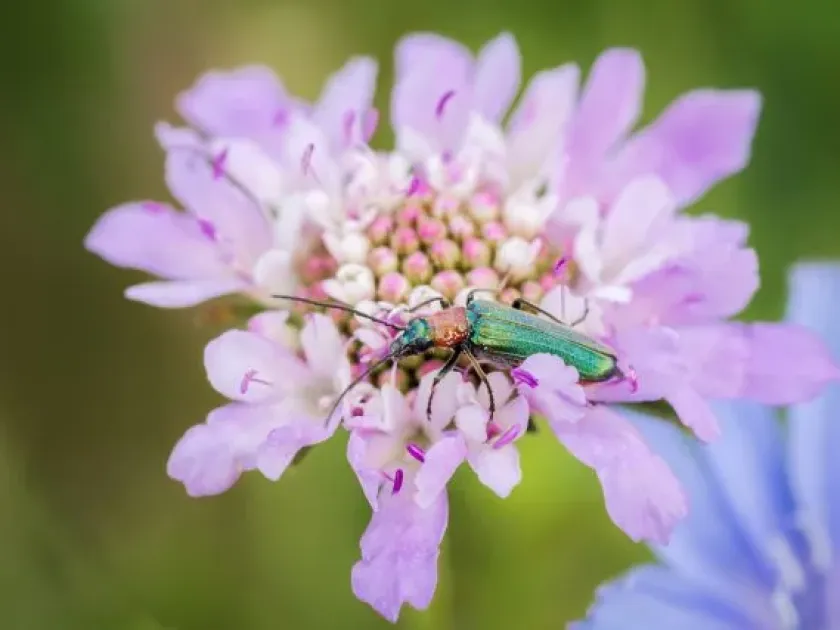
The blister beetle (lat. Epicauta tenuicollis) belongs to the family Meloidae, within the order Coleoptera. Adult beetles are characterized by an elongated body, typically measuring between 10 and 15 millimeters, with a distinctly narrowed neck-like section between the head and thorax.
The coloration of these beetles is generally dark, often featuring a matte or dull appearance due to fine pubescence on their exoskeleton. A defining biological feature is the presence of cantharidin, a potent toxin in their hemolymph used for defense against predators, which can cause severe skin blisters on humans.
The life cycle of the blister beetle includes hypermetamorphosis, a complex development process common to many Meloidae. Larvae typically develop in the soil or within the nests of ground-nesting bees, making them difficult to detect in the early stages of their life cycle.
Adult beetles are highly mobile and capable of flight, allowing them to rapidly colonize new fields in search of food. Their activity is heavily influenced by temperature, with peak movement observed during warm, sunny weather conditions.
These insects exhibit gregarious behavior, often forming dense clusters on specific areas of a field. This swarming nature allows them to cause severe, localized destruction of foliage in a very short amount of time.
What it damages
Blister beetles are polyphagous, meaning they feed on a wide variety of agricultural plants. They cause significant economic losses to grain legumes, including soybeans, alfalfa, and various peas, which serve as preferred hosts for the adults.
In addition to legumes, they damage vegetable crops in the Solanaceae family, such as potatoes, tomatoes, and peppers. When preferred crops are unavailable, they can survive on various weeds, maintaining their population levels near agricultural fields.
Adult beetles consume leaves and stems, significantly reducing the plant's photosynthetic capacity. This damage is particularly detrimental during the flowering and pod-filling stages, directly impacting overall crop yield and quality.
Young seedlings are especially vulnerable; a swarm of blister beetles can completely defoliate a stand of young plants, leading to severe thinning and often necessitating the replanting of damaged sections of the field.
Beyond leaf consumption, these beetles also feed on flowers and buds. By removing these reproductive structures, they directly lower the number of fruit or seed sets, leading to measurable losses in productivity across the affected acreage.
Signs of infestation
The most prominent sign of a blister beetle infestation is the skeletonization of leaves, where beetles consume the soft tissue and leave behind only the main veins. This creates a lace-like pattern on the foliage that progresses rapidly as the beetles feed.
Visual identification is usually straightforward as the beetles are often found in conspicuous clusters on the upper leaves or terminal buds of the host plants. During the cooler parts of the day, they may be less active, making them easier to spot.
Frass (excrement) accumulation on the leaves is another indicator of recent feeding activity. In cases of massive infestations, a distinct odor may be noticeable, as the beetles release chemical defense compounds when disturbed.
Plants heavily infested by blister beetles often exhibit signs of wilting or yellowing, exacerbated by both the loss of foliage and the potential for cantharidin-induced phytotoxicity to surrounding plant tissues.
Patches of defoliated plants appearing suddenly within a field are a classic hallmark of their activity. Farmers should monitor field edges, as these are often the first points of entry for swarming blister beetle populations.
Control measures
Effective management requires the timely application of contact insecticides when the first clusters are spotted. Applications should be timed for the early morning or late evening when the beetles are less active and more localized on the foliage.
Cultural practices such as deep autumn plowing can help disrupt the soil-dwelling larvae, reducing the overwintering success of the population. Maintaining weed-free field margins significantly reduces the attractiveness of the area to these pests.
Crop rotation is a recommended strategy to break the life cycle, especially in regions where the beetles are known to be a recurring problem. Consistent field scouting using yellow sticky traps can provide early warning of their arrival.
Biological control, including the use of entomopathogenic fungi, is being researched as a more sustainable alternative to synthetic chemicals. However, success depends heavily on specific environmental conditions like humidity and temperature.
When selecting control agents, farmers must ensure they are using products labeled for blister beetles and pay strict attention to pre-harvest intervals to ensure food safety and minimize risks to beneficial pollinators in the surrounding area.
Taxonomy
- Latin name
- Epicauta tenuicollis
- Order
- Coleoptera (beetles)
- Family
- Meloidae
- EPPO code
- EPIATE
Discussion
No discussions yet — be the first.