
Striped blister beetle
Epicauta suturalis
Description
How to identify
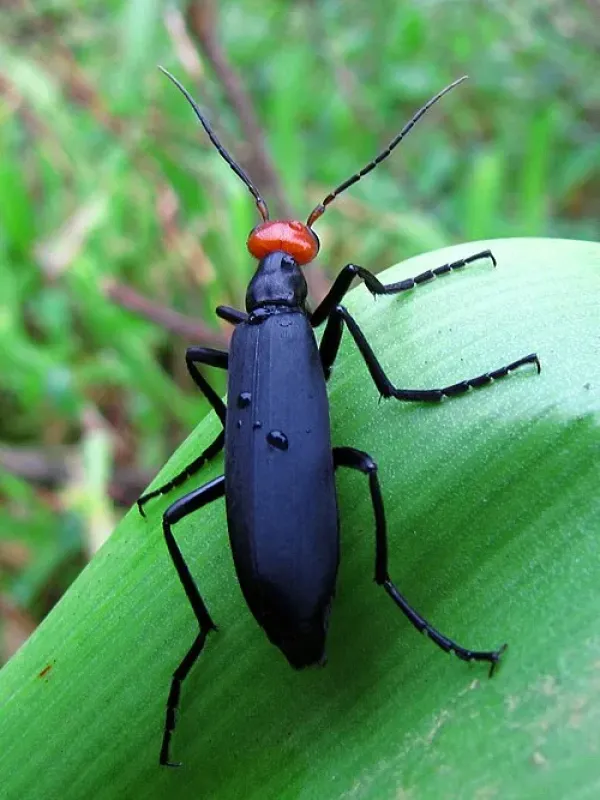
The striped blister beetle (Epicauta suturalis) belongs to the family Meloidae, order Coleoptera. It is a medium-sized beetle characterized by an elongated body shape.
The insect is distinguished by specific longitudinal stripes on its elytra, which contrast with the primary color of the beetle's exoskeleton.
These beetles possess cantharidin in their hemolymph, a potent chemical compound used as a defense mechanism that can cause skin irritation or blisters in humans upon contact.
The head is distinctly separated from the pronotum, and the antennae are thread-like, which are key morphological traits for the genus Epicauta.
The larval stage undergoes hypermetamorphosis, a complex development process where the larvae inhabit the soil and often parasitize the egg pods of grasshoppers.
What it damages
This beetle is a polyphagous pest, causing significant damage to a wide variety of agricultural crops, particularly legumes, nightshades, and various vegetables.
Adult beetles feed voraciously on foliage, flowers, and young fruit, leading to severe defoliation and a reduction in the overall plant health.
Large populations of the striped blister beetle can cause extensive destruction to field crops such as soybeans, alfalfa, and sugar beets, resulting in yield loss.
By consuming reproductive tissues, the pest directly impacts the fruit-setting process, preventing the development of a marketable harvest.
The physical damage caused by feeding also increases the plant's susceptibility to secondary pathogens and environmental stressors.
When it appears
The adult emergence typically occurs during the second half of summer, which corresponds to the peak activity period for these beetles in the field.
Beetles are highly active during sunny, warm days, frequently moving between host plants to feed and mate throughout the afternoon.
The life cycle is closely tied to local grasshopper populations, as the larvae rely on the presence of grasshopper eggs in the soil to complete their development.
Pupation takes place within the soil, and after a period of development, the new generation of adults emerges to the surface.
Environmental conditions play a crucial role in the timing of the life cycle, with temperatures dictating the duration of each developmental stage.
Signs of infestation
A primary indicator of a blister beetle infestation is the skeletonized appearance of leaves, where only the tough veins remain intact.
The presence of adult beetles, which are often found aggregating on flowers or the tops of plants, is a clear sign that intervention is required.
Wilting, deformation of buds, and premature drop of flowers are common symptoms of significant pest feeding on reproductive plant parts.
Gardeners and farmers can detect these pests by visually inspecting the upper canopy of crops during peak sunshine hours.
Accumulations of frass (insect excrement) on the ground surface beneath plants can also indicate a high level of beetle activity.
Control measures
Chemical control using authorized insecticides is often the most effective way to manage populations when the economic threshold is exceeded.
Applications should be timed carefully to ensure maximum efficacy while minimizing the impact on non-target beneficial insects in the field.
Cultural practices, such as deep plowing, can help disrupt the soil, potentially destroying the overwintering or developing stages of the larvae.
Managing weed populations in surrounding areas is critical, as weeds can act as reservoirs and provide initial sustenance for the beetles before they migrate.
- Use of contact-stomach insecticides for field treatment.
- Crop rotation to break the beetle's life cycle.
- Monitoring with visual traps to detect the onset of infestation.
Taxonomy
- Latin name
- Epicauta suturalis
- Order
- Coleoptera (beetles)
- Family
- Meloidae
- EPPO code
- EPIAST
Discussion
No discussions yet — be the first.