
Epicauta rufidorsum
Epicauta rufidorsum
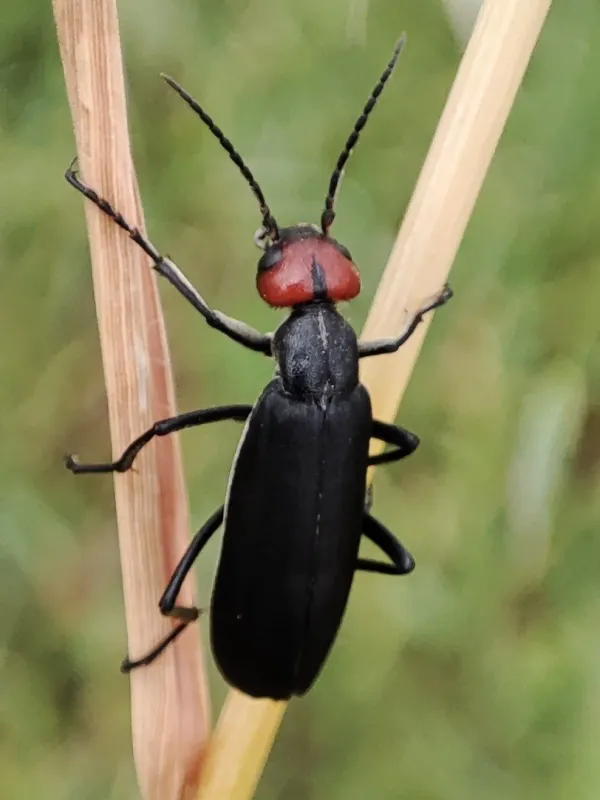
Description
How to identify
Epicauta rufidorsum is a species of beetle belonging to the Meloidae family, commonly known as blister beetles. These insects are recognized by their elongated bodies and specific reddish or yellowish coloration on the elytra.
A defining biological characteristic of this species is the presence of cantharidin, a toxic substance contained in their hemolymph that acts as a potent chemical defense mechanism.
The life cycle involves hypermetamorphosis, where larvae undergo distinct developmental stages, often developing in the soil or within the nests of other insects.
Adult beetles are highly mobile, active during daylight hours, and tend to congregate on host plants, which facilitates rapid colonization of fields.
As phytophagous insects, they can cause significant damage to agricultural productivity if their population densities are not properly managed throughout the season.
What it damages
Adult beetles are responsible for the primary damage, as they feed aggressively on the foliage, buds, and flowers of various crops, particularly legumes and solanaceous plants.
In fields of potatoes or tomatoes, a swarm of these beetles can strip leaves to the veins within a very short timeframe, significantly hindering the plant's ability to photosynthesize.
The loss of floral organs directly correlates to a decrease in fruit set, which leads to substantial yield losses at the time of harvest.
Plants weakened by heavy feeding are susceptible to secondary infections, including fungal and bacterial pathogens that enter through the damaged plant tissues.
The total destruction of the leaf apparatus in sensitive stages can lead to the death of the plant or a total failure to produce marketable yield.
When it appears
Adult activity typically peaks during the summer months when warm, stable weather conditions favor their flight and high metabolic rates.
The synchronization of their life cycle with the flowering phases of host plants makes them a high-risk factor during the reproductive stages of crops.
Environmental conditions such as temperature and humidity significantly dictate the duration and intensity of their appearance in agricultural areas.
While heat promotes activity, excessive temperatures may cause beetles to seek shelter within the canopy or near the soil surface to avoid dehydration.
The winter period is usually spent in the larval stage, buried in the soil or protected niches, ensuring survival until the next favorable season.
Signs of infestation
The most evident sign of infestation is skeletonized foliage, where the soft tissues between the leaf veins have been consumed, leaving only a network of fibers.
Direct observation of the insects is usually possible, as they are often found in groups on the upper leaves of host plants during the early or late hours of the day.
Missing buds and flowers are indicative of active feeding, particularly if there are no other symptoms of disease or alternative pest presence.
Frass or excrement left on the leaf surfaces or the ground beneath the plants serves as another indicator of heavy feeding pressure.
General plant stunting and chlorosis, caused by the stress of extensive defoliation, are late-stage signs of a severe infestation that requires immediate intervention.
Control measures
Management of Epicauta rufidorsum involves an integrated approach combining cultural practices, biological controls, and judicious chemical application.
Fall tillage is a critical cultural practice, as it disrupts the soil and exposes the overwintering larvae to environmental stress or predation.
Chemical control should be targeted using approved insecticides when scouting reports confirm that the economic injury level has been exceeded.
- Regular field scouting to monitor pest density.
- Removal of host weed species near fields to reduce pest populations.
- Protective gear usage to avoid skin irritation from beetle toxins.
Caution must be exercised during hand-removal or manual control efforts, as the beetles' defensive secretions can cause blisters and dermatitis upon skin contact.
Taxonomy
- Latin name
- Epicauta rufidorsum
- Order
- Coleoptera (beetles)
- Family
- Meloidae
- EPPO code
- EPIARD
Discussion
No discussions yet — be the first.