
Epicauta ruficeps
Epicauta ruficeps
Description
How to identify
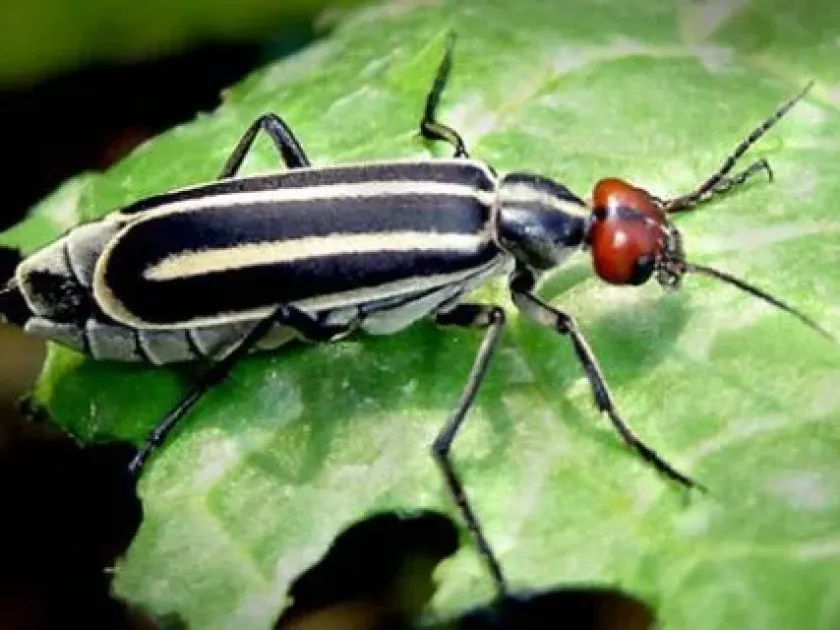
Epicauta ruficeps, commonly known as a type of blister beetle, belongs to the family Meloidae. Adult beetles are easily recognized by their elongated bodies and a distinct reddish coloration on their heads, which contrasts with their darker elytra.
The biology of this species is quite fascinating, as it undergoes hypermetamorphosis. The larvae are typically predatory, often developing within the egg pods of grasshoppers, which positions them as natural enemies of other pests during their early developmental stages.
Adult beetles possess a defense mechanism: they secrete a toxic chemical compound known as cantharidin. This substance can cause skin blistering in humans and can be toxic if ingested by livestock, making these insects a significant concern.
The size of the adult Epicauta ruficeps generally ranges from 10 to 15 mm. They are highly mobile and tend to aggregate on host plants during the warmer summer months, making them highly visible to farmers.
Their defensive nature is a key identifying factor; when threatened or handled, the beetle may exude droplets of hemolymph from its leg joints, which contains the aforementioned irritant toxin.
What it damages
The adult beetles are the primary life stage responsible for agricultural damage. They are voracious feeders that consume large portions of the foliage of various crops, leading to significant yield losses.
Major crops affected by this beetle include various Solanaceae, such as potatoes, tomatoes, and eggplants. They have also been reported to cause severe damage to legumes, including soybeans and alfalfa.
The damage pattern is characterized by the consumption of leaf tissue, leaving behind only the tougher veins of the leaves. In cases of high infestation, the plants can be almost completely defoliated in a very short time.
Reduced leaf surface area severely impacts the plant's ability to perform photosynthesis. This physiological stress during critical growth stages results in stunted plant development and lower fruit yields.
Furthermore, because the beetles are toxic, their presence in forage crops like hay can be catastrophic. If harvested along with the crop, the dried beetles remain toxic, posing a severe health risk to horses and cattle that consume the fodder.
When it appears
The presence of Epicauta ruficeps is typically seasonal, coinciding with the peak summer months. In most regions, adults emerge and become active from mid-summer until early autumn.
Environmental conditions, particularly temperature and soil moisture, dictate their emergence patterns. Warm, dry weather usually accelerates their life cycle, leading to larger populations in the fields.
Beetles are diurnal, exhibiting their highest feeding and mating activity during sunny, warm hours. They tend to seek shelter or stay less active during cooler, overcast conditions.
Their mating period occurs during the summer, followed by oviposition in the soil. The duration of the adult activity period often overlaps with the crucial vegetative and reproductive stages of many summer crops.
Farmers are advised to monitor fields diligently from the onset of summer heat to ensure that any initial infestations are detected before they reach a threshold that requires intensive chemical intervention.
Signs of infestation
The most prominent sign of an infestation is the appearance of skeletonized leaves on the host plants. The beetles consume the green tissue, leaving a web of leaf veins behind.
Direct observation of the plants usually reveals clusters of beetles on the foliage, stems, or flowers. Their bright head coloration often makes them stand out against the green canopy of the crops.
Damage often appears in patches or spots across the field, as the beetles tend to congregate. If left unchecked, these patches expand, resulting in widespread loss of leaf mass and overall plant vigor.
Plant distress is another sign; heavily attacked plants may lose their structural integrity and show signs of dehydration due to the severe loss of photosynthetic tissue.
Occasionally, the presence of these beetles can be detected by the distinct chemical odor of their defensive secretions, especially when a significant population is gathered on a single plant.
Control measures
Effective management of Epicauta ruficeps requires a combination of cultural practices and targeted insecticide use to protect crop yields.
- Implement deep plowing in the autumn to disrupt soil-dwelling stages and reduce the success of overwintering.
- Manage weed populations around field borders, as these areas often serve as initial feeding grounds for the beetles.
- Apply authorized insecticides during the early stages of infestation to prevent mass migration into the field.
- Utilize light traps or other physical barriers in small-scale cultivation to reduce adult beetle numbers.
- Maintain proper crop rotation to break the life cycle and reduce the build-up of beetle populations in the field soil.
Taxonomy
- Latin name
- Epicauta ruficeps
- Order
- Coleoptera (beetles)
- Family
- Meloidae
- EPPO code
- EPIARU
Discussion
No discussions yet — be the first.