
Epicauta puncticollis
Epicauta puncticollis
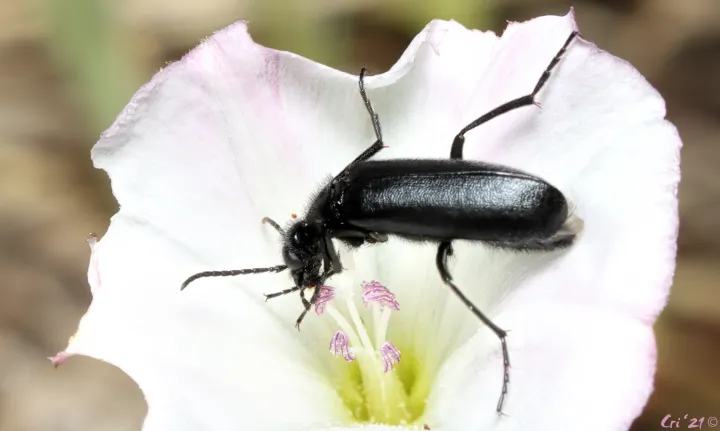
Description
How to identify
Epicauta puncticollis is a species of blister beetle belonging to the Meloidae family. These beetles are characterized by an elongated body shape and small, distinct punctations on the pronotum, which distinguish them from other similar species.
The hemolymph of these beetles contains cantharidin, a potent toxic compound that serves as a chemical defense against predators. Humans handling these insects should be careful, as the toxin can cause skin blisters or irritation.
The beetle undergoes hypermetamorphosis, a complex development cycle. The larval stages are typically soil-dwelling and act as specialized predators of grasshopper eggs, making them somewhat beneficial in some contexts, despite adult damage.
Adult beetles are highly active, diurnal insects that are often found in large, gregarious groups on plants. They are strong fliers and can move quickly between host plants in a field.
Identification is best achieved by examining the thoracic structure and the specific color patterns of the elytra, which remain consistent across populations of this species.
What it damages
Epicauta puncticollis is primarily known as a significant pest of legumes. Crops such as soybeans, alfalfa, and various pulse plants are frequently targeted by these voracious feeders.
Adult beetles consume foliage, often skeletonizing leaves until only the veins remain. They also show a high preference for reproductive structures, causing severe damage to buds, flowers, and developing pods.
Feeding intensity is usually high; a single group of beetles can devastate a patch of plants in a very short period, leading to significant yield loss and economic damage.
The damage caused by these insects often exacerbates plant stress, making crops more susceptible to environmental factors like drought and various secondary pathogenic infections.
Field scouting for this pest is critical, as the rapid nature of their feeding can lead to sudden, widespread defoliation across a commercial crop site if not monitored closely.
When it appears
The activity of Epicauta puncticollis is closely tied to warm weather conditions. Adults typically emerge during the summer months when plants are in their most active vegetative stages.
They are most active during the heat of the day, congregating on the upper parts of the plant canopy. During cooler conditions, they tend to drop to the soil or hide within the dense foliage.
The timing of their emergence often aligns with the blooming period of legumes, which is the most critical time for protection to ensure the development of fruit and seeds.
Seasonal fluctuations in weather, particularly temperature and rainfall patterns, can influence the duration of the adult feeding period and the overall population density for the year.
Larval stages remain in the soil through the winter months, ensuring the species survives the off-season and emerges reliably as the next generation when conditions become favorable.
Signs of infestation
Visible signs of infestation include irregular, jagged holes in leaves that eventually develop into complete skeletonization as the beetles continue to feed.
Large clusters of beetles visible on the tops of plants or stems are a clear indication of a significant infestation that requires immediate attention and management.
Plant stunting or flower drop is another key indicator. If the crop is in a reproductive stage, the loss of flowers will directly result in reduced pod set and final harvest volume.
Fecal deposits and leaf remnants under the plant canopy can serve as subtle clues of beetle activity even when the insects are not immediately visible at the top of the plant.
Frequent scouting during the summer peak allows producers to identify the presence of these beetles before they move across the entire field and cause irreversible economic loss.
Control measures
Chemical control remains the most effective way to manage Epicauta puncticollis. Fast-acting insecticides, particularly pyrethroids, are often applied once the population exceeds the economic threshold.
Integrated Pest Management (IPM) practices should involve the removal of host weeds from field margins, as these can serve as reservoirs for beetle populations prior to crop infestation.
Tillage practices, specifically deep plowing, can help disrupt the soil environment where larvae overwinter, potentially reducing the number of adults that emerge the following season.
Monitoring using pheromone traps or systematic field inspections is recommended to track the beetle's life cycle and determine the optimal timing for protective intervention.
Safety is a priority when dealing with blister beetles; field workers should wear appropriate protective gear to avoid accidental exposure to the cantharidin toxin released by crushed beetles.
Taxonomy
- Latin name
- Epicauta puncticollis
- Order
- Coleoptera (beetles)
- Family
- Meloidae
- EPPO code
- EPIAPU
Discussion
No discussions yet — be the first.