
Epicauta pilma
Epicauta pilma
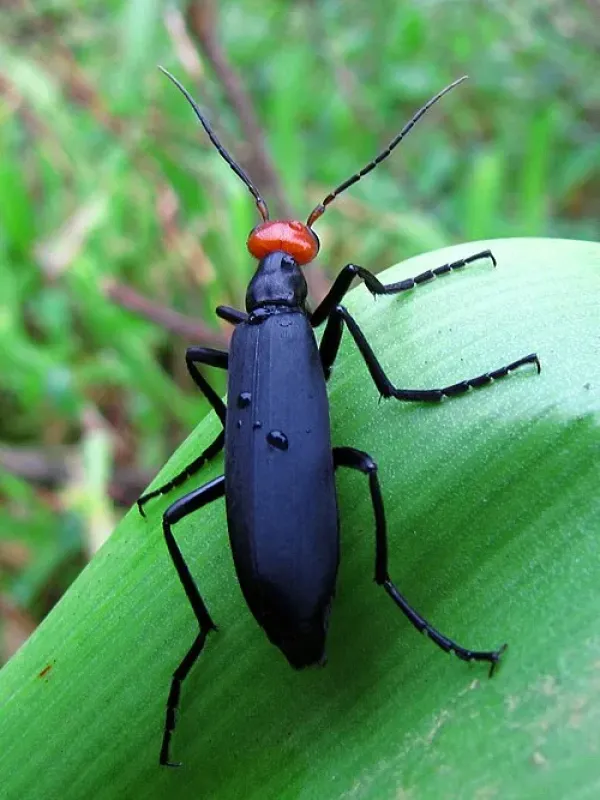
Description
How to identify
Epicauta pilma belongs to the Meloidae family, commonly known as blister beetles. This order of insects is characterized by their elongated bodies and soft elytra, which distinguish them from many other ground-dwelling beetles.
These beetles possess a toxic hemolymph containing cantharidin. This substance can cause severe skin irritation or blisters upon contact, acting as a natural defense mechanism against vertebrate predators.
They are active during the day, thriving in warm and sunny environments. Their mobility is high, allowing them to travel significant distances between fields to find suitable hosts for feeding.
Morphologically, they are identified by the shape of their heads and antennae, which are typical for the genus Epicauta. Adults are relatively large, making them easy to spot during regular crop scouting.
The larval stage is highly specialized, often living in the soil and feeding on the egg pods of grasshoppers. This unique life cycle makes the population density of these beetles highly dependent on the presence of other insects in the ecosystem.
What it damages
Epicauta pilma causes significant damage to various agricultural crops, including legumes, potatoes, and tomatoes. The primary damage is inflicted by the adults, which consume the plant's vegetative parts.
The beetles devour leaf tissue, often leaving only the veins behind, a process that severely inhibits the plant's photosynthetic capability. Left untreated, high populations can defoliate entire plants in just a few days.
During the flowering stage, the damage extends to blossoms and young fruit. This leads to substantial yield losses, as the plant loses its reproductive organs, which is a major concern for farmers.
Damage to stems and stalks can also occur, weakening the plant's structure and making it susceptible to opportunistic fungal and bacterial pathogens that enter through feeding wounds.
The economic impact is severe because the beetles are voracious eaters. Even small populations can quickly exceed the economic threshold for intervention, requiring immediate action from growers.
When it appears
The appearance of adults typically occurs in mid-to-late summer, coinciding with the peak of the warm season. This period usually aligns with the reproductive phases of many vegetable crops.
The emergence of the beetles is triggered by seasonal temperature increases, which signal the end of the pupal stage within the soil. Their activity duration is dictated by the length and intensity of the summer heat.
Adult beetles generally live for several weeks, during which they mate and lay eggs. Monitoring is most effective during this window, typically from July through August in many temperate regions.
Environmental conditions, such as drought or excessive rain, can shift the peak activity periods. Growers should adapt their scouting routines based on local weather forecasts and historic emergence data.
As the season progresses toward autumn, the beetles migrate back into the soil for hibernation. Understanding the overwintering conditions is crucial for predicting potential population levels in the subsequent growing season.
Signs of infestation
Skeletonized leaves are the primary indicator of Epicauta pilma presence. The beetles feed on the soft leaf tissue between the veins, creating a lace-like appearance on the plant foliage.
The visual presence of the beetles themselves is the most reliable sign. They are often found in clusters, making them clearly visible on the leaves, stems, and flowers of the host plants.
Small, dark fecal spots on the leaves indicate the intensity of the beetle feeding. A higher density of these spots usually correlates with larger populations that require immediate control measures.
Sudden wilting of the plant canopy or top shoots may suggest stem damage or high localized feeding pressure. Such symptoms often appear in patches as the colony moves across a field.
The destruction of flowers and the absence of fruit set are late-stage signs of a severe infestation. By the time this occurs, significant economic damage has already been sustained by the crop.
Control measures
Effective management relies on the use of systemic and contact insecticides. Selecting the right product depends on the crop type and the timing of the infestation, always respecting pre-harvest intervals.
Cultural control includes deep plowing after harvest, which disrupts the overwintering pupae in the soil. This practice significantly reduces the emergence of adults in the following year.
Crop rotation is another vital strategy, as it forces the insects to look elsewhere for suitable food sources, breaking the cycle of infestation in specific field plots.
Biological control agents, such as specific fungi that infect beetles, can be used in integrated pest management programs, though chemical control remains the standard for immediate population knockdown.
- Regular field scouting, especially during flowering.
- Weed control in and around field borders.
- Application of labeled insecticides during peak activity hours.
- Rotation of chemical classes to prevent resistance.
- Use of light traps to monitor beetle activity levels.
Taxonomy
- Latin name
- Epicauta pilma
- Order
- Coleoptera (beetles)
- Family
- Meloidae
- EPPO code
- EPIAPI
Discussion
No discussions yet — be the first.