
Epicauta pestifera
Epicauta pestifera
Description
How to identify
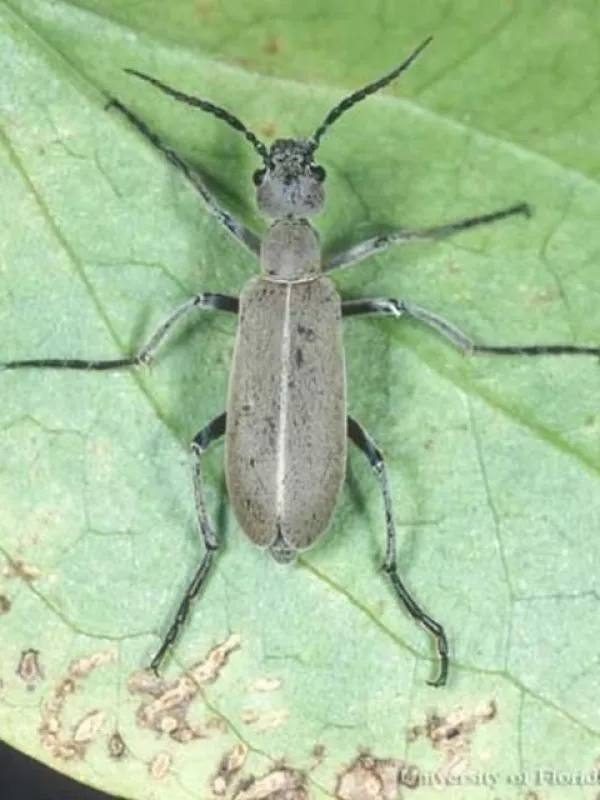
Epicauta pestifera, commonly known as a type of blister beetle, belongs to the family Meloidae. The adult beetles are characterized by a long body covered with dense pubescence, which often gives them a dull or matte appearance.
The coloration of these beetles ranges from gray to black. A defining feature of the Meloidae family is the presence of cantharidin, a toxic compound found in their hemolymph, which serves as a defensive mechanism and can cause blistering on human skin upon contact.
The life cycle of this species is complex and includes a complete metamorphosis (egg, larva, pupa, and adult). Unlike the leaf-feeding adults, the larvae typically reside in the soil and often feed on grasshopper egg pods, making them beneficial in some stages but detrimental as adults.
Development is highly dependent on soil moisture and temperature. They usually overwinter as larvae (specifically as coarctate larvae or pseudopupae) within earthen cells, allowing them to survive harsh environmental conditions during the off-season.
Adults are highly mobile and active, especially during sunny and hot weather. They are capable of flying over significant distances, which allows them to colonize new fields rapidly once they emerge in the spring or summer.
What it damages
The primary economic damage is caused by the adults, which are polyphagous and feed on a wide variety of plants. They are particularly known for damaging legumes, with soybeans being a primary target during their growth stages.
Besides soybeans, Epicauta pestifera can impact alfalfa, dry beans, and various solanaceous crops like potatoes or tomatoes. They also feed on weeds, which often act as initial bridge hosts before the beetles move into cultivated fields.
Damage is most severe during the flowering and pod-filling stages. The beetles consume leaves, flowers, and developing pods, significantly reducing yield and quality. In some cases, they can defoliate plants entirely if the population density is high.
Feeding signs include large, irregular holes in leaves, often consuming tissue down to the leaf veins. This extensive defoliation compromises the plant's ability to photosynthesize, leading to weakened plants and increased susceptibility to drought and disease.
The physical damage caused by their mandibles creates entry points for secondary bacterial and fungal infections. This often leads to a decline in plant vigor that extends beyond the immediate loss of biomass caused by the feeding itself.
Control measures
Effective management of Epicauta pestifera requires an integrated pest management (IPM) approach that focuses on scouting and timely intervention when populations exceed economic thresholds.
Cultural control practices, such as deep tillage, can help disrupt the soil-dwelling life stages of the beetle, reducing the number of emerging adults in the following season. Maintaining clean fields by eliminating weeds is also crucial for reducing initial populations.
Chemical control is often necessary when populations are high. Growers should use approved insecticides that target coleopterans, ensuring that applications are timed correctly to maximize efficacy while minimizing impact on non-target species.
It is essential to rotate chemical modes of action to prevent the development of resistance. Additionally, applications should be scheduled during times of low pollinator activity, such as late in the evening, to protect beneficial insects.
- Implement regular field scouting, especially along borders and grassy areas.
- Rotate crops to disrupt the life cycle of the beetle.
- Apply insecticides according to local agricultural guidelines and safety standards.
Taxonomy
- Latin name
- Epicauta pestifera
- Order
- Coleoptera (beetles)
- Family
- Meloidae
- EPPO code
- EPIAPS
Discussion
No discussions yet — be the first.