
Blister beetle
Epicauta pardalis
Description
How to identify
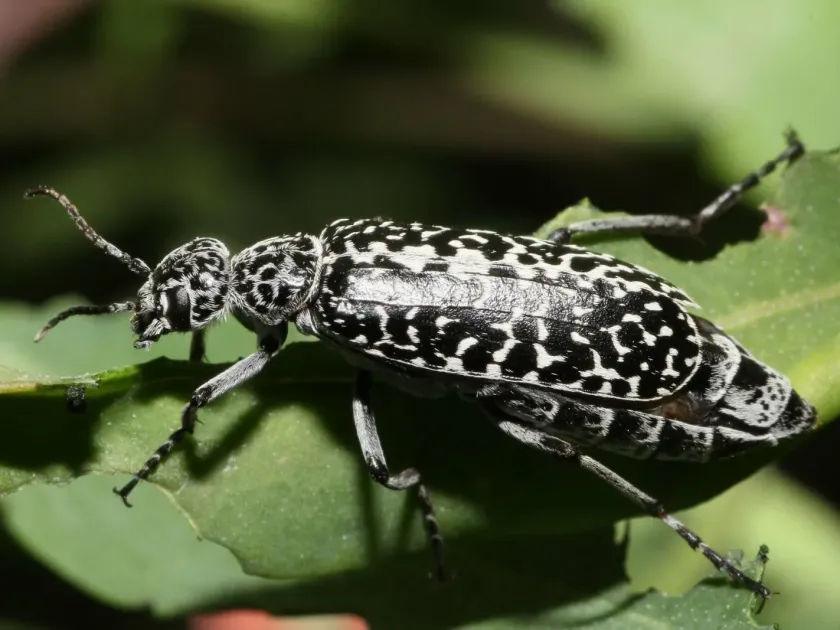
The blister beetle Epicauta pardalis belongs to the family Meloidae, order Coleoptera. These insects are easily identified by their elongated bodies and specific spotted pattern on their elytra.
These beetles are famous for their defensive mechanism: they exude a substance called cantharidin from their joints when threatened, which can cause severe skin blisters on humans and animals.
The adults typically measure between 10 and 20 millimeters in length, making them easily visible during field inspections on sunny days when they are most active.
The biological cycle of this species is complex and features hypermetamorphosis, where larvae undergo distinct developmental stages with significant physical changes.
Larvae of early stages are mobile and often predatory, frequently feeding on grasshopper eggs, which connects their life cycle to the presence of other field pests.
What it damages
Adult blister beetles are voracious phytophagous insects that pose a significant threat to a variety of agricultural crops, particularly members of the Solanaceae and Fabaceae families.
Commonly affected crops include potatoes, tomatoes, eggplants, soybeans, and beans, where adults feed aggressively on foliage, stems, and reproductive structures.
The beetles can strip plants of their leaves almost entirely, leaving behind only the veins, which drastically reduces the photosynthetic capacity and overall yield of the crop.
Damage to flowers and young fruit is especially critical, as it directly reduces the market value and total production volume of the vegetable crop.
Infestations often occur in intense, localized patches that can expand rapidly across a field if not addressed promptly by agricultural management teams.
When it appears
The emergence of adult beetles typically occurs in late spring and early summer, coinciding with the active growth phase of most horticultural crops.
Favorable conditions for these beetles include hot and dry weather, which stimulates their feeding activity and promotes mating and egg-laying processes.
Peak populations are generally observed in mid-summer, when beetles migrate onto crops to feed and reproduce, completing their cycle before autumn.
Pupation occurs in the soil, from where the next generation of adults emerges to continue the cycle, highlighting the need for early-season monitoring.
The species survives the winter in the prepupal stage within the soil, ensuring the population remains resilient against environmental fluctuations.
Signs of infestation
The first sign of an infestation is the sudden appearance of skeletalized foliage, where the soft tissues of leaves have been consumed, leaving a mesh-like appearance.
Inspecting the plants will often reveal clusters of beetles feeding on the upper parts of the leaves and stems, as they prefer to feed in groups.
A distinct, pungent odor may be noticeable near infested plants due to the defensive secretions released by the beetles when they are disturbed or feeding.
Rapidly expanding patches of damaged plants are a clear indicator of a growing population that requires immediate intervention to prevent spread.
The presence of beetle droppings on the leaves and the visible reduction of green biomass are further signs that the population is actively damaging the crop.
Control measures
The most effective management strategy involves the timely application of approved contact and systemic insecticides to prevent large-scale crop damage.
Integrated pest management suggests monitoring fields closely and applying treatments at the first sight of adult activity rather than waiting for mass colonization.
- Application of pyrethroid-based insecticides.
- Implementing crop rotation to disrupt the beetle's life cycle in the soil.
- Wearing protective gloves and clothing when handling infested plants to avoid skin burns.
- Deep tillage of fields after harvest to disturb overwintering sites.
- Using row covers or physical barriers for smaller garden plots.
Because these insects contain cantharidin, it is vital to avoid crushing them against the skin, as the chemical can cause intense irritation and inflammation.
Effective weed control in and around the field can help reduce the alternative food sources for the beetles, thereby lowering the initial population pressure on crops.
Taxonomy
- Latin name
- Epicauta pardalis
- Order
- Coleoptera (beetles)
- Family
- Meloidae
- EPPO code
- EPIAPA
Discussion
No discussions yet — be the first.