
Striped blister beetle
Epicauta lemniscata
Description
How to identify
The striped blister beetle (Epicauta lemniscata) belongs to the Meloidae family, order Coleoptera. It is a distinctive insect, usually measuring about 10 to 15 mm in length.
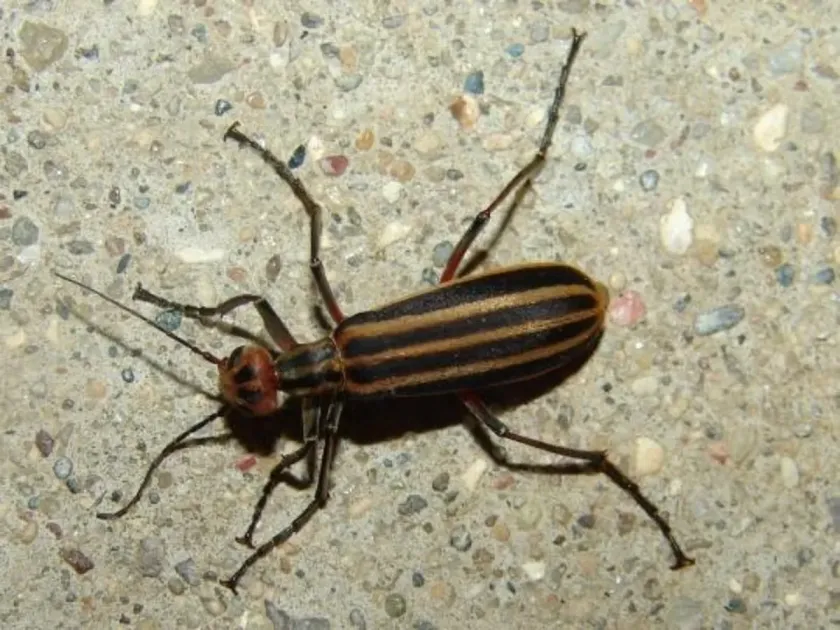
The beetle is easily identified by its elongated body and striking longitudinal black and yellow or orange stripes along its elytra (wing covers).
As a member of the blister beetle family, it contains cantharidin in its body fluids. This substance can cause skin irritation and blisters if crushed against human skin.
The life cycle is complex, involving hypermetamorphosis. The larval stages are soil-dwelling and are often predators of grasshopper eggs.
Adults emerge in summer to feed on foliage and mate. Their presence is usually seasonal and often sudden, coinciding with the peak vegetative growth of crops.
What it damages
Adult striped blister beetles are polyphagous pests, capable of consuming a wide variety of cultivated and wild plants.
They are notorious for attacking solanaceous crops such as potatoes, tomatoes, and eggplants, often stripping leaves entirely to the veins.
Legumes, including soybeans and alfalfa, are also high-risk targets. Large swarms can cause significant economic losses in these fields in a very short time.
The primary damage is caused by the adults (imago), which possess voracious appetites and exhibit a tendency to feed in large groups.
By consuming leaves, the beetles drastically reduce the photosynthetic capacity of the plants, leading to stunted growth and reduced crop yields.
Signs of infestation
The most obvious sign of an infestation is the rapid and severe defoliation of plants, with leaves often appearing skeletonized.
Because they are gregarious, you will often find clusters of beetles feeding on the same plant, making them very easy to spot visually.
Plants may show irregular holes in leaves, or in severe cases, entire stems may be left bare of any foliage.
The presence of large, noticeable beetles with distinct stripes during the daytime is a clear indicator that immediate inspection is required.
Field patches that seem to have been "pruned" or severely eaten overnight are typical markers of a striped blister beetle swarm.
Control measures
Managing the striped blister beetle requires timely monitoring, especially during the peak summer months when adults are most active.
For small-scale gardeners or localized infestations, hand-picking can be effective, provided you wear protective gloves to avoid contact with cantharidin.
Chemical control is often necessary for larger infestations. Contact insecticides, particularly those containing pyrethroids, provide quick knockdown of adult populations.
It is important to spray during cooler parts of the day, as this minimizes the risk of drifting and improves the efficiency of the application on the target plants.
- Practice crop rotation to disturb the soil where larvae overwinter.
- Control weeds in and around fields that may serve as alternative food sources for adults.
- Use physical barriers like netting to protect sensitive crops in small plots.
Taxonomy
- Latin name
- Epicauta lemniscata
- Order
- Coleoptera (beetles)
- Family
- Meloidae
- EPPO code
- EPIALE
Discussion
No discussions yet — be the first.