
Blister beetle
Epicauta grammica
Description
How to identify
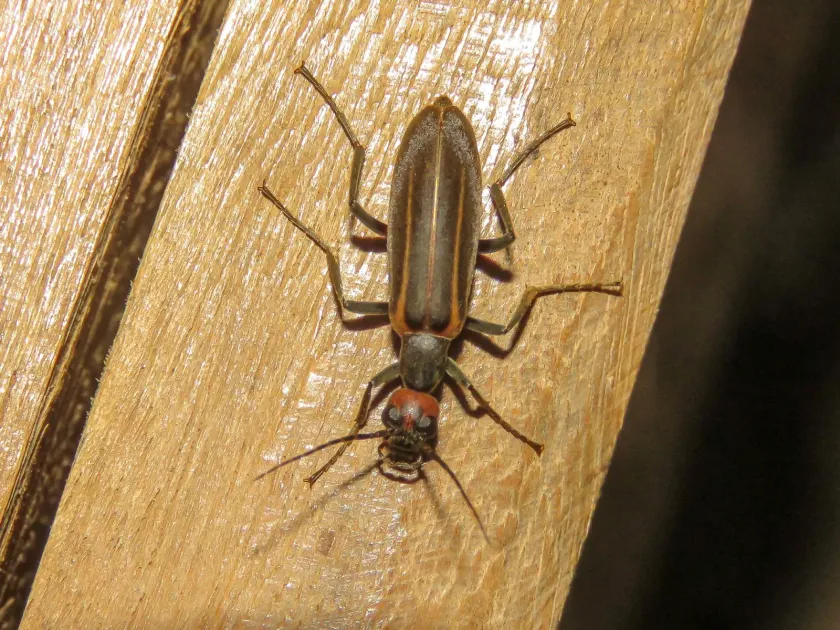
The Blister beetle (Epicauta grammica) belongs to the family Meloidae, order Coleoptera. Adult beetles are elongated, measuring 10–15 mm in length, with their bodies covered in fine hairs.
The coloration is typically grey or yellowish-grey, characterized by distinct dark longitudinal stripes on the elytra, which is the primary diagnostic feature of this species.
These beetles possess long legs that allow them to move quickly across plants and fields. They are well-adapted to active lifestyles during hot summer days.
A notable characteristic of the Meloidae family is the production of cantharidin, a toxic alkaloid found in their hemolymph. Contact with these beetles can cause skin irritation or blisters in humans.
The life cycle involves hypermetamorphosis. The first instar larvae are highly mobile and search for grasshopper egg pods to feed on, acting as natural enemies of locusts.
What it damages
The Blister beetle is a polyphagous insect that damages a wide range of crops. Solanaceous plants, legumes, and cucurbits are particularly susceptible to their feeding habits.
Adult beetles aggressively consume foliage, leaving only the primary veins behind. Under high pressure, plants can be completely defoliated in just a few days.
Beyond leaf consumption, the beetles feed on buds, flowers, and developing fruits. This causes immediate yield loss and reduces the plant's overall photosynthetic capacity.
The damage often occurs in patches within a field. Because the beetles are highly mobile, they can migrate rapidly, expanding the infested area throughout the season.
- Potatoes, tomatoes, and eggplants
- Soybeans, alfalfa, and other legumes
- Melons and watermelons
- Various weed species in fields
When it appears
Adult beetles typically appear in mid-summer, from June through August. Their peak activity corresponds with the hottest periods of the summer season.
Drought years often lead to increased population levels. Favorable conditions for locust reproduction increase the available food sources for Blister beetle larvae, leading to higher adult populations later.
Beetles are most active during the hottest hours of the day when they feed voraciously. Their activity levels drop significantly during the cooler morning or evening hours.
Adults live for several weeks, during which they can cause extensive damage to crops in their vegetative and reproductive stages.
Regular field scouting starting at the bud stage is essential for early detection and prevention of large-scale crop damage.
Signs of infestation
The first sign of an infestation is skeletal leaves. Beetles consume the leaf tissue while leaving the tough veins, resulting in a lace-like appearance of the foliage.
Large groups of beetles clustering on individual plants are a common indicator. They often feed in colonies, moving from one plant to another as a group.
The absence of flower buds or blossoms on otherwise healthy-looking plants is a key sign that these beetles have been feeding on the reproductive structures.
The presence of small, dark, granular frass on the leaves and stems is another clear indication of a resident beetle colony.
When approaching an infested plant, the insects often fly away en masse, creating a distinct sound and movement that is easily noticed by field managers.
Control measures
Insecticide applications are the primary method of control when population thresholds are exceeded. Products containing pyrethroids or organophosphates are generally effective.
Applications should be timed for the early morning or late evening to minimize impacts on beneficial insects, especially essential pollinators like bees.
Field sanitation is critical; removing weeds along field margins helps reduce shelter and secondary food sources for the beetles.
Effective crop rotation and soil management can disrupt the development cycles of insects that have soil-dwelling larval or pupal stages.
When handling these beetles manually, always wear protective gloves to avoid exposure to cantharidin, which can cause significant skin irritation.
Taxonomy
- Latin name
- Epicauta grammica
- Order
- Coleoptera (beetles)
- Family
- Meloidae
- EPPO code
- EPIAGR
Discussion
No discussions yet — be the first.