
Epicauta gorhami
Epicauta gorhami
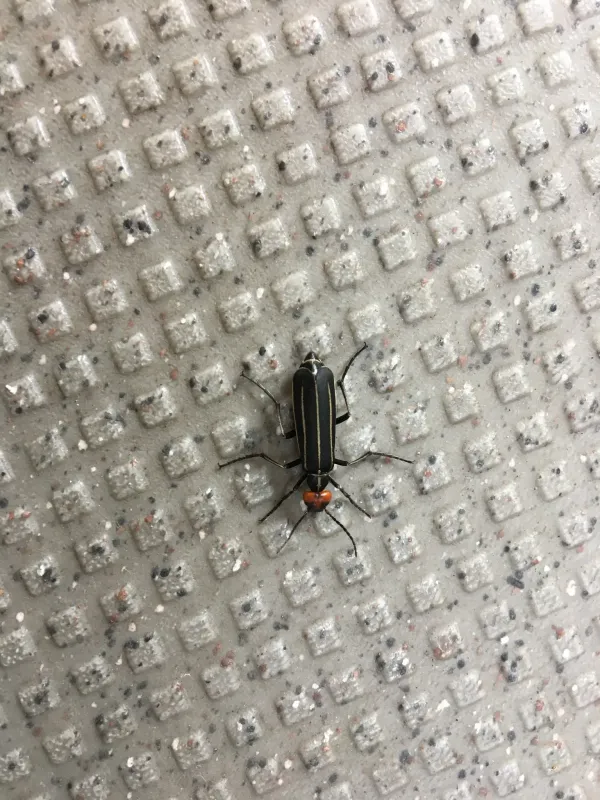
Description
How to identify
Epicauta gorhami, commonly known as a type of blister beetle, belongs to the family Meloidae within the order Coleoptera. These insects are distinguished by their chemical defense mechanism involving the production of cantharidin.
The adult beetle possesses an elongated body and relatively soft wing covers. Its movement is swift, and its presence can be disruptive to crop development during peak population periods.
The life cycle involves hypermetamorphosis, a complex development process where larvae undergo several distinct stages. Most of their early life is spent in the soil, often as predators of grasshopper eggs.
Adult beetles are phytophagous, meaning they feed on plant tissues. They have strong, chewing mouthparts designed to strip foliage and consume reproductive plant parts efficiently.
Due to the toxic nature of their hemolymph, these beetles should be handled with care, as contact can cause skin irritation or blisters in humans and livestock.
What it damages
This pest is known to attack various crops, with a notable preference for legumes such as soybeans and phaseolus beans, as well as certain solanaceous plants.
Feeding damage is characterized by heavy defoliation. Adults chew on leaves, often consuming the soft tissue while leaving the veins, which significantly reduces the plant's photosynthetic capacity.
The damage to flowers and young pods is particularly devastating. By consuming these reproductive structures, the beetles directly reduce yield potential and can cause total crop failure in heavily infested areas.
Infestations typically occur in patches. Beetles often congregate in specific areas of the field, leading to severe localized damage before spreading to larger sections of the crop.
Weakened plants resulting from beetle feeding are more susceptible to secondary infections, such as bacterial or fungal blights, which further exacerbate the loss of plant vigor.
When it appears
The active period for adults generally occurs during the summer months, spanning from mid-June to August, which often aligns with the critical flowering stages of many crops.
Population surges are frequently associated with hot, dry weather conditions, which facilitate the beetles' metabolic activity and feeding intensity.
Typically, the species has a one-year life cycle. Overwintering occurs in the soil, predominantly as mature larvae, providing them with protection against winter extremes.
The emergence of adults is triggered by soil warming in the spring. This emergence is usually staggered, leading to a prolonged window of potential pest pressure.
Environmental conditions throughout the season play a crucial role in determining the severity of the infestation and the longevity of the pest's presence in the fields.
Signs of infestation
The most evident sign of Epicauta gorhami is the presence of skeletonized leaves on affected plants, where only the vascular structure of the leaf remains.
Clusters of beetles feeding on the upper canopy or floral parts are easily visible during field scouting, especially during the early morning or late afternoon.
The presence of large amounts of frass (excrement) on the leaves and soil surface beneath the plants is a clear indicator of a feeding colony.
Aborted buds and missing pods on plants without physical trauma suggest the presence of these beetles, as they selectively target these nutrient-rich organs.
A sudden, unexplained decline in bloom density during the flowering stage is a strong indicator that scouting for blister beetles is required.
Control measures
Chemical control involving approved insecticides is the primary method for managing high populations. Treatments should be applied as soon as the economic threshold is reached.
Cultural practices, such as deep autumn tillage, can help disturb the soil environment and destroy overwintering larvae, reducing the pest population for the following year.
Effective weed management on field borders is essential to reduce alternative food sources and shelter sites for the beetles during the off-season.
Regular scouting is crucial. Identifying initial localized clusters allows for spot-treatment, which can prevent the spread of the infestation across the entire field.
- Integrated pest management (IPM) strategies.
- Rotation of insecticide classes to prevent resistance.
- Strategic monitoring of field edges.
Taxonomy
- Latin name
- Epicauta gorhami
- Order
- Coleoptera (beetles)
- Family
- Meloidae
- EPPO code
- EPIAGO
Discussion
No discussions yet — be the first.