
Ash Gray Blister Beetle
Epicauta fabricii
Description
How to identify
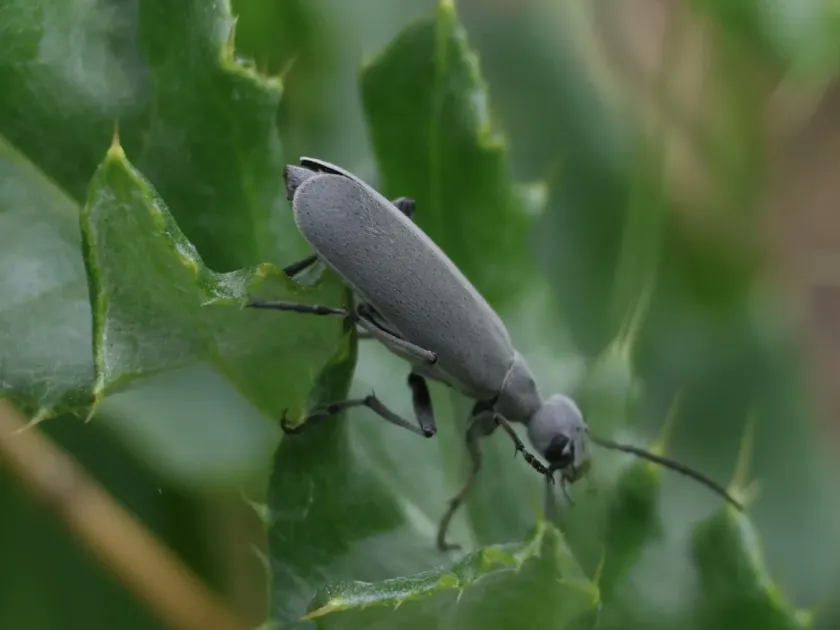
The Ash Gray Blister Beetle Epicauta fabricii is a member of the Meloidae family within the Coleoptera order. These beetles are typically elongated in shape, measuring between 10 to 15 millimeters in length.
Their coloration is generally ash-gray to black, covered in dense, fine hairs that give them a matte appearance. A distinctive characteristic of this beetle is the presence of cantharidin in its hemolymph, a defensive chemical that can cause blistering if it contacts human skin.
The larval stage of this species is largely soil-dwelling. They have a complex development cycle, often acting as predators of grasshopper egg pods, which makes them unique among agricultural pests.
They undergo complete metamorphosis: egg, larva, pupa, and adult. The adult stage is the most visible and active, frequently seen feeding on the foliage of various plants during the growing season.
These beetles are highly mobile and are often found in clusters. They prefer warm, sunny conditions and are most active during the daylight hours when they feed and mate.
What it damages
The adult beetles are the primary life stage causing damage to agricultural crops. Their preferred host range includes various legumes and solanaceous crops, such as soybeans, alfalfa, potatoes, and tomatoes.
Damage occurs when the beetles feed on leaves, often starting from the edges. Their intense feeding habits can lead to significant defoliation, which reduces the plant's photosynthetic capacity.
In cases of high infestation, the beetles can skeletonize entire leaves, leaving only the primary veins. This severely impacts plant vigor, development, and eventual yield potential.
Feeding on flowers and developing buds is particularly detrimental, as it directly reduces the fruit or seed set. This can lead to substantial economic losses in field crops.
Furthermore, the physical injury caused by feeding makes the plant more susceptible to secondary pathogens, including bacteria and fungi that thrive in damaged tissues.
When it appears
Adult beetles typically emerge during the summer months. The timing of their emergence is closely tied to soil temperature and moisture levels, which influence the development of the over-wintering larval stages.
Hot and dry seasons tend to favor the development and survival of the beetle, often resulting in larger populations that appear more suddenly in agricultural fields.
The period of active adult feeding usually lasts for several weeks. Once the feeding period concludes, females move to the soil to deposit eggs for the next generation.
The population density often fluctuates year to year based on environmental factors and the availability of their primary host plants during the summer peak.
As summer draws to a close, adult activity wanes, and the species retreats into its subterranean life stages, where it enters a state of diapause to survive the winter months.
Signs of infestation
The most reliable sign of an Ash Gray Blister Beetle infestation is the direct observation of the beetles themselves on the plants. Their greyish, elongated bodies are usually easily spotted on top of leaves.
Feeding damage manifests as irregular holes or ragged leaf edges. Over time, these small holes grow, eventually leading to leaves that appear stripped of their green tissue.
- Ragged, irregular holes in foliage.
- Complete skeletonization of leaf tissues in severe cases.
- Clusters of beetles feeding on buds or flower structures.
- Reduced plant growth and premature leaf drop.
When scouting, check both sides of the leaves and the tops of the stems, as these beetles often congregate in groups while feeding on the plant's most tender parts.
Control measures
Managing the Ash Gray Blister Beetle requires an integrated approach that combines cultural practices with targeted chemical applications when necessary.
Deep plowing of the soil during the late fall or early spring can help disrupt the soil-dwelling stages, reducing the number of adults that successfully emerge the following season.
Effective weed management is essential, as many weeds provide secondary food sources and resting sites for the beetles, helping them survive before migrating to crops.
If economic injury levels are reached, registered insecticides can be used. It is important to choose products that are effective against Coleoptera and follow all label application rates.
Always exercise caution when handling these insects. Due to the cantharidin in their system, one should wear protective gloves to prevent skin irritation or accidental blistering.
Taxonomy
- Latin name
- Epicauta fabricii
- Order
- Coleoptera (beetles)
- Family
- Meloidae
- EPPO code
- EPIAFA
Discussion
No discussions yet — be the first.