
Epicauta atomaria
Epicauta atomaria
Description
How to identify
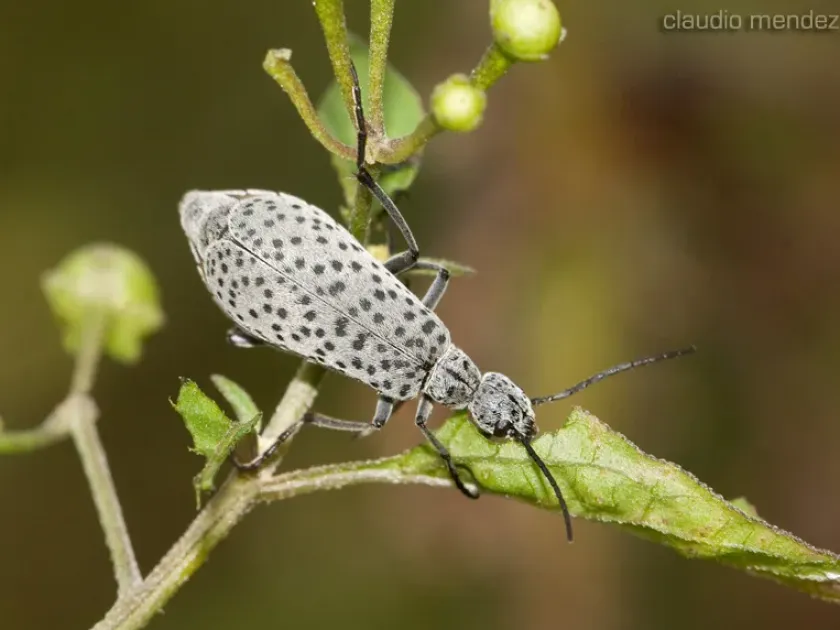
Epicauta atomaria is a species of blister beetle belonging to the Meloidae family within the Coleoptera order. These beetles are characterized by their elongated bodies and specific coloration.
The body is typically dark grey to black, covered with numerous light-colored spots, which gives the species its distinct appearance. They contain cantharidin, a toxic substance that acts as a chemical defense mechanism.
The larvae of these beetles have a complex life cycle, often living in the ground and feeding on the eggs of grasshoppers or in the nests of wild bees.
Adult beetles are highly active during the day, making them easily visible when they swarm on crops. Their mobility allows them to spread quickly across large agricultural areas.
Because these insects are gregarious, finding a few individuals on a field often indicates that a larger population is present nearby.
What it damages
This pest causes significant economic losses by feeding on a variety of agricultural crops, with a particular preference for legumes and solanaceous plants.
Adult beetles consume leaf tissue aggressively, often leaving behind only the veins of the leaves, which severely impacts the plant's photosynthetic capacity.
In cases of heavy infestation, Epicauta atomaria can defoliate entire fields of soybeans, alfalfa, or beans in a very short period.
Feeding on flowers and developing pods causes direct damage to reproductive structures, leading to a drastic reduction in total crop yield and seed quality.
The stress caused by defoliation makes plants more susceptible to secondary diseases and environmental stressors, further exacerbating the yield loss.
When it appears
The activity of Epicauta atomaria is most pronounced during the summer months when warm and dry weather conditions prevail.
Population peaks typically occur in mid-summer, following the emergence of adults from the soil after pupation.
The beetles are diurnal, meaning they feed actively during the daylight hours, often resting in shaded areas of the plants during the hottest parts of the day.
Climate variables play a crucial role in population dynamics, with dry seasons often favoring larval survival and increasing overall beetle numbers.
Farmers should monitor their crops closely from July through August to detect early signs of infestation before significant damage occurs.
Signs of infestation
The most common sign of an Epicauta atomaria infestation is leaf skeletonization, where only the leaf veins remain after the soft tissue is consumed.
Visual identification of adult beetles sitting on the foliage or flowers is a clear indicator that protective measures are necessary.
The appearance of patches of bare stems within a field is a hallmark sign of heavy feeding activity by these beetles.
Presence of excrement on the leaves and a generally damaged, tattered appearance of the crop canopy point to an active pest population.
- Ragged leaf edges and missing foliage.
- Flower destruction preventing pod formation.
- Aggregated clusters of beetles on plants.
Control measures
Management of Epicauta atomaria primarily involves the application of registered insecticides that are effective against coleopteran pests.
Spot spraying or treating field borders is often effective, as the beetles frequently migrate into fields from adjacent roadsides or weed patches.
Implementing deep tillage practices in the fall or early spring can help disrupt the soil-dwelling larval stages of the beetle.
Effective weed management around agricultural fields is essential to reduce harborages and food sources that sustain pest populations outside of the primary crop.
When selecting control methods, it is vital to adhere to pre-harvest intervals and safety guidelines due to the toxic nature of the beetles and the chemical residues of insecticides.
Taxonomy
- Latin name
- Epicauta atomaria
- Order
- Coleoptera (beetles)
- Family
- Meloidae
- EPPO code
- EPIAAT
Discussion
No discussions yet — be the first.