
Blister beetle Epicauta apure
Epicauta apure
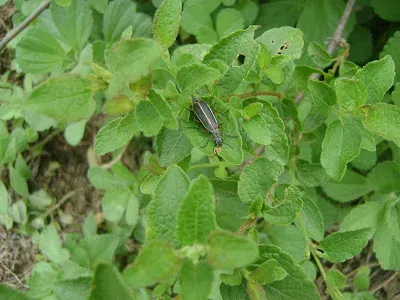
Description
How to identify
The Epicauta apure is a species of blister beetle belonging to the family Meloidae, within the order Coleoptera. These beetles are characterized by their elongated bodies and specific chemical defense mechanisms.
Adult beetles possess cantharidin, a toxic compound found in their hemolymph. This substance is a natural deterrent that can cause severe skin irritation and blisters if handled by humans or animals.
Morphologically, they are recognized by their distinct antennae and often dull, matte-colored wing covers. They differ from other leaf-eating beetles by their unique head structure and specific life cycle traits.
The life cycle involves hypermetamorphosis, where larvae pass through several distinct developmental stages. This adaptation allows the species to survive in varied environments and exploit different food sources.
The larval stage often acts as a parasite or predator in the nests of wild bees or grasshopper egg pods. This complex ecology is a defining trait of the Meloidae family, distinguishing them from simple herbivores.
What it damages
Adult Epicauta apure beetles are significant defoliators. They feed aggressively on the leaves, buds, and flowers of various crops, often leaving nothing but the skeletal structure of the plant.
Legume crops such as soybean, alfalfa, and beans are particularly susceptible to infestation. Rapid consumption of foliage leads to a significant decrease in photosynthetic capacity and overall crop vigor.
Beyond legumes, these beetles can affect solanaceous crops like potatoes and tomatoes. Severe damage to flowering structures directly translates to yield loss and reduced commercial value of the produce.
The damage is often localized at first, appearing in patches within the field. However, these beetles are highly mobile and can migrate across large areas, causing widespread destruction if left unchecked.
The combination of rapid feeding and the ability to move between hosts makes this pest a serious concern during the peak vegetative and reproductive stages of the crop cycle.
Control measures
Integrated Pest Management (IPM) is essential for controlling Epicauta apure. Monitoring population levels through field scouting is the first step in determining the need for intervention.
When infestation levels exceed economic thresholds, insecticide applications are necessary. Contact and stomach poisons are typically effective, provided they are applied in compliance with local safety regulations.
Cultural practices, such as deep tillage, can disrupt the soil-dwelling larvae, reducing the number of adults in the next season. Maintaining clean field borders helps remove alternative hosts for the beetles.
Border treatments with insecticides can act as a buffer zone, preventing mass migration into the center of the fields. This approach is more sustainable and often requires less chemical volume than full-field sprays.
- Field scouting to assess pest density.
- Applying registered insecticides during peak activity.
- Disrupting larval habitats via soil cultivation.
- Managing weed populations along the field edges.
Taxonomy
- Latin name
- Epicauta apure
- Order
- Coleoptera (beetles)
- Family
- Meloidae
- EPPO code
- EPIAAP
Discussion
No discussions yet — be the first.