
Spotted blister beetle
Epicauta adspersa
Description
How to identify
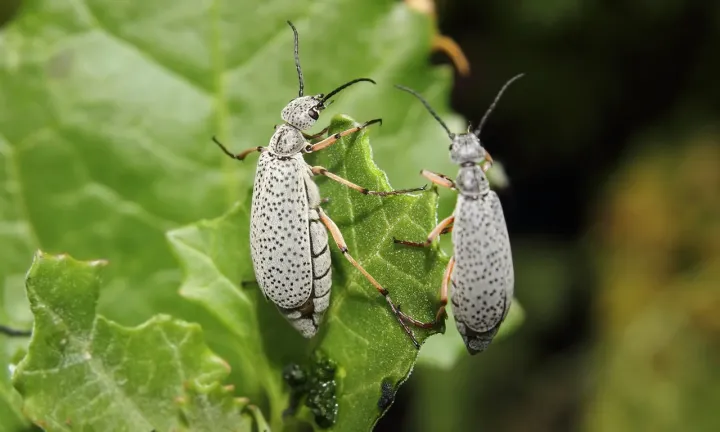
The spotted blister beetle (Epicauta adspersa) is a member of the Meloidae family, known for its distinct appearance and potential to cause significant damage to agricultural lands. The adult beetle is typically elongated, with a greyish or black body covered in small, light-colored spots.
Adults measure approximately 10–15 millimeters in length. A defining biological trait is the production of cantharidin, a toxic substance stored in their hemolymph that acts as a defense mechanism against predators and causes blistering on human skin.
The species undergoes a complex developmental process known as hypermetamorphosis. Their larvae are active predators, often specializing in consuming grasshopper egg pods within the soil, which creates a link between beetle outbreaks and locust population cycles.
Females lay eggs in the soil, and the larvae pass through several developmental stages. This specialized predator behavior makes their population dynamics highly dependent on environmental conditions and the availability of their primary prey in the early stages.
Overwintering occurs in the pupal stage deep within the soil. This dormancy allows the species to survive harsh winter conditions, ensuring that adult beetles can emerge in synchrony with the seasonal growth of their host plants.
What it damages
The primary economic damage is caused by the adult beetles, which are highly active, voracious feeders. They consume foliage during the day, often gathering in large groups, which leads to rapid defoliation of various crops.
Spotted blister beetles are polyphagous, meaning they feed on a wide range of hosts. They are particularly destructive to solanaceous plants, including potatoes and tomatoes, and often target legumes like soybeans and alfalfa.
Damage is characterized by extensive skeletonizing of leaves. Beetles consume the leaf tissue while leaving behind the thicker veins, which severely disrupts the plant's ability to perform photosynthesis and stunts overall development.
During heavy infestations, these beetles can strip an entire field of its leaves in a very short period. This loss of foliage causes severe stress, leading to diminished fruit or seed set and potential total crop failure.
- Potatoes
- Tomatoes
- Alfalfa
- Sugar beet
- Soybeans
Signs of infestation
The most visible sign of an infestation is the presence of the beetles themselves, which are easily spotted on the foliage of host plants during warm, sunny hours of the day. They are often seen feeding in clusters.
Leaf damage is a key indicator: plants will appear sparse with leaves that look like lace or skeletons. This distinct pattern of damage allows for quick identification during regular field scouting.
High populations of grasshoppers in the previous year or early season often act as a precursor for a spotted blister beetle outbreak. Keeping track of prey populations can help in predicting potential beetle pressure.
Stunted plant growth, dropped flowers, and overall poor vigor are common symptoms in fields where beetle activity is high. These signs often point to long-term feeding pressure that has already compromised the plant's health.
Field workers should be aware that handling these beetles without gloves is dangerous. The secretion of cantharidin can lead to painful skin irritation, requiring immediate washing if accidental contact occurs.
Control measures
Chemical control remains the most effective management strategy for large-scale infestations. Broad-spectrum insecticides, such as pyrethroids or organophosphates, should be applied when beetle counts exceed established economic thresholds.
Cultural control involves deep fall plowing, which disrupts the soil structure and exposes overwintering pupae to cold and predators, significantly reducing the survival rate for the next season's generation.
Integrated pest management (IPM) strategies emphasize monitoring grasshopper populations. By controlling the primary food source for the larvae, the overall population growth of the blister beetle can be naturally suppressed.
Managing weed growth around field borders is essential, as these areas often serve as refuge sites. Keeping perimeters clear makes the field less attractive to colonizing adults migrating into the crop.
For smaller plots or gardens, manual removal can be considered, but it must be performed with extreme caution. Protective equipment, such as long-sleeved clothing and gloves, is mandatory to prevent skin contact with the beetles' toxic hemolymph.
Taxonomy
- Latin name
- Epicauta adspersa
- Order
- Coleoptera (beetles)
- Family
- Meloidae
- EPPO code
- EPIAAD
Discussion
No discussions yet — be the first.