
Coryna hermanniae
Coryna hermanniae
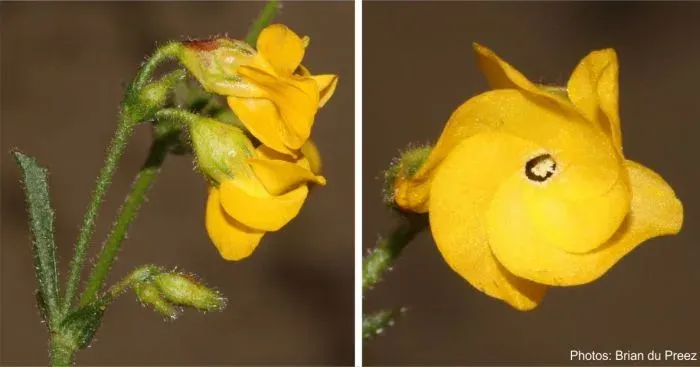
Description
How to identify
Coryna hermanniae is a member of the Meloidae family, commonly known as blister beetles. This group of insects is known for their complex metamorphosis and the presence of cantharidin in their hemolymph.
Adult beetles are generally characterized by an elongated body shape and often vibrant colors. These visual markers often warn potential predators of their toxic nature, which causes skin irritation if the insect is handled or crushed.
The life cycle involves hypermetamorphosis, where the larvae undergo several distinct stages, changing their morphology significantly to survive and develop, often as nest parasites in the cells of ground-nesting bees.
These insects are highly mobile and capable of flight, which facilitates their spread across agricultural landscapes. Their presence is usually linked to specific floral environments where they feed on nectar and pollen.
Understanding their taxonomy and behavior is essential for developing effective pest management strategies, as they behave differently from common folivorous pests in agriculture.
What it damages
The primary damage caused by Coryna hermanniae occurs during the reproductive stage of the plant. Adult beetles feed on the buds, flowers, and sometimes the tender parts of the plants, leading to severe yield losses.
By consuming the reproductive organs of crops, the beetles prevent proper fruit set and seed formation. In pulse crops, this can result in total destruction of inflorescences if the infestation is not controlled.
The larval stage, acting as a parasite on beneficial insects like wild bees, contributes to a decline in crop pollination efficiency. This indirect impact can be as economically significant as direct feeding damage.
Outbreaks of these beetles are often localized but intense. Once they arrive in a field, they can quickly decimate the flowering parts of the crops, posing a significant risk to yield stability.
Physical injuries to the flowers facilitate the entry of secondary pathogens, such as mold or bacteria, which can further decay the damaged plant parts and lead to further crop losses.
When it appears
The activity of Coryna hermanniae is highly dependent on seasonal temperature cycles. Adult beetles emerge in late spring or early summer, synchronized with the flowering periods of their host plants.
The peak activity period is typically observed during warm, dry summer months. During these periods, the beetles are most active, feeding during the day and moving between flowering fields.
Their life cycle is tightly coupled with the host plant phenology, ensuring that the emergence of adults coincides with the availability of high-energy food sources like floral pollen.
As autumn approaches and temperatures drop, adult activity decreases significantly. The beetles move to egg-laying sites in the soil, entering a phase that protects the offspring from winter temperatures.
Monitoring for this pest should be prioritized during the bud-burst and flowering phases of the crop, as these are the critical windows for potential economic damage.
Signs of infestation
The most obvious sign of Coryna hermanniae infestation is the visual observation of the beetles on the blossoms. They often cluster in groups, making them easy to spot during regular field inspections.
Feeding damage is characterized by ragged petal edges and completely stripped flower heads. In some cases, only the woody parts of the inflorescence remain after a heavy infestation.
A reduction in the presence of pollinators in the field can also be an early warning sign, as these beetles may compete for resources or disrupt the activity of bees in the area.
Presence of insect frass or the defensive chemical secretions on the leaves and flowers near the damaged area can serve as an additional diagnostic sign for agronomists.
Damaged plants often show signs of wilt or lack of development in the flower heads, which can be distinguished from environmental stress by the presence of the pest itself on the plant.
Control measures
Effective management of Coryna hermanniae requires a multi-faceted approach, combining biological awareness with timely chemical interventions when thresholds are exceeded.
Contact-stomach insecticides are generally effective against adult beetles. Applications should be timed carefully to avoid harming beneficial pollinator populations during the flowering window.
Cultural practices, such as deep autumn plowing, are highly effective in disrupting the soil-dwelling stages of the beetle, significantly reducing the population density in subsequent years.
Crop rotation and the removal of border weeds help minimize the arrival and survival of the beetle near cultivated fields, thereby limiting the primary source of infestation.
- Regular field scouting during flowering to identify early hotspots.
- Use of trap crops or barrier crops to isolate the infestation from the main fields.
- Selective use of eco-friendly pesticides that minimize impact on non-target bee species.
Taxonomy
- Latin name
- Coryna hermanniae
- Order
- Coleoptera (beetles)
- Family
- Meloidae
- EPPO code
- MYLBAF
Discussion
No discussions yet — be the first.