
Tetralobus flabellicornis
Tetralobus flabellicornis
Description
How to identify
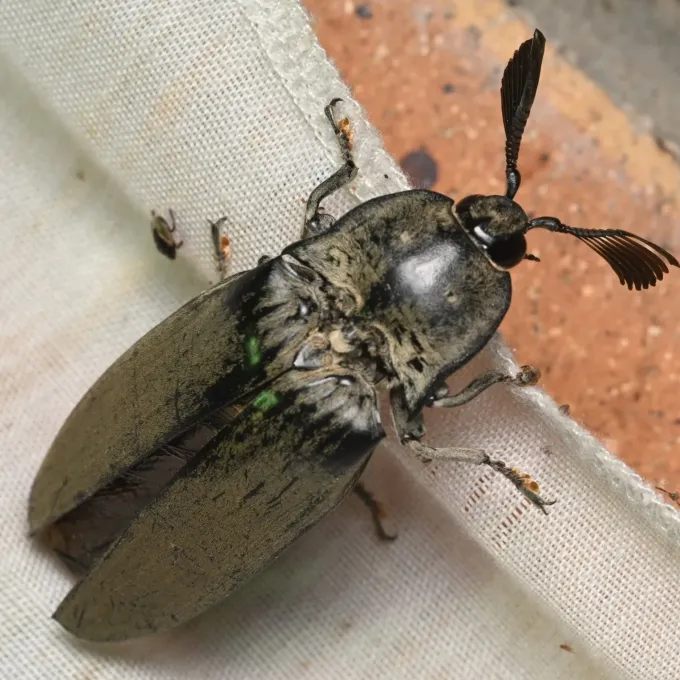
Tetralobus flabellicornis belongs to the family Elateridae (click beetles). It is a large, robust beetle known for its distinct morphological characteristics.
The males are particularly notable for their highly developed, fan-shaped antennae, which they use to locate females during the mating season.
Adult beetles typically feature a dark, chitinous exoskeleton, providing camouflage within their natural habitats, such as soil or decaying organic matter.
The larvae, commonly referred to as wireworms, are characterized by a long, cylindrical, and heavily sclerotized body that is well-adapted for movement through soil.
The life cycle involves complete metamorphosis, with larvae often spending multiple years underground feeding before pupation occurs.
What it damages
The primary damage is caused by the larval stage, which resides in the soil and feeds on the roots of various plants.
This species is specifically recognized as a pest of oil palm, where larvae target the root systems of young seedlings in plantation settings.
Root damage inhibits nutrient and water uptake, leading to plant wilting, stunted growth, and in severe infestations, the death of the plant.
Beyond oil palms, these wireworms may also compromise the health of other herbaceous plants if the soil contains significant organic residue.
Economic losses arise from both direct plant mortality and the subsequent cost of replanting large sections of the plantation.
When it appears
The life cycle is largely influenced by the tropical climate, where constant temperature and rainfall patterns support continuous development.
Adult emergence typically aligns with the onset of the rainy season, which facilitates mating and creates optimal conditions for egg deposition.
Larval activity occurs year-round, provided that soil moisture remains sufficient for their survival and subterranean movement.
Pupation takes place within the soil, where the insects construct protective cells to survive the transition from larva to adult.
Populations are often most noticeable during the transition periods when adults migrate for mating purposes near host plants.
Signs of infestation
Sudden wilting of young seedlings is the most reliable indicator of subterranean activity by wireworms in a nursery or field.
Excavation of the root zone around affected plants reveals characteristic feeding patterns and galleries bored into the root tissues.
Adult presence can be monitored during the night using light traps, as these beetles are attracted to artificial light sources.
Soil samples taken from the rhizosphere of withered plants often yield larvae, confirming the cause of the injury.
Physical evidence of adult activity may also be found near rotting logs or decaying woody debris in the vicinity of the cultivation area.
Control measures
Effective management begins with thorough mechanical soil preparation to disrupt larval habitats and reduce their population density.
Clearing agricultural land of decaying timber and stumps is essential, as these materials provide breeding and shelter sites for the species.
Soil-applied insecticides are utilized as a chemical control measure during the transplanting phase to protect young root systems.
Trapping adults with light or pheromone-based lures can help in monitoring and suppressing the reproductive success of the population.
Biological control strategies, including the use of entomopathogenic fungi or nematodes, are increasingly utilized to manage larval numbers in the soil.
Taxonomy
- Latin name
- Tetralobus flabellicornis
- Order
- Coleoptera (beetles)
- Family
- Elateridae
- EPPO code
- TETBFL
Discussion
No discussions yet — be the first.