
Broad click beetle
Selatosomus latus
Description
How to identify
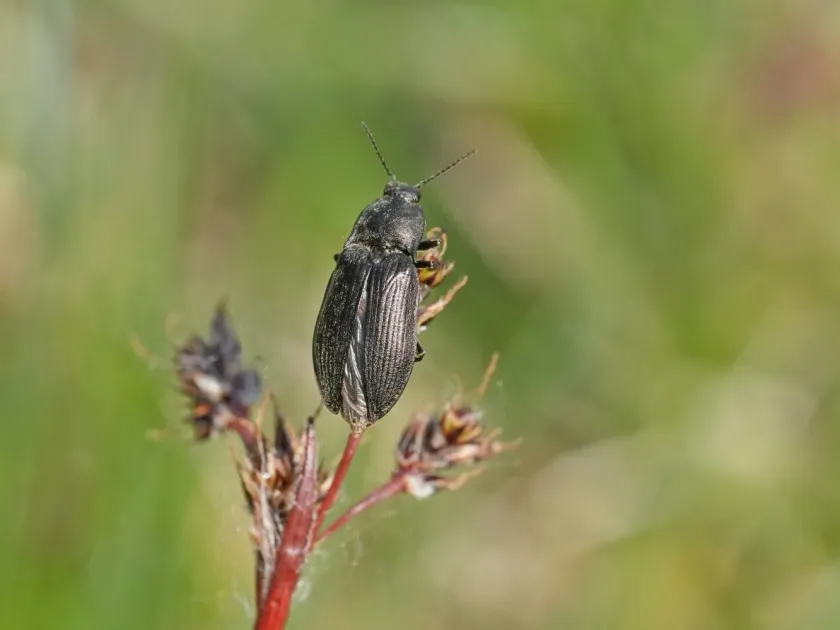
The adult Selatosomus latus beetle typically measures between 12 and 16 mm in length and possesses a robust, dark brown to black body.
The surface of the body is covered with short, dense hairs, giving it a somewhat matte appearance that helps in distinguishing it from other species.
Its larvae, widely referred to as wireworms, are characterized by a cylindrical, hard-shelled body that ranges from yellow to brownish in color.
The lifecycle is complex and lengthy, taking several years to complete, with the majority of the time spent developing within the soil profile.
These insects are well-known for their clicking mechanism, which allows them to flip themselves upright when placed on their backs.
What it damages
The broad click beetle is a significant soil-borne pest that poses a severe threat to a wide range of agricultural crops, including cereals and root vegetables.
The larvae are particularly destructive as they feed on germinating seeds, young roots, and underground stem sections of plants.
This feeding behavior results in stunted plant growth, reduced plant population density, and, in severe infestations, complete destruction of the crop.
Damaged plants often show symptoms of yellowing and wilting, making them highly susceptible to secondary pathogens and soil-borne diseases.
Economic losses can be substantial, especially when field conditions favor the rapid proliferation and movement of wireworm populations.
When it appears
Adult beetles typically emerge from the soil in spring as temperatures rise, usually when the soil reaches a threshold of 10–12°C.
Spring and autumn are the periods when larvae are most active in the upper soil layers, making these seasons critical for crop protection management.
During the intense heat of mid-summer, larvae migrate deeper into the soil to escape desiccation and find environments with higher moisture levels.
The duration of the larval stage varies significantly based on environmental factors, ensuring that overlapping generations are often present in the field.
Wintering occurs deep within the soil profile where the insects remain inactive, waiting for the return of favorable temperatures to resume feeding.
Signs of infestation
One of the primary indicators of a wireworm problem is the appearance of thin, uneven plant stands throughout the field shortly after germination.
Examination of the soil around struggling plants often reveals the presence of larvae or their distinct, tunneling damage on the root systems.
Plants affected by the larvae frequently exhibit sudden yellowing and permanent wilting as their primary vascular connections to the roots are severed.
Patchy growth patterns, often described as "dead spots" in a field, are a classic symptom indicating that wireworms are active in that specific area.
Finding adult beetles on the soil surface during spring tillage is an early warning sign that the population density is high enough to threaten crops.
Control measures
Integrated pest management strategies are essential, focusing on both cultural practices and chemical interventions to mitigate population numbers.
Regular and thorough soil cultivation helps to mechanically disturb the larvae and exposes them to natural predators and adverse environmental conditions.
The use of insecticide-treated seeds is the most effective and common method for providing initial protection during the sensitive germination phase.
Maintaining a crop rotation scheme that minimizes the presence of favorable host plants can significantly reduce long-term pest pressure.
Effective weed control, particularly of rhizomatous grasses, is crucial as these plants act as a secondary food source for larvae in the absence of crops.
Taxonomy
- Latin name
- Selatosomus latus
- Order
- Coleoptera (beetles)
- Family
- Elateridae
- EPPO code
- CORMLA
Discussion
No discussions yet — be the first.